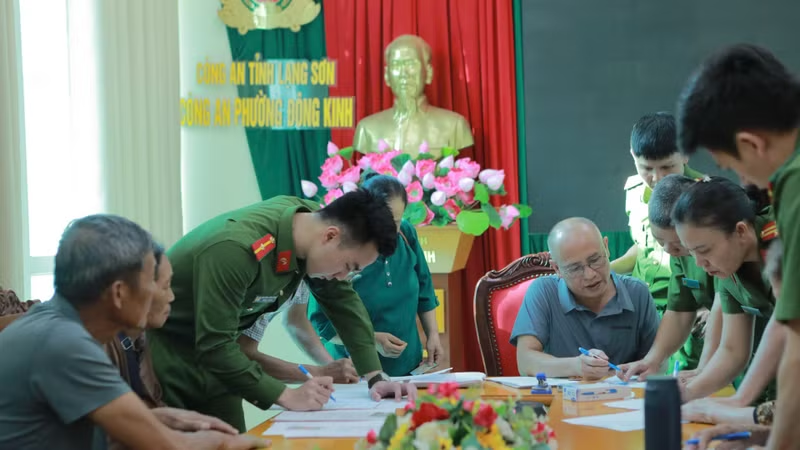
Vietnam Enhances DNA Testing for Unidentified Martyrs' Remains to Support Families
Technology
2026年7月16日
4
Nhan Dan

Vietnam Enhances DNA Testing for Unidentified Martyrs' Remains to Support Families

AI サマリー

Lang Son province in northern Vietnam has launched a campaign to enhance DNA testing for unidentified martyrs' remains. By collecting DNA samples from relatives, the initiative aims to identify numerous fallen soldiers and facilitate their return to families. This is part of a national effort to collect and identify war remains.

On July 16, the Lang Son Provincial Police in northern Vietnam held a ceremony to launch a campaign to enhance the collection of DNA samples from relatives of unidentified martyrs. This initiative is part of a national program aimed at identifying the remains of numerous fallen soldiers, whose names and information remain unknown, who perished during the Vietnam War and past conflicts, through DNA testing. The campaign will involve collecting DNA samples from the relatives of martyrs and cross-referencing them with the DNA data of thousands of unidentified remains collected to date. The goal is to identify the remains and provide accurate information to the families. Vietnam has been engaged in the identification and collection of martyrs' remains for many years, and the use of DNA testing technology plays a crucial role in improving the accuracy and efficiency of this endeavor. Many victims from past conflicts still remain unidentified, and their families have lived with profound grief for years. This campaign is a significant step towards alleviating the suffering of these families and honoring the dignity of the fallen. Lang Son province is located in the northern border region of Vietnam and includes many areas that were fierce battlegrounds in past conflicts. Therefore, it is presumed that many of the remains discovered in this region are unidentified. The enhancement of DNA sample collection in this region can be seen as a more detailed approach tailored to local conditions. The Communist Party of Vietnam and the government consider honoring and showing gratitude to martyrs as a national priority. Such initiatives for identifying remains are deemed important for national unity and social stability. Lessons learned from past successes and similar efforts in other regions are expected to contribute to swift and accurate identification. Source: Nhan Dan

多角的分析

経済的影響

このDNA鑑定強化は、直接的な経済効果よりも、社会的な安定と国民統合への貢献という側面が強い。しかし、関連する技術開発や鑑定機関の運営、遺族への情報提供体制の構築などは、一定の雇用創ちやサービス産業の発展に寄与する可能性がある。また、身元が特定されることで、遺族への補償や社会福祉制度の適用が明確になり、間接的に経済的負担の軽減につながることも考えられる。

投資家心理

投資家にとっては、直接的な投資機会は限定的である。しかし、ベトナム政府が社会インフラや国民福祉に重点を置いている姿勢を示すものであり、長期的な視点では、社会の安定と発展への投資と捉えることができる。関連技術(バイオテクノロジー、データベース管理など)への間接的な関心は高まる可能性がある。

社会的影響

身元不明の戦没者遺骨のDNA鑑定強化は、長年情報がないまま苦しんできた遺族にとって、精神的な救済をもたらす重要な取り組みである。ランソン省という国境地帯での実施は、過去の紛争で多くの犠牲者を出した地域への配慮とも言える。遺族は、長年の不確実性から解放され、故人の最後の安息地を知ることができるようになる。また、これにより、家族の歴史の断片が埋められ、次世代への伝承がより確かなものとなる。

市民の声

未特定遺骨のDNA鑑定強化は、直接的な影響を受ける遺族にとっては、長年の悲願達成の可能性を秘めている。一方で、一般市民にとっては、国家が過去の犠牲者とその家族に寄り添う姿勢を示すものとして、国家への信頼感や愛国心の醸成につながる。特に、ベトナム戦争の記憶が風化しつつある世代にとっては、過去の歴史を再認識する機会となる。

背景・歴史的文脈

ベトナムでは、フランス植民地時代から続く戦争や紛争により、数多くの兵士が犠牲となり、その多くが身元不明のまま埋葬されている。特にベトナム戦争(1955年~1975年)では、南北両陣営合わせて膨大な数の兵士が戦死し、遺骨の収集と身元特定は国家的な課題となっている。1975年のベトナム統一後、政府は戦没者への追悼と遺族への配慮を重視し、遺骨収集・身元特定事業を継続的に実施してきた。近年、DNA鑑定技術の進歩により、この事業の精度が飛躍的に向上し、より多くの遺骨の身元特定が可能になっている。今回のランソン省でのキャンペーンは、こうした長年の取り組みの一環であり、最新技術を活用して未特定遺骨の解消を目指すものである。

原文ソース

Nhan Dan

原文を読む
Vietnam Enhances DNA Testing for Unidentified Martyrs' Remains to Support Families | NEWS-BRAIN