General articles are free for 24 hours after publish.
Cambodia Emphasizes 'Solutions' Over 'Accusations' in Maritime Dispute with Thailand
Cambodia's Minister of Information, Net Pheaktra, stated that numerous accusations raised by Thailand in the UN arbitration committee regarding the maritime border dispute are not core solutions but mere arguments. Cambodia reiterated its focus on legal arguments and presenting viable solutions.
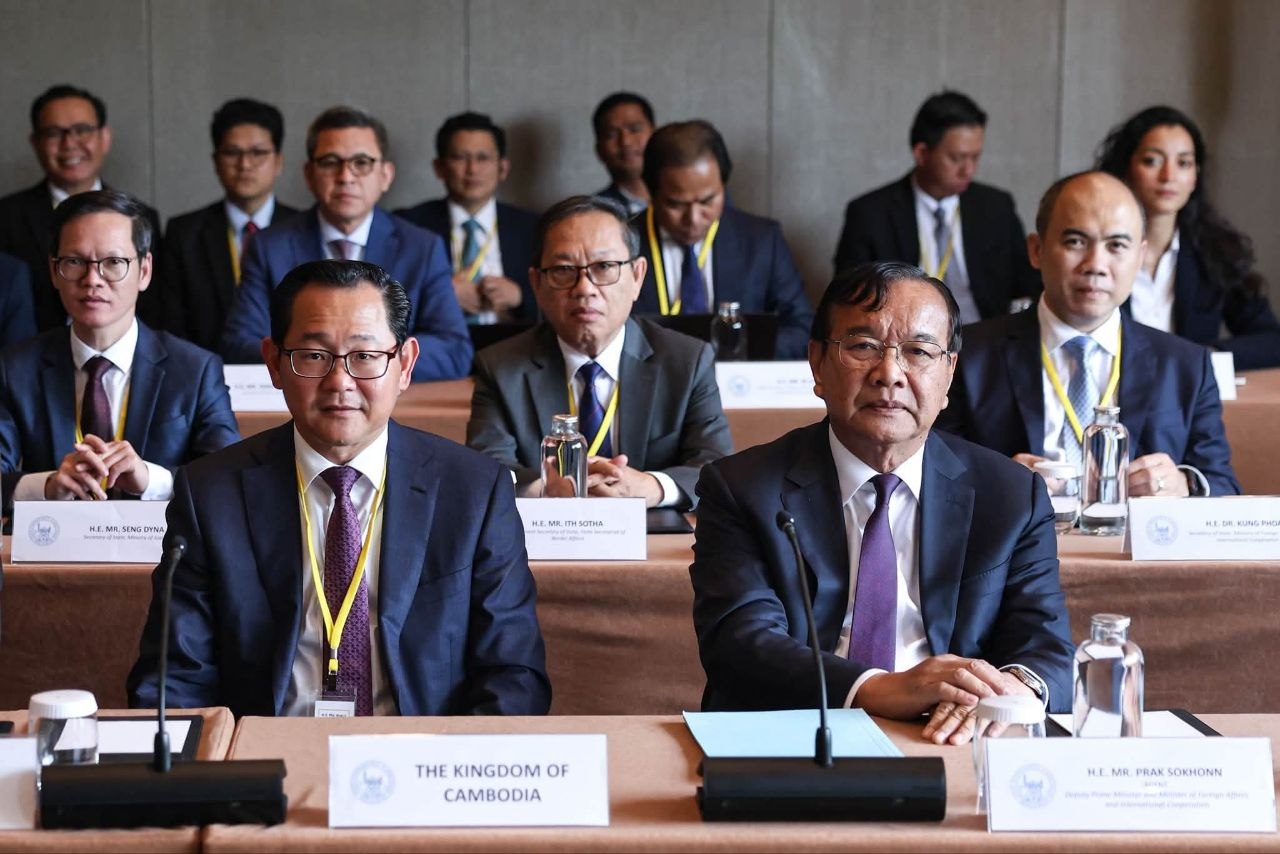
Following the opening statements by the Cambodian and Thai parties before the UN Commission on the Law of the Sea (UNCLOS) arbitration committee, the public should clearly understand that numerous accusations do not necessarily mean stronger legal arguments, according to Cambodian Minister of Information Net Pheaktra. In a statement posted on social media on September 15, 2026, the Minister noted that the Thai side raised many issues, some of which relate to land border disputes, military events, and other political matters. While these issues may attract public and media attention, they are not the core of the problem that the arbitration committee is tasked with helping the two parties resolve. Therefore, the Cambodian public does not need to worry or feel compelled to respond to every accusation made. "Cambodia does not need to compete on accusations. Cambodia needs to compete on legal arguments, facts, and solutions," stated the Minister. He emphasized that the arbitration committee was not established to determine which party can make stronger or more numerous accusations. The purpose of this mechanism is to assist both parties in finding a peaceful and implementable solution to the deadlock in maritime border issues. Cambodia has presented a clear direction and a solution-oriented approach. The country has put forward concrete proposals aimed at achieving a resolution that benefits the people of both nations and contributes to regional peace, cooperation, and shared prosperity. To achieve this goal, Cambodia proposes: 1. To conclude a treaty with Thailand, with the assistance of the commission and in accordance with international law, to define a single, comprehensive maritime boundary between the two countries. 2. As an alternative, Cambodia is prepared to enter into an agreement with Thailand for joint development and equitable sharing of resources during the interim period while awaiting a final agreement on the maritime boundary. 3. If a final agreement on both the maritime boundary and joint development cannot be reached, Cambodia requests the commission to prepare a report with recommendations for both parties to use as a basis for future negotiations to reach such agreements, in accordance with their obligations under UNCLOS. The Minister further explained the significant difference between competing narratives and pursuing solutions. Accusations can make headlines but cannot define maritime borders. Verbal attacks may attract attention for a while but cannot break decades-long deadlocks. What leads to results are facts, law, sincere negotiations, and implementable solution proposals. Therefore, the public should ask not "How many points did Thailand accuse Cambodia of?" or "Which side spoke more forcefully?" The more important questions are: "Which side has arguments relevant to the issues the commission is addressing?" "Which side stands on legal grounds?" and most importantly, "Which side has presented concrete solutions on the table?" Cambodia has presented its options. The next crucial question is: "What concrete solutions does Thailand have on the table to move both parties out of the deadlock?" Moreover, the Minister urged Cambodia to maintain calm, disciplined communication, and focus on the case. Cambodia does not need to bring discussions to new battlefields simply because one party raises new accusations. The international community has the capacity to review records, evidence, and developments independently. Cambodia's task is to present facts, stand on international law, and continue to propose implementable solutions. Not chasing every accusation is not a sign of weakness. Instead, it demonstrates confidence in facts, arguments, and legal processes, and maintains focus on the ultimate goal: seeking a peaceful, equitable, and internationally lawful resolution. For the public, a simple principle can be remembered: "Do not count accusations; weigh arguments. Do not look at who speaks louder; look at who has legal grounds and clearer solutions. Cambodia has put solutions on the table. The question now is: What concrete solutions does Thailand have on the table?" Source: AKP Khmer
Original source
AKP Khmer