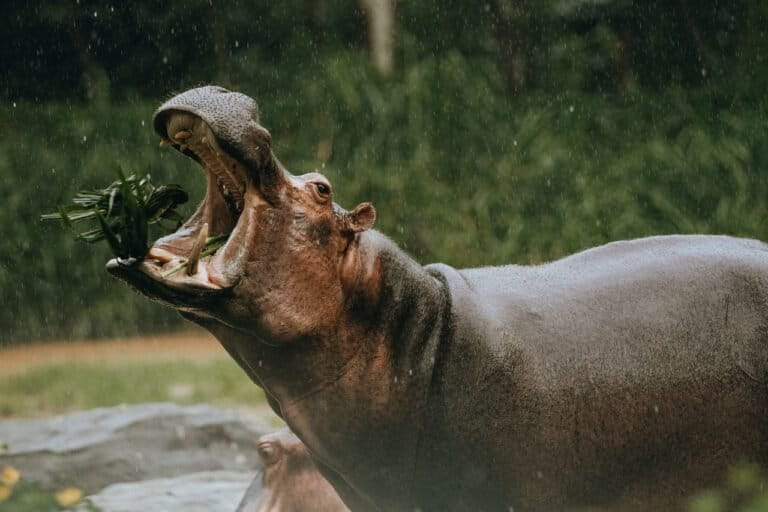
Surprising Evolutionary Link: Whales and Hippos Share Ancestry Despite Land and Sea Divide
Diplomacy
2026年7月8日
3
Mongabay Indonesia

Surprising Evolutionary Link: Whales and Hippos Share Ancestry Despite Land and Sea Divide

AI サマリー

Recent genetic and fossil research reveals that whales, marine mammals, share their closest living relatives not with other sea creatures, but with hippos, freshwater mammals from Africa. This finding overturns previous understandings of cetacean evolutionary history.

For a long time, marine mammals such as whales and dolphins were believed to be closely related to other marine creatures due to their habitat. However, recent genetic research and fossil discoveries have revealed a surprising truth: their closest living relatives are not other sea dwellers, but hippos, mammals that inhabit the freshwater rivers and lakes of Africa. This finding significantly overturns previous understandings of the evolutionary history of the group known as Cetacea, which includes whales. Before the advancement of genetic analysis, many scientists considered Cetacea to be closely related to the Mesonychians, an extinct group of terrestrial carnivorous mammals. However, molecular analysis has since reversed this view, and subsequent fossil evidence has reinforced this new conclusion. One particularly significant discovery is the fossil of Indohyus, a small deer-like mammal that lived approximately 48 million years ago in the region now known as Kashmir, India. Indohyus belonged to the Raoellidae family, an extinct group of artiodactyls, or even-toed ungulates. Analysis of the inner ear structure of the Indohyus fossil revealed similarities to a characteristic structure found in ancient whales, known as the involucrum. This structure is not found in other land mammals, making it strong evidence of a close kinship with whales. This research offers a glimpse into a part of the grand drama of life, from terrestrial mammals to marine mammals, and demonstrates how unpredictable and full of surprises the evolutionary path of life can be.

多角的分析

経済的影響

このニュース自体に直接的な経済的影響はないが、進化生物学の発見は、長期的に生物多様性保全の重要性への認識を高める可能性がある。これは、エコツーリズムや持続可能な資源利用といった分野への間接的な経済効果につながりうる。

投資家心理

直接的な投資機会を生むものではない。しかし、科学的発見への関心は、関連分野(例:バイオテクノロジー、教育コンテンツ)への投資 sentiment に影響を与える可能性はゼロではない。

社会的影響

クジラとカバという、一見全く異なる環境に生きる生物が共通の祖先を持つという事実は、自然界の多様性と進化の神秘に対する人々の認識を深める。これは、生物多様性保全への意識向上や、教育現場での教材としても活用されるだろう。

市民の声

一般市民にとっては、馴染み深いクジラとカバが遠い親戚であるという事実は、驚きとともに自然への興味を掻き立てる。特に子供たちにとって、進化の物語は科学への関心を高めるきっかけとなる可能性がある。

背景・歴史的文脈

クジラを含む鯨類の進化は、長らく科学界の大きな謎の一つであった。初期の研究では、その流線型の体や水中での生活様式から、他の海洋哺乳類との近縁性が推測されていた。しかし、1990年代以降の分子生物学の発展により、遺伝子レベルでの比較が可能になり、従来の説が覆された。特に、偶蹄類(ウシやシカの仲間)との近縁性が示唆され始め、その後の化石研究がこれを裏付ける形となった。インドヒウスの発見は、この進化の過程における重要な「移行化石」として、陸上哺乳類から水中生活への適応の初期段階を示すものと位置づけられている。

原文ソース

Mongabay Indonesia

原文を読む