Typhoon Inday Strands 681 in Philippine Ports
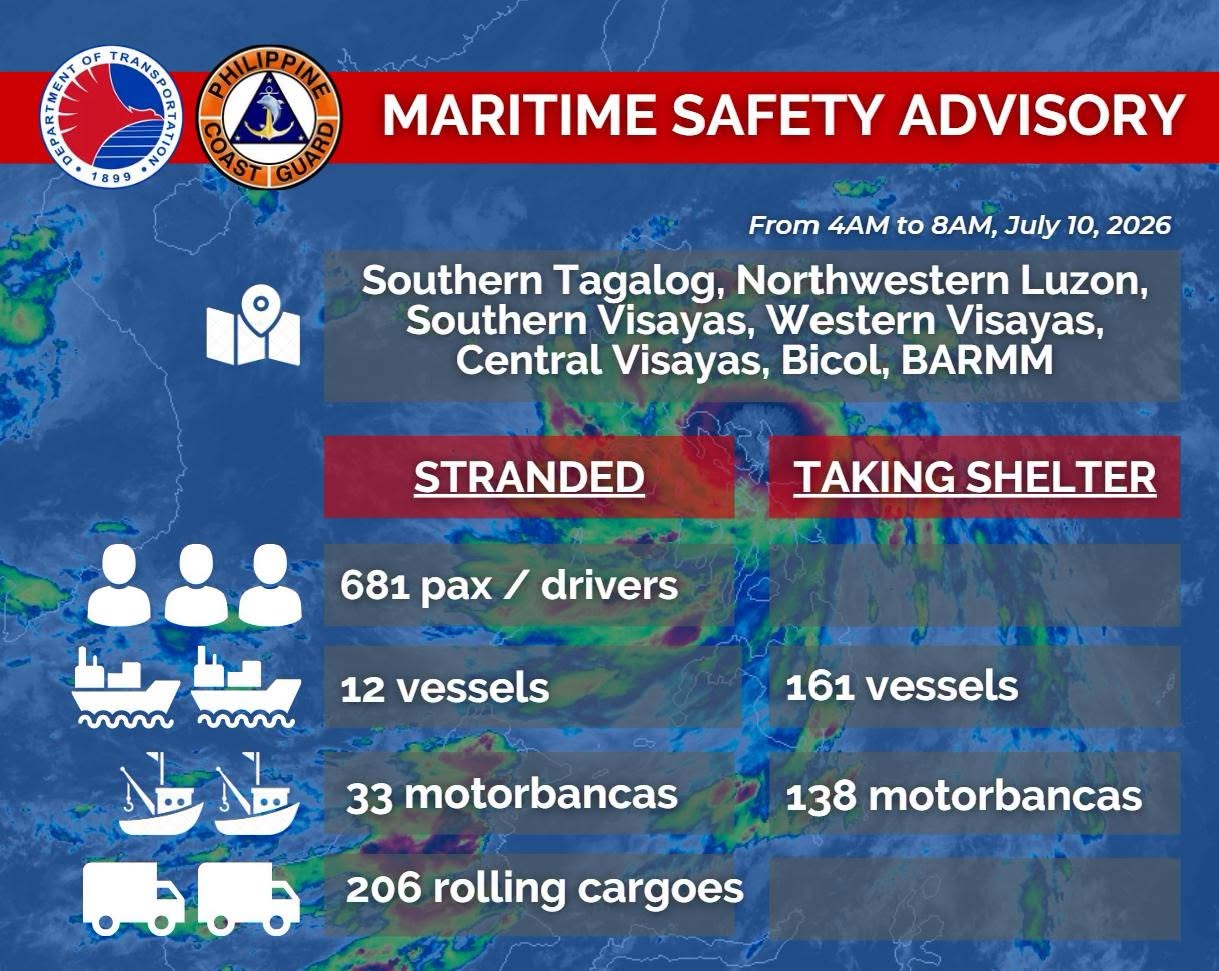
A total of 681 individuals were stranded in various Philippine ports on Friday morning due to the inclement weather brought by Typhoon Inday. Passengers, truck drivers, and cargo helpers were affected, with numerous vessels and rolling cargoes also immobilized.
A total of 681 individuals were stranded in various ports across the Philippines on Friday morning due to the inclement weather brought by Typhoon Inday, the Philippine Coast Guard (PCG) reported. The PCG stated that between 4 a.m. and 8 a.m., the affected individuals included passengers, truck drivers, and cargo helpers. Additionally, 206 rolling cargoes, 12 vessels, and 33 motorbancas were stranded, while 161 vessels and 138 motorbancas took shelter. In Southern Tagalog, 280 passengers and 23 rolling cargoes were stranded, with 111 vessels and 118 motorbancas seeking shelter. Central Visayas saw 95 passengers, 103 rolling cargoes, seven vessels, and 30 motorbancas stranded, while 20 vessels and 17 motorbancas sheltered. Western Visayas reported 87 passengers, 61 rolling cargoes, and one vessel stranded, with one vessel and two motorbancas taking shelter. In Bicol, 89 passengers, 19 rolling cargoes, three vessels, and three motorbancas were stranded, while eight vessels and one motorbanca sought refuge. Further details show that 19 vessels took shelter in North Western Luzon. In Southern Visayas, two vessels sheltered in Sibulan Port and its vicinity. One vessel was also stranded at Bongao Pier in BARMM. The disruptions caused by Typhoon Inday highlight the vulnerability of maritime transportation in the Philippines to weather disturbances, impacting both domestic trade and commuter travel.
多角的分析
台風による港湾の閉鎖は、物流の遅延を引き起こし、特に生鮮食品や緊急物資の輸送に影響を与える可能性がある。これにより、一時的な物価上昇やサプライチェーンの混乱が生じうる。フィリピン経済は、島嶼国家であるため海上輸送への依存度が高く、このような気象災害は経済活動全体に波及効果をもたらす。
投資家にとっては、インフラの脆弱性、特に海上輸送網の気象災害への対応能力がリスク要因となる。台風シーズン中の物流の遅延は、製造業や小売業の在庫管理や販売計画に影響を与え、収益予測の不確実性を高める。長期的な視点では、気候変動への適応策やインフラ投資の必要性が浮き彫りになる。
足止めされた乗客や貨物作業員は、食料、水、宿泊施設へのアクセスといった生活必需品の確保に直面する。特に地方の港では、支援体制が十分でない場合、彼らの不安や困難が増大する。これは、フィリピンの脆弱なコミュニティが自然災害にどのように影響されるかを示す一例であり、災害時の避難・支援計画の重要性を再認識させる。
地方に住む人々にとって、台風による交通網の寸断は、家族との連絡や移動の自由を奪う。特に、島嶼部では、物資の供給が滞り、生活必需品の不足を招く可能性がある。これは、日常的な生活の不安定さと、自然災害への継続的な懸念を浮き彫りにする。
背景・歴史的文脈
フィリピンは環太平洋火山帯に位置し、台風銀座と呼ばれる地域にあるため、年間を通じて数多くの熱帯低気圧の影響を受ける。特に7月から11月にかけての台風シーズンには、甚大な被害が発生することが多い。過去には、2013年の台風ヨランダ(ハイエン)のように、壊滅的な被害をもたらした事例もあり、気象災害への対応能力の強化が継続的な課題となっている。海上輸送への依存度が高いフィリピンでは、港湾インフラの整備や船舶の安全管理が、経済活動と国民生活の安定に不可欠である。
原文ソース
GMA News Philippines