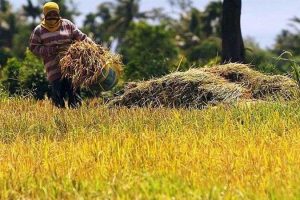
Palay Production Seen Rising in Q2; Corn Output Down
The Philippine Statistics Authority (PSA) estimates that palay (unmilled rice) production in the second quarter will increase by 5.7% year-on-year, while corn output is projected to decrease by 0.3%. While planted area for palay grew, total output may fall short of forecasts.
PALAY (unmilled rice) production in the second quarter was estimated to have increased 5.7% year on year, with corn falling 0.3% year on year based on an evaluation of standing crops, the Philippine Statistics Authority (PSA) reported. As of June 1, the PSA estimated palay output for the second quarter of 4.63 million metric tons (MMT). If the estimates pan out, the production total would miss the PSA’s 4.65 MMT forecast issued in April. Land planted to palay was estimated to have increased 6% year on year during the period to 1.03 million hectares, with the yield per hectare now seen at 4.49 MT from 4.50 MT previously. Corn output for the second quarter was estimated at 1.49 MMT, downgraded from the April projection of 1.57 MMT. Land planted to corn was estimated to have risen 3.4% year on year to 416.16 thousand hectares, with the yield per hectare believed to have fallen 3.5% to 3.58 MT. Of the total area planted to corn, 86% has been harvested, producing 1.32 MMT of corn. — Marron Joshua F. Mendoza
多角的分析
米生産量の微増予測は、フィリピンの主要食料である米の国内供給安定化に向けた努力の一端を示すものです。しかし、予測値をわずかに下回る可能性は、気候変動による異常気象や、農作物の病害虫などの外的要因が生産に影響を与え続けていることを示唆しています。トウモロコシ生産量の減少は、飼料価格の上昇を通じて畜産業にコスト増をもたらし、最終的には消費者物価にも波及する可能性があります。これは、インフレ抑制を目指すフィリピン中央銀行にとって、追加的な懸念材料となり得ます。
農業セクターへの投資家は、米生産量の予測値未達の可能性とトウモロコシ生産量の減少に注意が必要です。これらの変動は、関連する食品加工業や小売業の収益性に影響を与える可能性があります。また、政府の農業支援策や、気候変動対策への投資動向も、長期的な投資判断において重要な要素となります。特に、海外からの食料品輸入への依存度が高まる場合、為替レートの変動リスクも考慮する必要があります。
米生産量の予測は、フィリピン国民の食卓に直結する問題です。たとえ生産量が増加しても、予測を下回る可能性は、特に低所得層の食料価格への影響を懸念させます。トウモロコシ生産量の減少は、畜産業従事者や、トウモロコシを原料とする食品を扱う事業者にとって、直接的な収入減やコスト増につながる可能性があります。これは、地方のコミュニティにおける経済的格差を拡大させる要因ともなり得ます。
米の収穫量予測は、国民の主食である米の価格と供給に影響します。たとえ生産量が増えても、予測値を下回る場合、特に物価上昇が続く中で、家計への負担が増える可能性があります。トウモロコシの生産量減少は、鶏肉や豚肉などの価格上昇につながる恐れがあり、日々の食費に影響を与えることが懸念されます。農家にとっては、収穫量の変動は収入の不安定化を意味し、生活への不安が増します。
背景・歴史的文脈
フィリピンは「アジアの米倉庫」とも呼ばれた歴史を持ちますが、近年は人口増加と都市化による農地減少、気候変動による異常気象(台風、干ばつ)、そして国際市場での価格競争などにより、食料自給率の維持が課題となっています。特に米は国民の主食であり、その生産動向は政治的にも経済的にも極めて重要視されています。政府は、灌漑施設の整備、品種改良、農家への技術支援などを通じて国内生産の強化を図っていますが、その効果は気象条件や国際情勢に左右されやすい状況です。
原文ソース
BusinessWorld Economy