General articles are free for 24 hours after publish.
Thai Nguyen Province Commences Renovation of Doc Lim Martyrs' Cemetery
Thai Nguyen Province, in collaboration with Viettel, has commenced the renovation and restoration of the Doc Lim Martyrs' Cemetery. The project aims to repair deteriorated facilities and create a solemn space for honoring fallen soldiers.
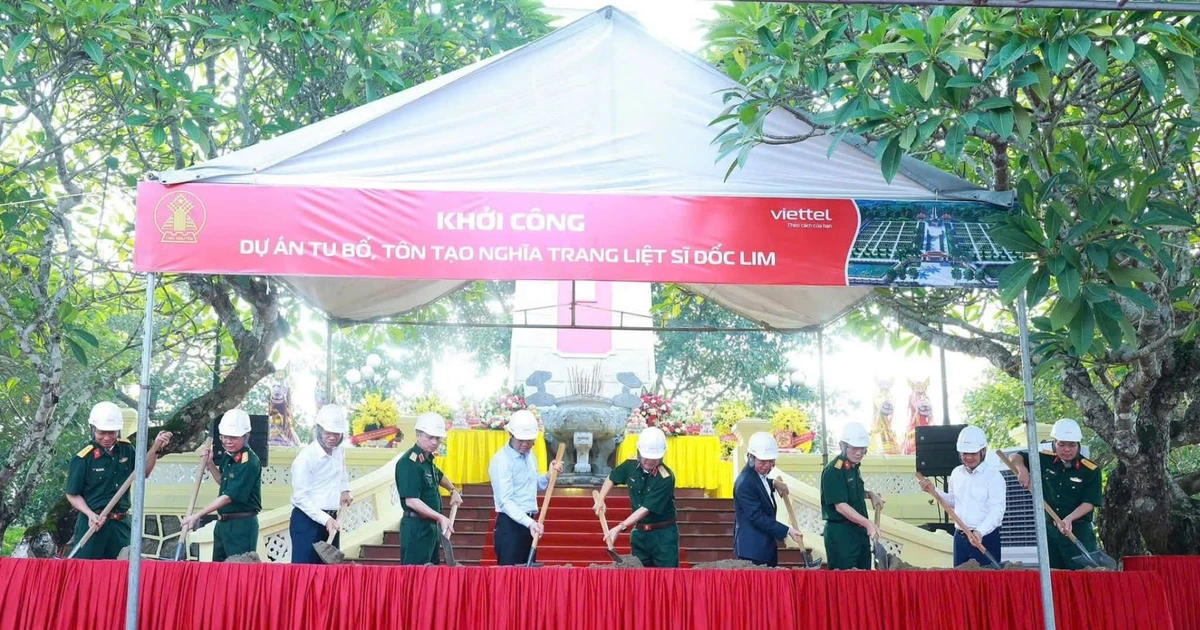
On September 20, Thai Nguyen Province, in coordination with the Military Industry-Telecommunications Group (Viettel), organized the groundbreaking ceremony for the renovation and restoration of the Doc Lim Martyrs' Cemetery in Quyết Thắng Ward. The ceremony was attended by Central Committee members Trịnh Xuân Trường, Secretary of the Thai Nguyen Provincial Party Committee, and Lieutenant General Tào Đức Thắng, member of the Central Military Commission, Chairman and CEO of Viettel, along with leaders from Thai Nguyen province, Military Region 1, and relevant agencies. The Doc Lim Martyrs' Cemetery covers an area of approximately 13,853 square meters and is the resting place for 869 fallen soldiers, with 615 identified and 242 unidentified. Over time, some facilities at the cemetery have deteriorated and require renovation and restoration to ensure the preservation of its landscape and memorial space. According to the preliminary design, the project will involve the synchronized renovation and upgrading of facilities including the gate, flagpole, burial areas, fences, and landscape infrastructure. It also includes raising the ground level to mitigate flooding, expanding the ceremonial sân, constructing two additional memorial stone houses, and refurbishing or replacing grave markers, pathways, green spaces, lighting systems, and a landscape pond. During the ceremony, delegates offered incense to commemorate and express their deep gratitude to the heroes and martyrs, followed by the groundbreaking ritual for the project. The project is sponsored by Viettel, demonstrating the group's profound sentiment and responsibility towards the heroes and martyrs. Upon completion, it is expected to create a more spacious and solemn memorial environment, better meeting the public's needs for visiting and commemorating, while also educating future generations about patriotism and the moral principle of "drinking water, remembering its source."
Original source
Nhan Dan