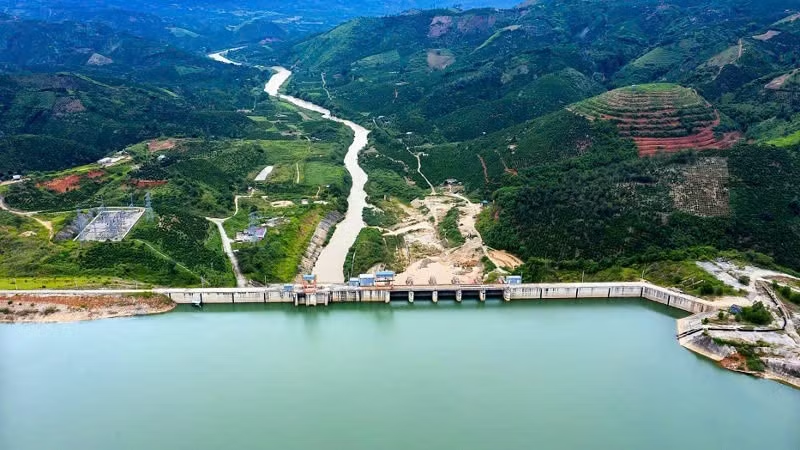
Lam Dong Approves Dong Nai 2 Floating Solar Power Plant Project Worth Nearly VND 5 Trillion
The People's Committee of Lam Dong province has approved the investment policy for the Dong Nai 2 floating solar power plant project, with an investment of nearly VND 5 trillion, to be located on the Dong Nai 2 hydropower reservoir. Trungnam Power JSC will be the investor. Vietnam is accelerating its renewable energy development.
The People's Committee of Lam Dong province has officially approved the investment policy for the Dong Nai 2 floating solar power plant project. This significant undertaking will be situated on the Dong Nai 2 hydropower reservoir, with an estimated investment of close to VND 5 trillion (approximately USD 200 million). The chosen investor for this ambitious project is Trungnam Power JSC, a key subsidiary of the Trungnam Group. This approval aligns with Vietnam's broader national strategy to accelerate the development of renewable energy sources. As the nation experiences robust economic growth, its electricity demand continues to rise, necessitating substantial investments in sustainable power generation. Floating solar power projects, like the one planned for Dong Nai 2, are becoming increasingly attractive for Vietnam as they efficiently utilize existing water bodies, thereby mitigating land acquisition challenges and optimizing resource use. Trungnam Power JSC has established a strong track record in the Vietnamese renewable energy market, having developed and operated multiple solar and wind power facilities. The Dong Nai 2 project is anticipated to further solidify its position as a leading player in the sector. Within Vietnam's political framework, the Communist Party prioritizes economic development, and securing a stable and diversified energy supply is fundamental to achieving this goal. In its foreign relations, while fostering economic cooperation with China, Vietnam also strategically seeks to enhance its energy independence and security through diverse international partnerships and domestic resource development.
多角的分析
このプロジェクトは、ベトナムの再生可能エネルギー導入目標達成に向けた重要な一歩であり、経済成長を支える電力供給の安定化に貢献する。約5,000億ドンという規模は、地域経済への波及効果も期待できる。ベトナムは、エネルギー輸入依存度を低減し、エネルギー安全保障を強化する観点からも、国内の再生可能エネルギー開発を加速させる必要がある。これは、長期的な経済成長の持続可能性を高める上で不可欠である。
チュンナムパワー社は、ベトナム国内で複数の再生可能エネルギープロジェクトを手掛けており、浮体式太陽光発電の分野でも実績を積んでいる。今回のプロジェクトは、同社のポートフォリオを拡大し、ベトナムのエネルギー転換における主要プレーヤーとしての地位を確固たるものにする機会となる。投資家としては、政府の支援策や電力購入契約(PPA)の条件が、プロジェクトの収益性とリスク評価において重要な要素となる。
ラムドン省のドンナイ2貯水池周辺地域では、この大規模プロジェクトによって、新たな雇用機会が生まれる可能性がある。一方で、環境への影響や地域住民の生活への配慮も求められる。特に、水資源の利用や生態系への影響については、詳細な環境アセスメントと透明性のある情報公開が不可欠となる。ベトナム政府は、経済発展と環境保全のバランスを取りながら、持続可能な開発を進めることが社会的な課題となっている。
このプロジェクトは、将来的にはより安定した電力供給に繋がり、経済活動の活性化を通じて市民生活の向上に貢献する可能性がある。しかし、建設期間中の環境負荷や、水資源の利用に関する懸念も市民の間で生じるかもしれない。特に、地元住民への十分な説明と、開発による恩恵の公平な分配が、地域社会の支持を得る上で重要となる。
背景・歴史的文脈
ベトナムは、1986年のドイモイ政策以降、市場経済化を進め、急速な経済成長を遂げてきた。この成長を支えるため、電力需要は年々増加しており、政府はエネルギーインフラの拡充を最重要課題の一つとしている。特に、2010年代以降、太陽光発電や風力発電といった再生可能エネルギーへの投資が奨励され、多くのプロジェクトが実施されてきた。本件のドンナイ2浮体式太陽光発電所プロジェクトは、こうした背景のもと、既存の水力発電インフラを活用し、土地利用の制約を克服しながら電力供給能力を増強しようとする最新の取り組みである。
原文ソース
Nhan Dan