General articles are free for 24 hours after publish.
Australia's Political Shift Rightward: Nationalism, Authoritarianism, and Populism's Grip
The rise of right-wing populism in Australia is explained by the intertwining of nationalism, authoritarianism, and populism with existing societal norms and values. This phenomenon is analyzed not merely as a fringe movement, but as an extreme extension of mainstream ideas.
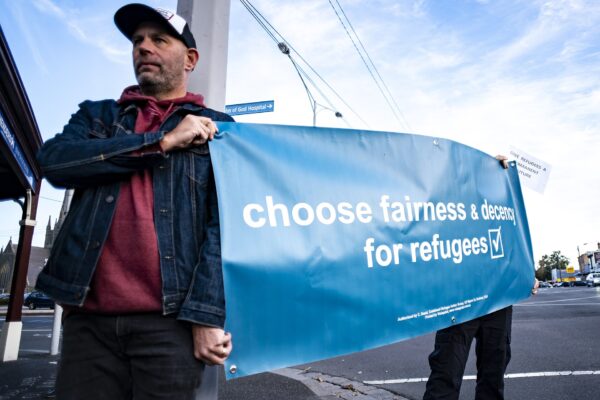
The prevalence of nationalism, authoritarianism, and populism explains the rise of far-right politics in Australia. The reasons for the rise of far-right politics in Australia are often cited as financial stress, housing shortages, and frustration with the government. Yet this doesn’t explain why disillusioned voters are drifting toward the far right instead of the left. To understand this, we need to look at how far-right ideas actually connect to mainstream Australian values – not treat the far right as some separate, foreign, or imported movement. The common assumption is that far-right politics is fundamentally opposed to democratic values, or is a kind of “sickness” in an otherwise healthy system. But Cas Mudde argued the opposite: “The radical right isn’t a rejection of mainstream values, it’s an extreme version of them.” This means that the drift to the right has grown out of ideas already normal and accepted, just pushed further. To see this, it helps to look at the three core ingredients of far-right politics – nationalism, authoritarianism, and populism – and ask how much of each already exist in Australian life. Nationalist language is nothing new in Australian politics. Phrases like the “national interest,” “Australian values,” and warnings about the “nation in danger” are everywhere, and people who disagree with those phrases are often branded “un-Australian.” This has deep roots. The dispossession of and violence against First Nations peoples was foundational to the Australian state, and Irene Watson argued that this violence remains built into Australian law today. One of the very first laws passed by the new Federal Parliament in 1901 was the White Australia Policy, which tied national identity directly to race. We like to think we’ve moved past this. But in the lead-up to the 2016 election, then-Immigration Minister Peter Dutton claimed refugees “won’t be numerate or literate” and would be “taking Australian jobs.” These two claims, that refugees are simultaneously incapable and a threat, are not as contradictory as they sound. Together, they paint outsiders as both lesser and dangerous, while reassuring “hard-working families” that their fear of falling behind is justified, and that someone or some party or grouping needs to protect them from these threats. Cases of authoritarianism, meaning when a government uses state power to override democratic norms, have been seen in Australia. For example, the 2007 military intervention into remote Northern Territory Indigenous communities (codenamed Operation Outreach, led by the Australian Defense Force at Prime Minister John Howard’s direction) led to compulsory income management; enforced bans on alcohol, pornography, and gambling in dozens of communities; and suspended the permit system for access to Aboriginal lands and acquired government-controlled leases over townships. Another clear case was the Robodebt fiasco introduced by Coalition governments between 2015-19. It led to investigations into nearly half a million welfare recipients claiming they owed money they didn’t actually owe. The fallout was severe, including at least five suicides linked to the debt-collection process. When Labor formed government in 2022 it called a Royal Commission into Robodebt, which the new Liberal leader, Peter Dutton, dismissed as a “witch hunt.” Dutton said instead of the Royal Commission, the public focus should instead be on families “struggling to pay their power bills.” By framing the issue as one between welfare recipients and struggling families, that reinforces a far-right idea: that one group’s wellbeing must come at another group’s expense. And that taps into another old colonial pattern where “our” security has always been linked to dispossessing someone else. The claim of populists is that they are the authentic voice of ordinary people and against the views of out-of-touch elites. That is not necessarily unique to the far right, as every party in Australia uses this pitch to some degree. It works because it resonates with people who feel left behind by leaders they see as belonging to a different social class. What’s different about today’s far-right populism is how directly it merges with nationalism. There is an emerging message from the far right that the elites are rigging the system to favor “others.” By that they mean the elites favor Indigenous Australians, immigrants, and people of color over “hard-working Australian families.” The implication is unmistakable: real Australians are white, and everyone else is undeservedly benefiting from the system. Far-right movements don’t emerge from nowhere; they derive from existing ideas and then update and re-fashion these concepts into something new and appropriate to current circumstances. That’s exactly what’s happening now. The One Nation far right is drawing on very Australian nationalist and authoritarian threads already woven into society and repackaging them to address and explain today’s anxieties. If we treat the far right as a fringe problem involving only a small number of extremists, we miss how deeply these ideas are already embedded in the mainstream – and how much work it will take to address that. Originally published under Creative Commons by 360info™. Subscribe today and join thousands of diplomats, analysts, policy professionals and business readers who rely on The Diplomat for expert Asia-Pacific coverage. Get unlimited access to in-depth analysis you won't find anywhere else, from South China Sea tensions to ASEAN diplomacy to India-Pakistan relations. More than 5,000 articles a year. Already have an account? Log in. Get briefed on the story of the week, and developing stories to watch across the Asia-Pacific.
Original source
The Diplomat Indonesia