General articles are free for 24 hours after publish.
Cambodia Shows Hopeful Signs in Vulture Conservation: Population Stabilization and 10-Year Plan Underway
Cambodia's efforts to conserve critically endangered vulture species are showing positive signs, with populations stabilizing and even increasing in some cases. After over two decades of dedicated conservation work by the government and NGOs, a 22% increase in the estimated minimum population was recorded. A 10-year conservation plan is also in development, highlighting Cambodia's crucial role in Asian vulture survival.
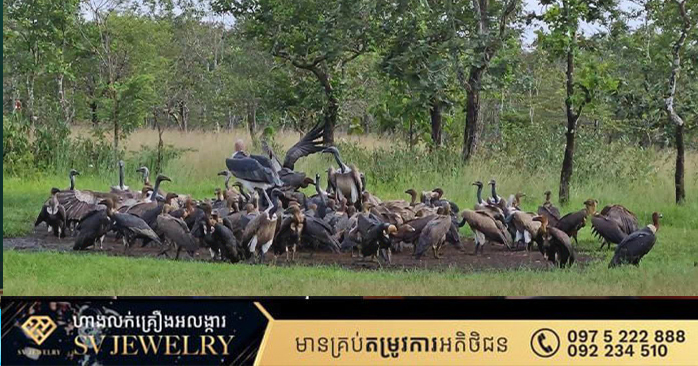
Positive signs are emerging from Cambodia's conservation efforts for three critically endangered vulture species, as populations show indications of stabilization. Years of dedicated work by the government and conservation organizations are beginning to yield results, with a notable stabilization and even an increase in numbers for some species. While vulture populations have drastically declined across Southeast Asia, with many areas losing their presence entirely, Cambodia remains one of the crucial last strongholds for these birds. Specifically, three species – the White-rumped Vulture, Slender-billed Vulture, and Red-headed Vulture, all listed as Critically Endangered – inhabit the remote dry forests of northern and eastern Cambodia. The remaining populations are of immense significance for national, regional, and global conservation efforts, making their continued protection a high priority for Cambodia and its conservation partners. For over two decades, a collaborative effort between Cambodian government institutions and various conservation organizations has been underway, focusing on monitoring, research, and conservation actions for vultures. In 2017, the Cambodia Vulture Working Group (CVWG) was formally established, comprising representatives from relevant government ministries and institutions, national and international conservation organizations, research institutions, and ecotourism partners. Members include the General Department of Nature Conservation and Protected Areas of the Ministry of Environment, the General Directorate of Forestry, the General Directorate of Animal Health and Production, the Angkor Centre for Conservation of Biodiversity, WWF-Cambodia, BirdLife International, Conservation International, and the Cambodian Bird Guide Association. The CVWG serves as a platform to coordinate surveys, monitoring, research, and conservation activities that support Cambodia's priority work in vulture conservation. Over the past two decades, vultures in Cambodia have faced persistent threats, including declining food sources, habitat loss, and more recently, accidental poisoning incidents. Analysis of data collected from 2014 to 2024 has provided several positive indicators, suggesting that long-term conservation efforts are helping to stabilize the remaining vulture population in Cambodia. The White-rumped Vulture, the most numerous of the three species, appears to be responding positively to increased supplementary feeding at the Siem Pang Wildlife Sanctuary and the Chhep-Preah Roka Wildlife Sanctuary, with its numbers showing signs of stability. Although the populations of the other two species remain lower, the Slender-billed Vulture appears to be stable, while the Red-headed Vulture is regularly recorded in five wildlife sanctuaries: Lumphat, Siem Pang, Chhep-Preah Roka, Sambor, and Sre Pok. These survey results are encouraging, and the analysis of vulture population data was further confirmed by the results of a vulture census conducted after the publication of a research paper. In 2025, the annual report from the CVWG presented an official minimum population estimate for the year of 163 vultures across the three species. This figure represents a 22% increase compared to the 2024 findings and is the highest annual count recorded since 2016. Conservationists in Cambodia are highly optimistic about these results. Alistair Mould, Vice Chair of the CVWG, stated, "These results give us great optimism and show that focused and sustained conservation action can bring about real change for vultures in Cambodia. However, these species remain critically endangered, and maintaining this progress will require continued collaboration between the government, conservation partners, and local communities to address the threats they still face." He added, "To ensure the long-term survival of vultures in Cambodia, the CVWG is developing a 10-year conservation action plan." His Excellency Khai Adity, Undersecretary of State and Spokesperson for the Ministry of Environment, commented, "As the government institution responsible for Cambodia's protected natural areas, the Ministry of Environment is greatly encouraged by this 22% increase in vulture populations. It demonstrates the strong cooperation between government institutions and NGO partners in protecting vulture habitats and implementing conservation activities in line with government policy." His Excellency further added, "Cambodia is a vital country in supporting vulture survival in Asia. Recognizing this crucial role, Cambodia will host the Asian Regional Steering Committee Meeting on Vulture Conservation in October this year." Source: CEN Cambodia
Original source
CEN Cambodia