Vietnam Renews Commitment to Foreign-Invested Economic Development, Strengthening FDI-Domestic Firm Linkages
Vietnam's Communist Party Central Committee has adopted a key resolution on economic development leveraging foreign direct investment (FDI). A national conference, attended by the General Secretary and President, emphasized strengthening linkages between FDI and domestic enterprises, and qualitative growth through industrial restructuring. This signals Vietnam's intent to enhance its competitiveness in the global economy and pursue sustainable growth.
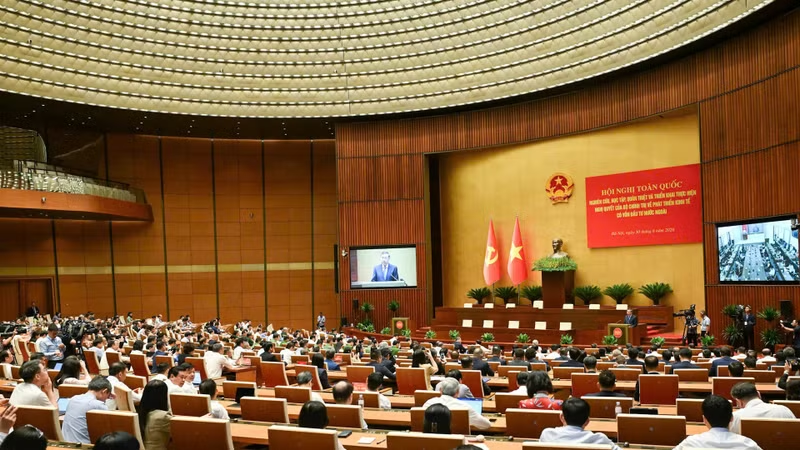
On June 30, the Communist Party of Vietnam's Central Committee convened a nationwide conference to study, learn about, and implement Resolution No. 10-NQ/TW, adopted on June 8, concerning the development of the economy with foreign-invested capital. General Secretary and President Tô Lâm attended and delivered a directive speech. This resolution is considered extremely important as it concretizes Vietnam's strategy for leveraging foreign direct investment (FDI), which is crucial for the future of the Vietnamese economy. The core of the resolution lies not merely in attracting foreign capital, but in linking it to the strengthening of Vietnam's domestic industrial base and technological innovation. Deepening cooperation between FDI enterprises and domestic companies, and expanding the role of domestic firms in the supply chain, were highlighted as urgent tasks. Furthermore, the policy aims to promote a shift towards higher value-added industries through industrial restructuring, thereby improving the quality of FDI. This aligns with Vietnam's long-term economic strategy to transition from traditional labor-intensive industries to technology-intensive and knowledge-intensive sectors. Under its one-party system, Vietnam has consistently prioritized economic growth and maintained an active stance in attracting foreign capital. In recent years, amid rising geopolitical tensions with China and global supply chain realignments, investment in Vietnam has accelerated. This resolution can be seen as a strong statement of the Vietnamese government's intent to maximize the benefits of FDI in a more strategic and sustainable manner, taking into account the current international landscape.
多角的分析
今回の決議は、ベトナムが今後、単なる製造拠点としてのFDI誘致から脱却し、より高度な技術や付加価値を持つ分野への投資を重視する方針を明確にしたものと解釈できる。過去、ベトナムは低賃金を武器に多くの製造業を誘致してきたが、賃金上昇や他国との競争激化により、その優位性は低下している。産業構造の再構築と国内企業との連携強化は、サプライチェーンの高度化と、ベトナム経済全体の生産性向上に不可欠である。特に、デジタル経済やグリーン経済といった新興分野へのFDI誘導が成功すれば、ベトナム経済の質的転換を加速させる可能性がある。
投資家にとって、この決議はベトナムがFDIの質を重視する姿勢を強めていることを示唆する。今後、技術力やイノベーション能力を持つ企業、あるいは環境・社会・ガバナンス(ESG)基準に適合する投資がより優遇される可能性がある。国内企業との連携強化は、現地のパートナーシップ構築が投資成功の鍵となることを意味する。一方で、産業構造の転換は、既存の製造業分野では競争環境の変化や、新たな技術への適応が求められることを意味するため、慎重な市場分析が必要となる。
FDIと国内企業との連携強化は、国内中小企業の技術力向上や、より質の高い雇用創出につながる可能性がある。これにより、所得格差の是正や地方経済の活性化が期待される。また、産業構造の転換は、教育システムや労働者のスキルアップの必要性を高める。特に、デジタル化や高度技術分野へのシフトは、若年層にとって新たなキャリアパスを開く可能性がある一方、既存産業からの労働者の再教育や、新たなスキル習得への支援が、社会的な摩擦を避ける上で重要となる。ハノイやホーチミン市のような都市部だけでなく、地方における産業振興策との連携が問われる。
今回の決議は、ベトナム市民の生活に直接的な影響を与える可能性がある。FDIと国内企業との連携強化が進めば、国内企業の技術力が向上し、より高品質な製品やサービスが手頃な価格で提供されるようになるかもしれない。また、新たな産業分野への投資は、若者にとってより良い雇用機会とキャリアパスを創出する可能性がある。しかし、産業構造の転換は、一部の労働者にとってはスキルの陳腐化や職を失うリスクも伴うため、政府による職業訓練や再就職支援策が重要となる。地方の住民にとっては、新たな産業誘致による経済活性化が期待される一方、都市部への人口流出が加速する可能性も考慮する必要がある。
背景・歴史的文脈
ベトナムは1986年のドイモイ(刷新)政策以降、市場経済を導入し、外国資本の導入を積極的に進めてきた。特に、中国との経済的結びつきが強かったが、近年、米中貿易摩擦や地政学的なリスクの高まりを受け、多くの外国企業がサプライチェーンの多様化を模索する中で、ベトナムは新たな投資先として注目を集めている。しかし、その一方で、国内産業の競争力不足や、FDIと国内産業との連携の弱さが課題として指摘されてきた。今回の決議は、こうした長年の課題に対し、より踏み込んだ対策を打ち出すものと言える。
原文ソース
Nhan Dan