Recycled Peso Bills Transformed into Armchairs for Davao City School
Business
2026年7月26日
4
Rappler Business

General articles are free for 24 hours after publish.

Recycled Peso Bills Transformed into Armchairs for Davao City School

Share
AI Summary

The Bangko Sentral ng Pilipinas (BSP) Employees Association has donated armchairs made from recycled polymer banknotes to an elementary school in Davao City, demonstrating effective end-of-life management for currency and the durability of polymer bills.

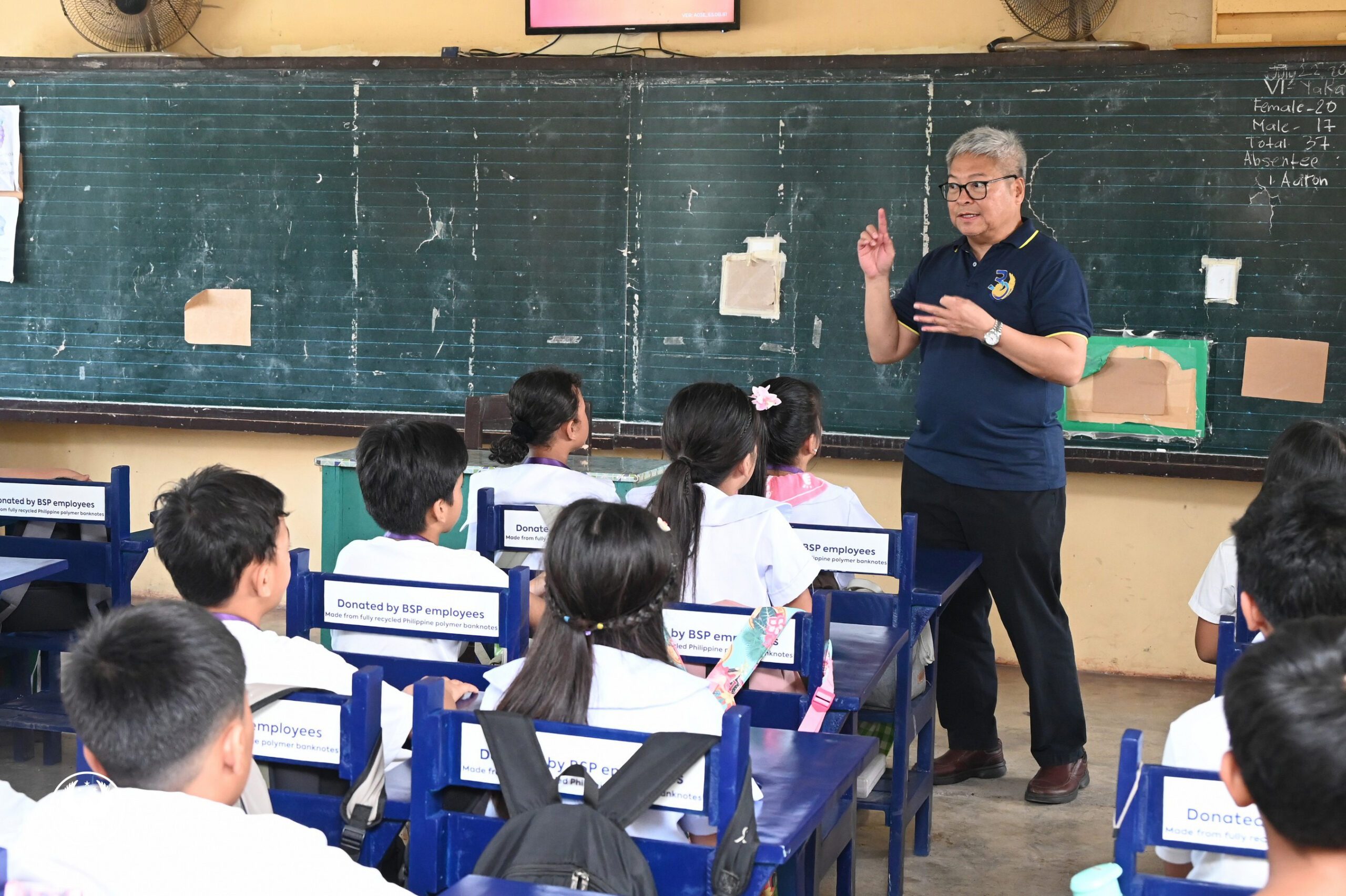
MANILA, Philippines – Nearly 100 armchairs made entirely from recycled polymer banknotes have been donated to Doña Pilar L. Marfori Elementary School in Davao City, giving the notes a second life after they were deemed unfit for circulation. The chairs were turned over on Wednesday, July 22, through the Banknote-to-Armchair Project of the BSP Employees Association Inc. (BSPEAI). BSP Deputy Governor Mamerto Tangonan, BSP Mindanao Regional Office officer-in-charge Jason Capocao, BSPEAI president Brent Lucero, and Currency Policy and Integrity Department director Eloisa Glindro led the ceremonial turnover to the school, represented by principal Eloisa Questo. The project transforms damaged or worn-out polymer notes, along with manufacturing byproducts, into durable classroom furniture. The employees’ association partnered with private recycling company Envirotech Waste Recycling Inc. to produce the armchairs. “Polymer banknotes follow a planned lifecycle from circulation to recycling. End-of-life management is built into their design,” Tangonan said. Lucero said the Davao City elementary school was selected after the group assessed the needs and priorities of communities on the ground. The project also highlights one of the BSP’s arguments for shifting from paper to polymer notes: they are designed to last longer and require less frequent replacement. (READ: Senators, farmers question design of new P1,000 polymer bills) From 2022 to May 2026, the BSP said just 0.02% of the P1,000 polymer banknotes issued to banks were returned to the BSP because they were already worn out or damaged. By comparison, 54.75% of the P1,000 paper banknotes issued over the same period were eventually returned in worn-out or damaged condition. The BSP said it had also yet to receive any unfit lower-denomination polymer notes since the new P50, P100, and P500 polymer bills were first released in December 2024. – Rappler.com

0

Original source

Rappler Business

原文を読む