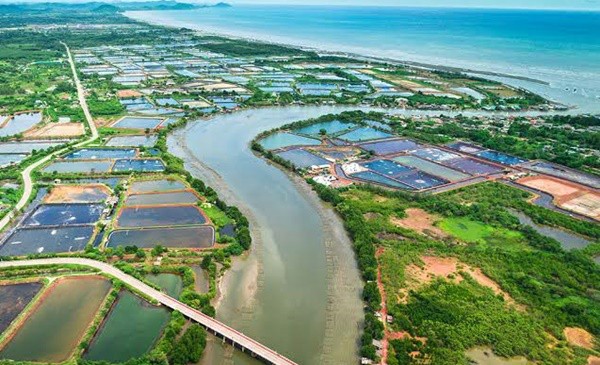
Chanthaburi Reservoir Project Sparks Environmental Debate, Impacts EEC
Environment
2026年8月7日
4
MGR Online (Regional)

General articles are free for 24 hours after publish.

Chanthaburi Reservoir Project Sparks Environmental Debate, Impacts EEC

Share
AI Summary

A 7.2 billion baht reservoir project in Thailand's Chanthaburi province, aimed at alleviating drought and supporting the Eastern Economic Corridor (EEC), is facing significant environmental controversy.

A "Khlong Wang Thong Reservoir" construction project, with a total budget of 7.2 billion baht, is underway in Chanthaburi province, eastern Thailand. The project aims to alleviate drought in the province and support the Eastern Economic Corridor (EEC), a key government initiative. However, this large-scale development has drawn significant concerns from local communities and environmental groups. Debates are ongoing regarding the project's impact, particularly concerning deforestation, effects on the ecosystem, and the livelihoods of nearby residents. Chanthaburi province is renowned for its fruit cultivation, making a stable supply of agricultural water essential. Upon completion, the reservoir is expected to significantly enhance irrigation capacity, boosting agricultural productivity and promoting efficient water resource utilization. It is also anticipated to contribute to securing water resources needed for the industrial development of the EEC. Conversely, there are criticisms that the Environmental Impact Assessment (EIA) may not be sufficiently robust and that alternative solutions have not been adequately explored. Concerns have been raised about the loss of biodiversity due to deforestation, the risk of water pollution, and the impact of associated infrastructure development on the living environment of local residents, necessitating further detailed assessments. The Thai government has stated its commitment to balancing economic development with environmental conservation. However, the Khlong Wang Thong Reservoir project highlights the challenges in achieving this equilibrium. Further coordination among stakeholders and the results of more detailed environmental impact assessments are keenly awaited. Source: MGR Online (Regional)

0

Original source

MGR Online (Regional)

原文を読む