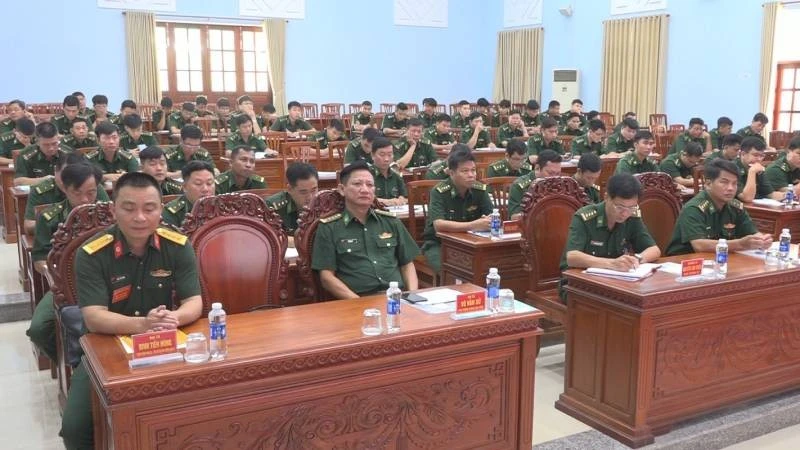
Vietnam Border Guards Train for Chemical and Radioactive Threats
Vinh Long Province Border Guards in Vietnam conducted joint training to enhance their response capabilities to chemical and radioactive agents, aiming to strengthen border management and security.
The Border Guard force of Vinh Long Province, located in southern Vietnam, commenced a training session on July 10 aimed at enhancing its response capabilities to chemical and radioactive agents. This training, conducted in coordination with the Chemical Corps, targets officers and soldiers of the provincial Border Guard force, focusing on improving their skills in reconnaissance, detection, and initial response to potential threats from chemical, biological, radioactive, and nuclear (CBRN) agents. During the one-day training, participants will study various topics, including an overview of CBRN agents, Vietnamese and international regulations on the control of goods containing these agents, the risks of illegal cross-border transportation of toxic chemicals, radioactive sources, and nuclear materials. Emphasis will also be placed on reconnaissance skills, initial response, disease control in border areas, and methods for analyzing and detecting biological agents in the field. Colonel Nguyen Anh Tan, Deputy Chief of the Political Department of the Chemical Corps and Deputy Head of the training organizing committee, stressed that in the current context of increasing CBRN risks, equipping the Border Guard force with the knowledge and skills to identify these agents, use rapid detection equipment, approach the scene, provide initial treatment, and coordinate with relevant agencies is an urgent requirement. The training is expected to bolster the Border Guard's capacity to perform its duties, ensure the safety of its personnel and the public, and contribute to maintaining border sovereignty and security in the evolving situation. Source: Nhan Dan
多角的分析
この訓練は直接的な経済活動ではないが、国境管理の強化は、違法な化学物質や放射性物質の密輸防止に繋がり、ベトナム経済の安定に間接的に寄与する。特に、ベトナムは製造業や輸出に依存しており、サプライチェーンの安全確保は重要である。国際的な化学物質規制への対応能力向上は、貿易相手国からの信頼を高める要因ともなり得る。
投資家にとって、この訓練はベトナムの国内安全保障への投資と見ることができる。化学物質や放射性物質の漏洩・事故は、インフラへの損害や環境汚染を引き起こし、経済活動に悪影響を与える可能性がある。国境警備隊の能力向上は、こうしたリスクを低減させ、投資環境の安定化に寄与すると考えられる。
ヴィンロン省の国境地域に住む住民にとって、この訓練は直接的な恩恵をもたらす可能性がある。化学物質や放射性物質による事故は、住民の健康と生活環境に深刻な脅威を与える。国境警備隊の対応能力向上は、万が一の事態発生時の被害を最小限に抑え、地域社会の安全を守ることに繋がる。また、訓練を通じて、地域住民への啓発活動も期待される。
国境警備隊の将兵は、有害物質への対応という、より専門的で危険を伴う任務を遂行するためのスキルを習得する。これにより、国境地域における治安維持と住民の安全確保という、国民生活に不可欠な役割をより効果的に果たせるようになる。訓練は、将兵自身の安全確保にも繋がる。
背景・歴史的文脈
ベトナムは、長い海岸線と複雑な陸上国境を有し、国境管理は国家安全保障の最重要課題の一つである。特に、近年、化学物質や放射性物質の違法取引、テロ利用のリスクが増大しており、これらに対する対応能力の強化は喫緊の課題となっている。ベトナム共産党は、国家の主権と安全保障を維持するため、国防・公安部門の近代化と能力向上を継続的に推進しており、今回の訓練もその一環として位置づけられる。一党体制下においては、政府の決定に基づき、迅速かつ集中的なリソース配分が可能であり、このような専門的な訓練も計画的に実施される。
原文ソース
Nhan Dan