Philippines Backs Pax Silica Initiative Amidst Safeguard Calls
Business
2026年8月2日
5
Philstar Business

General articles are free for 24 hours after publish.

Philippines Backs Pax Silica Initiative Amidst Safeguard Calls

Share
AI Summary

The Management Association of the Philippines (MAP) supports the US-led Pax Silica initiative aimed at strengthening AI and semiconductor supply chains, but urges clear safeguards for national interest, the environment, and local jobs. While the initiative promises economic development, concerns remain.

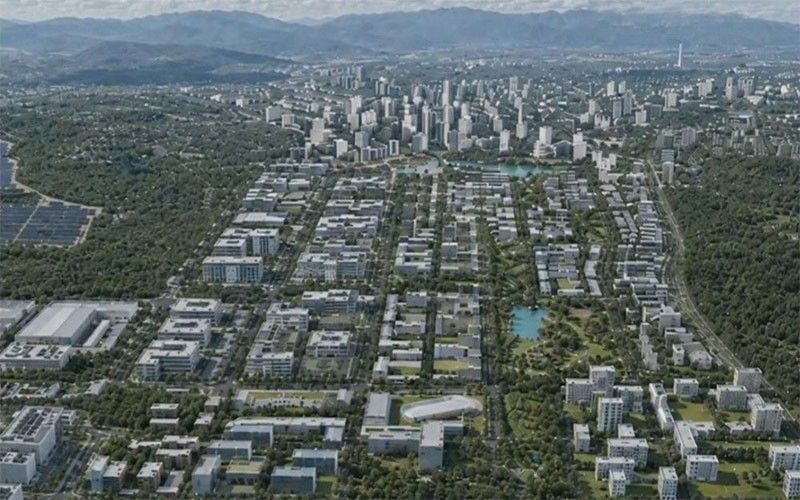
The Management Association of the Philippines (MAP), a prominent business group, has expressed support for the Pax Silica initiative, which is anticipated to unlock economic opportunities for the country. However, MAP stressed the necessity for clear safeguards to ensure the initiative protects national interests, the environment, and fosters the creation of quality local jobs. In a statement, MAP described the Pax Silica initiative as "a potentially transformative opportunity to accelerate industrial development, create quality jobs, develop Filipino talent, and strengthen the country’s position in the global economy." Nevertheless, the group emphasized that the initiative must be accompanied by clear safeguards that guarantee technology transfer, environmental sustainability, inclusive growth, capability building for Filipinos, and the protection of national interests. Concerns regarding environmental sustainability, resource utilization, community impact, economic sovereignty, and the Philippines’ long-term strategic interests have been raised by various sectors concerning the initiative. MAP stated, "MAP therefore supports a Proceed, but Protected approach." The Philippines joined the US-led Pax Silica initiative in April, which aims to build secure and resilient artificial intelligence (AI) and semiconductor supply chains. Under this initiative, the Philippines and the US are developing an AI hub in New Clark City. According to MAP, the Pax Silica initiative offers an opportunity to support the country's strategic transition towards higher value economic activities, moving away from labor exports, consumption-led growth, and minimally processed resources. While the initiative holds the potential to attract large-scale investments, enhance semiconductor and AI-related capabilities, bolster its position in global supply chains, and create jobs, MAP noted that these outcomes need to be negotiated, contractually protected, and monitored. To ensure these outcomes are achieved, MAP highlighted the need for safeguards. Specifically, MAP asserted that the Philippines should ensure the initiative contributes to domestic industrial capabilities and leads to value addition in mineral processing, component manufacturing, technology development, advanced manufacturing, and research activities. Furthermore, technology transfer and capability building must be measurable. The group also mentioned the need to prioritize Filipino employment and their gradual integration into technical, professional, supervisory, and leadership roles. Considering concerns about the proposed hub's water usage, power demand, emissions, biodiversity, and resource utilization, MAP stated that strong environmental stewardship is imperative. Moreover, it emphasized that community protection and inclusive growth must be guaranteed by ensuring that the benefits of Pax Silica extend beyond investors and large corporations. The need to preserve national sovereignty by ensuring all activities within Pax Silica remain fully subject to Philippine laws, regulations, taxation rules, labor standards, environmental requirements, and judicial processes was also underscored. Meanwhile, Information Secretary Henry Aguda informed reporters that the Pax Silica project is projected to generate between 180,000 and as many as 500,000 jobs in the digital sector. Aguda stated that Pax Silica would enhance the country's AI capabilities, potentially persuading tech giants like Amazon, Google, and Meta to establish operations in the Philippines. These investments, in turn, would stimulate demand for digital talent, which the Philippines could supply through its pool of AI-ready workers, Aguda added. This could also lead to some workers transitioning into higher-value employment, such as in machine learning. Despite facing opposition from agricultural, environmental, and indigenous groups, Aguda expressed optimism about what Pax Silica could bring to the Philippines. He further noted that data centers within Pax Silica could require between 300 and 400 megawatts (MW) of power, a capacity sufficient to electrify up to 120,000 homes. Source: Philstar Business

0

Original source

Philstar Business

原文を読む