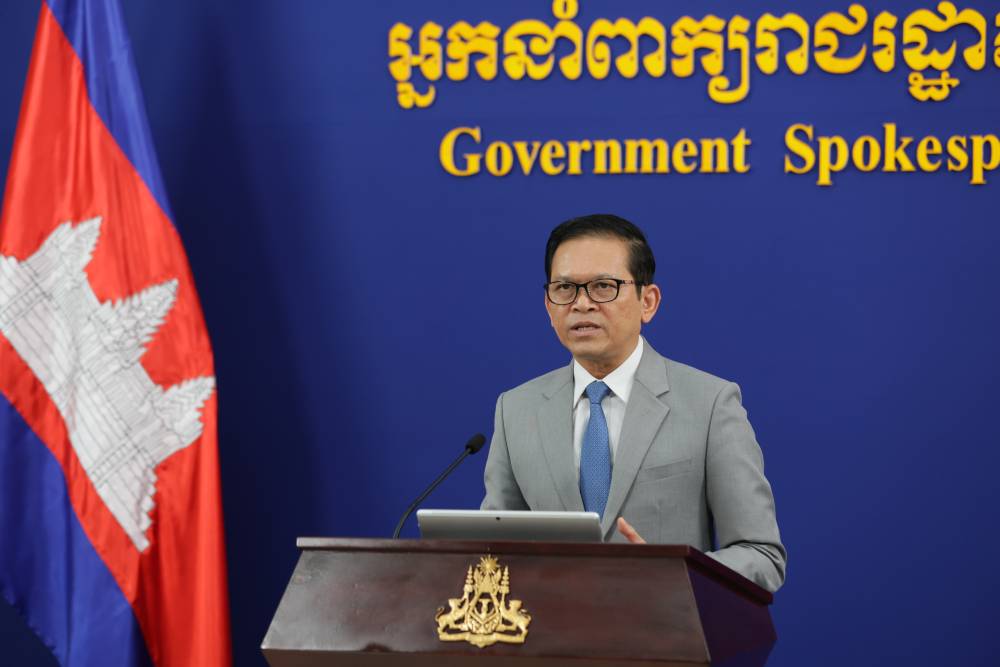
Cambodia Reiterates Stance on Resolving Land and Maritime Border Issues with Thailand
Diplomacy
2026年7月4日
6
AKP Khmer
Relations
🇰🇭Cambodia🇹🇭Thailand

Cambodia Reiterates Stance on Resolving Land and Maritime Border Issues with Thailand

AI サマリー

Cambodia's government spokesperson reiterated the government's position on resolving land and maritime border issues with Thailand. The country will pursue "compulsory conciliation" under UNCLOS for maritime borders and prioritize the joint commission's surveying and demarcation work based on existing agreements and international law for land borders.

Phnom Penh, July 4, 2026 – Pen Bona, spokesperson for the Royal Government of Cambodia, has reiterated the government's reasons and stance on resolving land and maritime border issues with Thailand. Regarding maritime borders, the Cambodian government has decided to utilize the "Compulsory Conciliation" mechanism under the United Nations Convention on the Law of the Sea (UNCLOS). This decision stems from Thailand's unilateral abrogation of a bilateral mechanism that had been maintained for 25 years, despite Cambodia's expression of regret and request for reconsideration. After careful consideration, the Cambodian side concluded that there is no better option than compulsory conciliation, as this mechanism is designed to assist state parties in resolving disputes peacefully and in accordance with international law, aligning perfectly with Cambodia's peaceful and law-based stance. Similarly, concerning land border resolution, Cambodia, as a peace-loving nation, strictly and sincerely upholds the ceasefire and the spirit of the joint declaration dated December 27, 2025. Particularly, point three of the declaration, where both parties agreed to task the Joint Border Commission (JBC) with the urgent demarcation and surveying of the countries' borders in accordance with existing agreements and international law. Point three of the joint declaration states that all agreements under this declaration shall not affect the demarcation of the international border between the two countries. Both parties agreed to assign the JBC the role of expediting the surveying and demarcation of the border as quickly as possible, in line with existing bilateral agreements, to achieve lasting peace along the border. They also agreed to utilize the existing mechanisms of the JBC to ensure the safety and security of the joint surveying teams on the ground, including protection from landmines. Furthermore, both parties agreed that the JBC would give the highest priority to the surveying and demarcation work in affected areas with civilian populations. In line with the spirit of this agreement, and based on respect for international law and international boundaries, as well as the desire for a peaceful and lasting solution to maintain peace along the border between the two countries, Cambodia has consistently adopted a peaceful approach through diplomatic negotiations in accordance with international law. Concurrently, Cambodia fully supports the role and neutral mandate of the ASEAN Observers Team (AOT) and other relevant parties to observe and verify the implementation of the ceasefire and all points of the joint declaration, as well as other agreements, effectively. In this regard, Cambodia firmly maintains its stance on defending the Cambodia-Thailand international border, as established by the Franco-Siamese Boundary Commission. This defense is based on the principles of international law, the principle of immutability of boundaries (Uti Possidetis Juris), respect for the Franco-Siamese Conventions and Treaties, maps, and boundary demarcation records of the Franco-Siamese Boundary Commission, as well as various agreements and documents previously agreed upon by both parties. Cambodia unequivocally rejects any alteration of borderlines resulting from the use of force. The Cambodian government protests the illegal actions of the Thai military in locations within Cambodian sovereign territory, which they have illegally occupied since December 27, 2025, and consistently demands that the Thai side respect and implement the joint declaration and existing agreements between the two countries.

多角的分析

経済的影響

カンボジア経済にとって、国境問題の長期化は物流の停滞や投資リスクの増大を招く可能性がある。特に陸上国境における測量・画定作業の遅延は、経済回廊や貿易ルートの整備に影響を与えかねない。一方、海洋境界線における強制調停は、紛争解決に向けた国際法遵守の姿勢を示すものであり、長期的な資源開発や漁業権の安定化に繋がる可能性がある。ただし、調停プロセス自体に時間を要することも予想される。

投資家心理

投資家にとって、国境問題は依然として不確実性要因となる。特に陸上国境の安定化は、サプライチェーンの円滑化や現地での事業展開の予測可能性を高める上で重要である。海洋境界線での国際法に基づく解決への動きは、長期的な視点では資源開発や海上交通の安全確保に寄与するが、短期的には調停プロセスやその結果に対する注視が必要となる。タイとの関係改善は、地域全体の投資環境にプラスに働く可能性がある。

社会的影響

国境問題の解決は、国境付近に居住する住民の生活安定に直結する。陸上国境の確定は、土地所有権や移動の自由に関する懸念を解消し、地域社会の発展を促進する可能性がある。また、海洋境界線の明確化は、漁業資源の持続可能な利用や、漁師たちの生活基盤の安定に貢献することが期待される。強制調停という国際法に基づく手続きは、国民に対し、政府が平和的かつ公正な解決を目指しているという安心感を与えるだろう。

市民の声

タイとの国境問題は、カンボジア国民、特に国境付近に住む人々の生活に直接的な影響を与えうる。陸上国境の確定作業は、土地の利用や移動の自由に関する長年の懸念を解消する可能性がある。また、海洋境界線の問題は、漁業資源の利用や沿岸地域の経済活動に関わるため、その解決は多くの国民の生計に影響を及ぼす。政府が国際法に基づき平和的な解決を目指す姿勢は、国民に安定への期待感を与える一方で、調停プロセスやタイとの交渉の進展に注目が集まる。

背景・歴史的文脈

カンボジアとタイの国境問題は、植民地時代の遺産や、その後の両国の政治的状況によって複雑化してきた。特に、フランス植民地時代に引かれた境界線は、一部で曖昧さが残り、陸上・海洋双方で係争地域が存在する。2005年の共同声明以降、共同国境画定委員会(JBC)による作業が進められているが、進展は遅々としており、時折緊張が高まることがある。海洋境界線については、過去には二国間交渉が主であったが、タイ側の unilateral なアプローチにより、カンボジアはUNCLOSに基づく強制調停という国際法上の手続きに移行する姿勢を見せている。

原文ソース

AKP Khmer

原文を読む