General articles are free for 24 hours after publish.
Russia Suggests 'Corporate PhD' Model for Vietnam
Russia's Minister of Science and Higher Education proposed that Vietnam adopt a 'corporate PhD' model, where doctoral candidates collaborate with businesses to solve practical problems. Both nations aim to expand human resource training and joint research in science and technology.
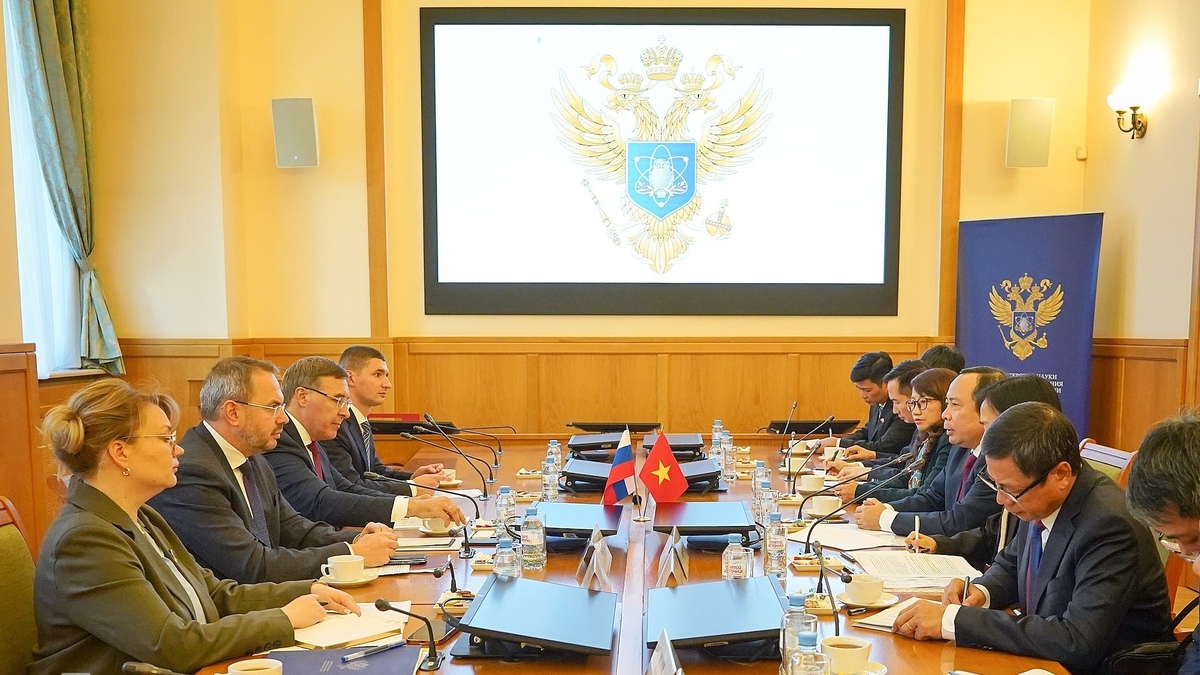
Russian Minister of Science and Higher Education Valery Falkov has proposed that Vietnam consider adopting a 'corporate PhD' model, where doctoral candidates conduct research directly with businesses to solve practical problems. This model is currently being piloted in Russia. During a working session with Vietnamese Minister of Science and Technology Vu Hai Quan and a delegation from Vietnam's Ministry of Science and Technology, along with leaders from several Vietnamese universities and academies on September 8, Minister Falkov suggested that Vietnam could explore this model. He explained that it connects theoretical knowledge with the resolution of real-world business challenges. Falkov also expressed support for Vietnam sending personnel to Russia for doctoral training, offering approximately 1,000 scholarships annually for this purpose. He emphasized the importance of linking PhD programs directly with bilateral research projects, allowing young Vietnamese scientists to join research groups working on joint projects during their studies in Russia and continue this work upon their return. The proposals come as both countries seek to expand scientific cooperation beyond joint research programs to human resource development for strategic technology fields. According to the Russian minister, a key mechanism to boost cooperation is the selection process for joint research projects. He noted that while only 10 applications were received in 2023, the number has tripled in the most recent period, with four projects selected for implementation between 2027 and 2029. "It is important to ensure that projects are implemented with high quality and yield tangible results," Falkov stressed. Vietnam has been invited as the first guest of honor at Russia's upcoming sixth Congress of Young Scientists in December. "This is the first time in the history of the forum that a country has been chosen as the guest of honor, and that country is Vietnam," he stated. Russia aims to widely showcase Vietnam's scientific achievements and facilitate networking and cooperation among young researchers from both nations. The country also hopes for the participation of young scientists involved in joint Vietnamese-Russian projects and those ready to propose new initiatives. Vietnam is expected to send around 50 delegates. Minister Vu Hai Quan indicated that his ministry would work with universities and research institutes to prepare the delegation, prioritizing young scientists currently engaged in joint research projects. He also expressed Vietnam's desire to increase the number of jointly funded scientific tasks and topics, and proposed coordinating the review of selection processes for more effective and continuous project implementation. Discussions also covered expanding cooperation into strategic technologies, with Minister Vu Hai Quan highlighting quantum technology. He proposed that Russia assist Vietnam in developing a quantum technology development strategy, which could then serve as a framework for specific cooperative projects, including human resource training. "Vietnam always considers Russia, especially in science and technology and education, as its most trusted partner. This is the most important foundation for long-term cooperation," stated Minister Vu Hai Quan. The meeting between the two ministers took place within the framework of the state visit to Russia by General Secretary and President To Lam and his spouse from September 7-12. Source: VnExpress
Original source
VnExpress