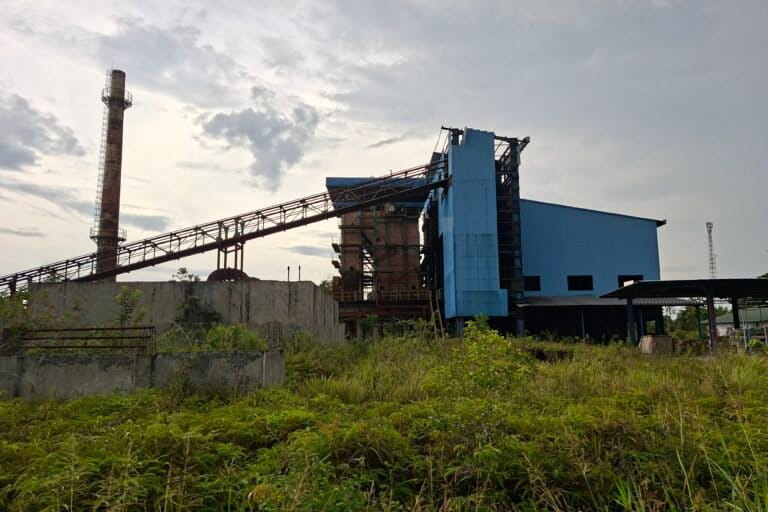
Riau's Stalled Coal Power Project Proposed for Solar and Mini-Hydro Conversion
Environmental groups Walhi Riau and Yayasan Indonesia Cerah have proposed converting a stalled coal-fired power plant (PLTU) project in Siak Regency, Riau, which has been unfinished for nearly two decades, into a source of clean energy through solar and mini-hydro power generation. The proposal aims to utilize regional assets effectively and contribute to energy transition policies.
Wahana Lingkungan Hidup Indonesia (Walhi) Riau and Yayasan Indonesia Cerah have proposed converting the stalled Koto Ringin coal-fired power plant (PLTU) project in Siak Regency, Riau, which has been unfinished for nearly two decades, into a source of clean and renewable energy through solar and mini-hydro power generation. The two organizations conveyed this proposal to several Siak officials in late May. "We want to help the Siak Regency government find options or alternatives so that this asset does not remain stagnant by utilizing existing opportunities. Local governments must play a role and contribute to fair energy transition policies," said Ahlul Fadli, Manager of Advocacy and Campaigns at Walhi Riau. The two organizations offer two clean energy sources to replace the abandoned Koto Ringin PLTU asset: solar power generation and a hybrid of solar and hydropower (mini-hydro). Global Horizontal Irradiation (GHI) data shows that the solar energy potential in Siak ranges between 1,580-1,657 kWh/m2 per year, which is considered a good figure. With an estimated capacity of 18%-18.9%, a solar power plant (PLTS) of approximately 23.3 MWp would be needed to generate 36,792 MWh of electricity per year. This is equivalent to the capacity of the 2×3.5 megawatt (MW) Koto Ringin PLTU. The required land is only 24.2 hectares, less than the current Koto Ringin PLTU area of 30 hectares. "This leaves ample space for further development or other supporting functions," said Sartika Nur Shalati, a researcher at Yayasan Indonesia Cerah. This condition further strengthens the argument that PLTS is a spatially efficient and more environmentally friendly alternative for power generation. From an investment perspective, the 23.3 MWp PLTS project is estimated to require a capital expenditure (capex) between US$16.31 million and US$20.97 million, at an exchange rate of Rp16,500 per US dollar, amounting to Rp269 billion to Rp346 billion. While acknowledging that coal-fired power plants can produce electricity consistently, the potential for transitioning to renewable energy is highlighted. This article was originally published on Mongabay
多角的分析
この提案は、インドネシアのエネルギー転換政策における潜在的な経済的機会を示唆している。未稼働のインフラ資産を、太陽光発電などの再生可能エネルギー源に転換することで、初期投資は必要だが、長期的な燃料費の削減やエネルギー安全保障の向上につながる可能性がある。特に、シアク地域の日射量データは、太陽光発電の経済的実現可能性を示唆している。しかし、石炭火力発電所と比較した場合の発電コスト、電力供給の安定性、送電網への統合といった課題も残る。
投資家にとって、このプロジェクトは再生可能エネルギー分野への投資機会を提供する。特に、政府のクリーンエネルギー推進策や、ESG投資への関心の高まりを背景に、太陽光発電プロジェクトは魅力的となりうる。ただし、プロジェクトの実現可能性、政府の支援策、収益性、そして既存の石炭火力発電所との競争力などを慎重に評価する必要がある。未完のプロジェクトの転換は、リスクとリターンの両面を考慮した詳細なデューデリジェンスを要する。
この提案は、地域社会における環境負荷の軽減と、将来のエネルギー供給への期待をもたらす可能性がある。未稼働のまま放置されていた石炭火力発電所が、クリーンエネルギー源に生まれ変わることで、地域住民の健康や生活環境の改善につながることが期待される。また、エネルギー転換のプロセスにおける地域社会の参加や、公正な移行の実現が、住民の生活実感に影響を与えるだろう。一方で、雇用機会の変化や、地域経済への影響なども考慮されるべき点である。
市民の視点からは、未稼働のまま放置されていたインフラ資産が有効活用されることは歓迎すべき動きである。特に、石炭火力発電所から太陽光発電への転換は、大気汚染の低減や健康被害の懸念解消に繋がり、より良い生活環境への期待を高める。しかし、再生可能エネルギーへの転換が、電気料金の安定性や供給の信頼性にどのように影響するかは、市民にとって重要な関心事となるだろう。また、地域経済への影響や、新たな雇用機会の創出も、市民生活に直結する課題である。
背景・歴史的文脈
インドネシアは、世界有数の石炭産出国であり、長らく主要なエネルギー源として石炭火力発電に依存してきた。しかし、近年の国際的な気候変動対策の圧力や、国内での環境問題への意識の高まりから、再生可能エネルギーへの移行が喫緊の課題となっている。特に、未稼働のまま放置されているインフラプロジェクトは、経済的損失であると同時に、環境への懸念も指摘されてきた。本件のコト・リンギンPLTUプロジェクトも、こうした背景の中で、その活用方法が模索されてきた事例の一つである。
原文ソース
Mongabay Indonesia