Illegal Mining Erodes Banjarbaru City - Inspectorate Report
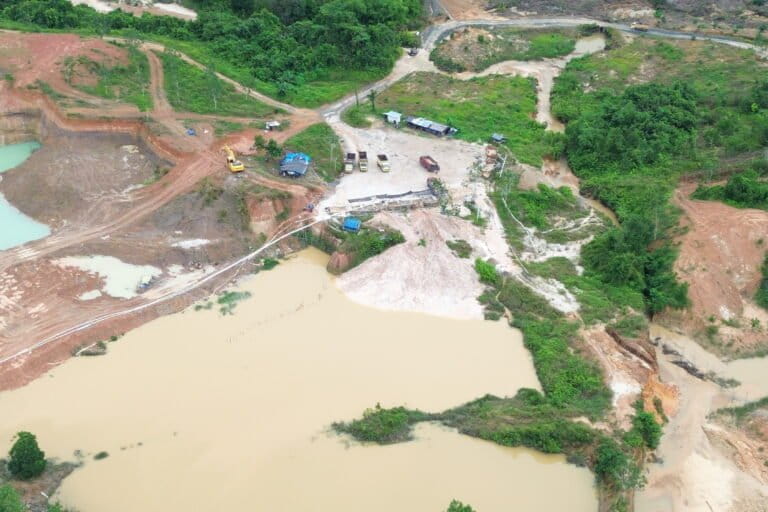
Illegal C-grade and coal mining activities in Banjarbaru City, South Kalimantan, have been ongoing for years, devastating approximately 99.59 hectares of land, according to a report from the regional inspectorate. No legal action has been taken so far.
Illegal mining activities, ranging from C-grade excavations to coal mining, are severely eroding the environment of Banjarbaru City in South Kalimantan (Kalsel). A report from the Regional Inspectorate (BPK) of Kalsel revealed six points of illegal activity that have been ongoing for years, leaving approximately 99.59 hectares of open land. No legal action has ever been taken. The findings are detailed in the Report of Examination Results (LHP) on Compliance with the Implementation of Environmental Protection and Management for the 2023 Fiscal Year up to the Third Quarter of 2025, conducted on the South Kalimantan Provincial Government and other relevant agencies. Andriyanto, Head of BPK Kalsel, explained that all mining business activities should be in accordance with the Provincial and City Spatial Planning (RTRW) for 2023-2043. "It must be in accordance, it cannot contradict each other," he told Mongabay. The findings were derived from a spot check that combined time-series spatial analysis of satellite imagery, physical field inspections, and confirmation with several related agencies as part of the data verification process. The first finding concerns C-grade mining for fill material in Cempaka Village, Cempaka District, Banjarbaru City. Located at coordinates -3.469682, 114.861437, the spatial analysis shows this location, very close to residential areas, has the largest pit area, approximately 83.47 hectares. From physical field inspections, BPK Kalsel found that activities at the location, which lacked a mining business permit, were operating with a mechanism of Rp350,000-Rp400,000 per truck for transport fees, as a substitute for direct sales of excavated materials. Although the activity is not as busy as before, Mongabay still found one excavator and one pickup truck in front of a hut for guarding. Moving southeast, three unlicensed sand mining sites are located close to each other. Two of them are at coordinates -3.519949, 114.861308 and -3.522363, 114.862191, with pit areas...
多角的分析
違法採掘は、本来国や地方自治体に納められるべき税収やロイヤリティを失わせるだけでなく、正規の鉱業セクターとの不公正な競争を生み出しています。また、大規模な土地改変は、長期的に見れば地域の経済活動(農業、観光など)の基盤を損なう可能性があります。さらに、採掘された資材が正式な流通経路に乗らないため、建設業界などへの供給の安定性にも影響を与えかねません。
投資家にとって、違法採掘の蔓延は、法規制の遵守状況に対する懸念を高めます。正規の鉱業プロジェクトは、環境アセスメントや地域社会との合意形成など、厳格な手続きを経ており、これらはコスト増につながります。しかし、違法採掘が野放しにされている場合、より安価な違法資材が市場に流入し、正規投資の競争力を低下させる可能性があります。また、法執行の不確実性は、事業リスクを増大させます。
バニャルバル市における違法採掘は、住民の生活環境に直接的な悪影響を及ぼしています。特に、居住地域に近い採掘現場は、粉塵、騒音、そして水質汚染のリスクを高めます。また、荒廃した土地は、将来的な土地利用やコミュニティの安全を脅かします。許可なく活動が行われているにもかかわらず法的な措置が取られない現状は、法の支配に対する信頼を損ない、地域住民の不満や不安を募らせる原因となります。例えば、チェンパカ村の住民は、採掘跡地が自宅の近くに広がることで、健康被害や財産価値の低下を懸念している可能性があります。
バニャルバル市では、違法採掘によって発生する環境汚染や景観破壊が、市民の日常生活に影を落としています。特に、居住地域に近い場所での採掘は、粉塵による呼吸器疾患のリスクや、騒音による生活妨害を引き起こす可能性があります。また、広大な採掘跡地は、子供たちの遊び場や地域住民の憩いの場としての利用を妨げ、将来的な土地利用計画にも不確実性をもたらします。法的な取締りが長年行われていないことは、市民が環境保護や法執行に対する行政の姿勢に疑問を抱き、不信感を募らせる一因となっています。例えば、チェンパカ村の住民は、自分たちの生活環境が悪化しているにも関わらず、行政が有効な対策を講じていないことに強い不満を感じていると考えられます。
背景・歴史的文脈
インドネシアにおける違法採掘問題は、広大な国土と豊富な天然資源、そして地方分権化の進展と密接に関連しています。1998年のスハルト政権崩壊後、地方自治体への権限移譲が進みましたが、同時に資源管理能力や監督体制が追いつかず、違法採掘の温床となるケースが増加しました。特にカリマンタン島では、石炭や鉱物資源が豊富であり、過去にも大規模な違法採掘が問題視されてきました。2009年の鉱業法改正により、鉱業事業の許可権限が中央から地方へ移譲されたことも、一部では監督のばらつきを生む要因となりました。バニャルバル市のような事例は、地方政府の監督能力の限界や、資源利権を巡る複雑な人間関係、そして法執行の甘さが長年放置されてきた結果と考えられます。
原文ソース
Mongabay Indonesia