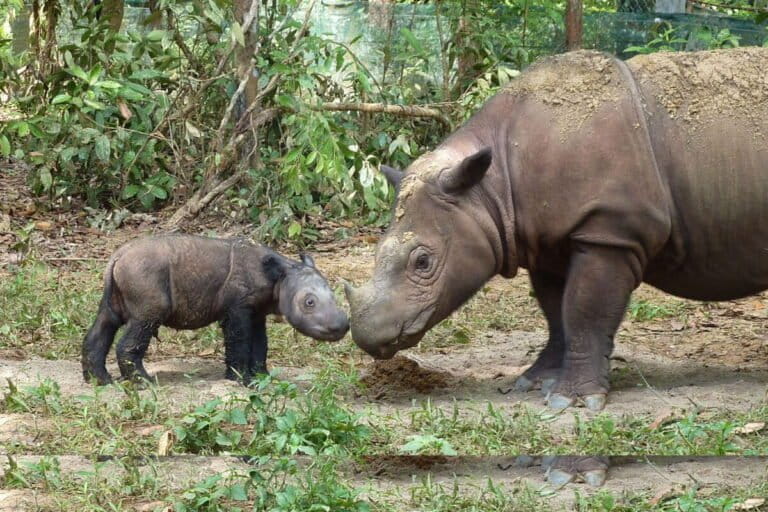
Indonesian Rhinos: Facing Extinction and Glimmers of Hope
While rhino poaching globally shows a declining trend, some species remain critically endangered due to climate change and inbreeding risks. While rhino populations are increasing in India and Nepal, African rhinos are declining, necessitating urgent conservation measures.
While rhino poaching globally has seen a slight decrease in the last three years, threats to these iconic mammals persist. According to a 2025 report by TRAFFIC and IUCN, two of the world's five rhino species are showing signs of population recovery, while the remaining three are in decline. Notably, the Greater One-Horned Rhino (Rhinoceros unicornis) in India and Nepal has achieved significant population recovery due to conservation efforts spanning over two decades. The Black Rhino (Diceros bicornis) in Africa also shows a recovery trend, with its population estimated to have increased by about 10 percent, from 6,195 individuals in 2021 to 6,788 in 2024. However, these successes are not universal across all rhino species. Conversely, the White Rhino (Ceratotherium simum) population has declined from 15,942 individuals in 2021 to 15,752 in 2024, reaching its lowest point in nearly two decades. Researchers indicate that threats to white rhinos are no longer solely from poaching. Prolonged droughts exacerbated by the climate crisis are severely impacting their habitats and food availability. The primary driver for rhino poaching remains the high demand for rhino horn in East Asia. The horn is traded as a status symbol and for use in traditional medicine, despite scientific evidence refuting its medical benefits. Its market value on the black market is reportedly higher than gold or diamonds. Various conservation strategies have been implemented to protect rhinos from poachers, including armed patrols, dehorning, and assisted reproduction. While these efforts have shown some results, they have not been enough to secure all rhino species. Species with critically low populations, in particular, face challenges in long-term survival. Although this report does not directly mention Indonesia, the conservation of rhinos is a global issue with lessons applicable to the protection of other endangered species in Indonesia. A multi-faceted approach is needed, including climate change adaptation measures and awareness campaigns to curb traditional demand. Source: Mongabay Indonesia
多角的分析
バクの角の密猟市場は、その希少性から金やダイヤモンドを上回る価値を持つとされ、経済的なインセンティブが密猟を継続させる大きな要因となっています。この高値は、伝統医学やステータスシンボルとしての需要に支えられています。保全活動の経済的持続可能性、密猟組織の資金源の断絶、そして代替療法や文化的な認識の変化を促すための啓発活動への投資が、経済的側面からの課題解決に不可欠です。
バクの角の違法市場は、投資対象としてはリスクが高すぎますが、保全活動や関連技術(監視システム、DNA追跡など)への投資は、ESG投資の観点から注目される可能性があります。また、観光資源としての野生動物保護への投資は、長期的な経済効果をもたらす可能性があります。しかし、現状では密猟というリスクが、投資環境を不安定にしています。
バクの角の需要は、アジア東部における伝統的な価値観や健康観に根差しています。この需要を抑制するためには、科学的根拠に基づいた情報提供による意識改革が不可欠です。また、密猟による地域社会への影響(治安の悪化、生態系破壊)や、保全活動に関わる人々の安全確保といった社会的な課題も存在します。インドネシアにおいても、象牙など他の希少動物の角の需要問題と共通する構造が見られます。
バクの角を求める一部の消費者の行動は、絶滅の危機に瀕している種をさらに追い詰める結果を招いています。また、密猟対策のために展開される武装パトロールは、地域住民の生活に緊張感をもたらす可能性があります。保全活動の成功は、地域社会の協力なしには難しく、彼らの生活への配慮と、密猟以外の収入源の確保が重要となります。インドネシアの市民も、同様の状況に直面する希少動物の保護において、意識の向上が求められています。
背景・歴史的文脈
バクの密猟は、21世紀に入り、特にアジア東部における伝統医学やステータスシンボルとしての需要の高まりとともに激化しました。2000年代初頭には、多くのバクの種で個体数が危機的な水準にまで減少しました。これを受け、国際社会はワシントン条約(CITES)などを通じて国際的な取引を規制し、各国で密猟対策や生息域での保護活動を強化しました。しかし、気候変動による生息環境の悪化や、一部の種における遺伝的多様性の低下といった新たな課題も浮上しており、保全戦略の見直しが迫られています。
原文ソース
Mongabay Indonesia