General articles are free for 24 hours after publish.
Forest Regeneration Brings Blessings to Kamang Mudiak Village Farmers
In Kamang Mudiak Village, West Sumatra, Indonesia, forest restoration efforts have enabled rice harvests twice a year, up from once annually, boosting farmer incomes. The community's dedication has led to sustainable forest management and revitalized the local economy.
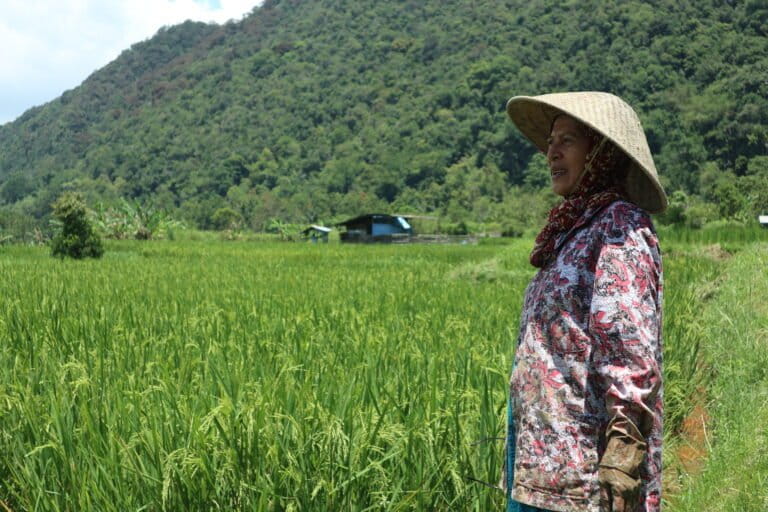
Lush green rice fields are watered by abundant water from the hills in Nagari Kamang Mudiak, Agam Regency, West Sumatra, in early September. Several farmers are busy weeding the grass growing between the rice stalks. They are happy because in the last few years, harvests have been possible twice a year, a contrast to the past when it was only once a year on average. Yodiantono, Head of the Nagari Forest Management Institute (LPHN), stated that this change is inseparable from the success of residents in re-greening the nagari forest. "On the hills, the trees are now dense. There are durian, clove, cinnamon, mangosteen, cocoa, and banana trees that residents can harvest," he told Mongabay. The 1990s to 2000s were the most difficult period for the nagari forest. Fires frequently occurred during the dry season, making the hilly areas barren. The rice fields dried up, and water became a scarce commodity in this nagari. The rampant illegal logging exacerbated the condition of the nagari forest at that time. Yodianto said that once, he heard the sound of a chainsaw from within the forest and approached the perpetrators, who turned out to be local residents. "If I forbade them directly, they wouldn't agree, they would resist. So, I just invited them to chat," he said. From the conversation, Yodiantono better understood the reason for the perpetrators cutting down trees in the forest: economic pressure. At that time, Yodiantono said, with only one harvest per year, people's income was uncertain, while at the same time, their needs were increasing. When the options for income sources were limited, the forest became one of the reliable places. Moreover, the awareness of residents about the impact of logging was still low. However, with the increasing impact of drought, residents slowly began to realize this fact.
Original source
Mongabay Indonesia