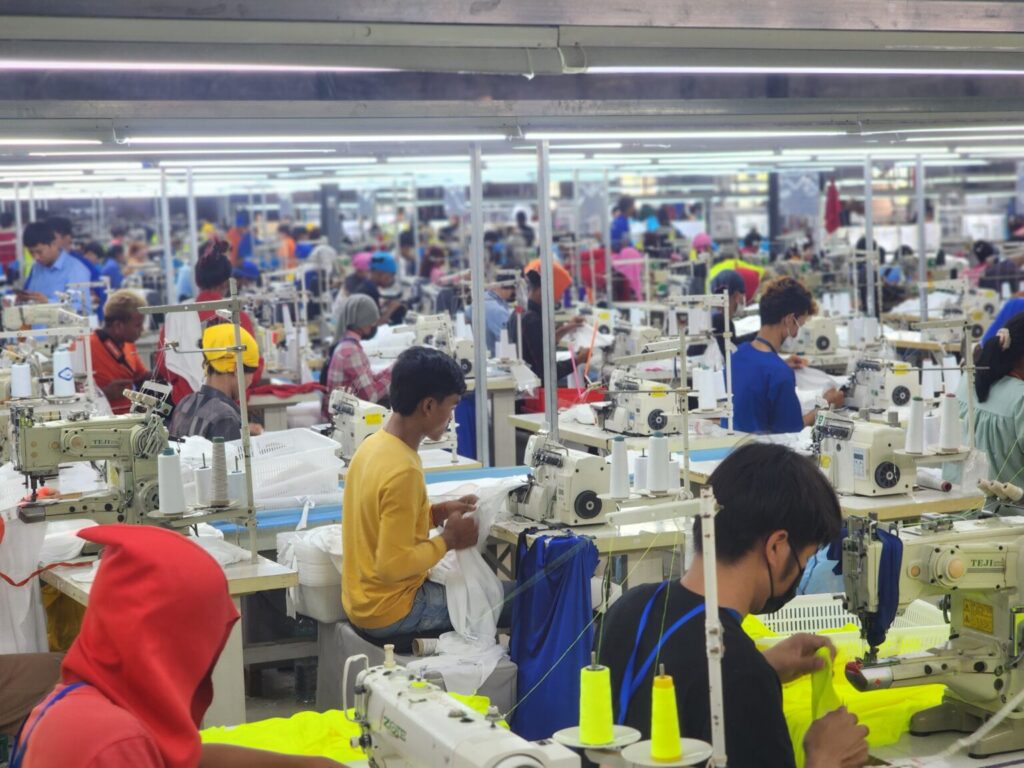
Cambodia Bans Forced Labor Goods Imports to Bolster Responsible Supply Chains
Cambodia has implemented new regulations banning the import of goods produced through forced labor, aiming to protect worker rights and strengthen responsible practices in international supply chains. Violators may face penalties.
PHNOM PENH, July 2, 2026 (KPT) — Cambodia has introduced new regulations banning the import of goods produced wholly or partly through forced labor, in a move aimed at strengthening responsible supply chains, protecting labor rights and enhancing the country’s trade competitiveness. The Inter-Ministerial Prakas on the Prohibition of the Importation of Goods with Forced Labor was jointly issued on July 1 by the Ministry of Economy & Finance, Ministry of Commerce and the Ministry of Labour and Vocational Training. It sets out procedures to prohibit the import, use, circulation and supply of goods linked to forced labor within Cambodia. Forced labor is defined as any work or service exacted under threat of penalty and performed involuntarily, consistent with Cambodia’s Labour Law and ILO Convention No. 29. The regulation applies to goods mined, extracted, harvested, manufactured or processed wholly or in part through forced labor. An inter-ministerial task force will be established, comprising representatives from the ministries of Economy and Finance, Commerce, Labour and other agencies. The body will investigate goods suspected of being linked to forced labor and may cooperate with foreign authorities when necessary. Importers whose goods are under investigation must respond within 10 working days, providing documentation on product origin, supplier information, contracts, payments, ownership records and independent audit reports to demonstrate compliance. Goods confirmed to involve forced labor will be barred from entry, while violators may face penalties including suspension of import and export activities and certificates of origin. Labour Minister Heng Sour said the measure underscores Cambodia’s commitment to eliminating forced labor from both imported and domestically produced goods. “Cambodia continues to uphold labor rights across global supply chains, particularly by eliminating the use of forced labor through this new regulation,” he said. The business community welcomed the move. Kaing Monika, Deputy Secretary General of the Textile, Apparel, Footwear and Travel Goods Association in Cambodia (TAFTAC), said the regulation would help safeguard the sector from supply chain risks. “We appreciate the government’s preventive measures to ensure clean supply chains and prevent imports linked to forced labor from any country,” he said. Monika added that TAFTAC has been preparing its members since 2023 by conducting workshops to help factory owners adopt responsible sourcing practices and establish traceability systems to ensure compliance.
多角的分析
この規制は、カンボジアが国際的なサプライチェーンにおける強制労働のリスクを回避し、よりクリーンで倫理的な貿易相手国としての地位を確立しようとする経済戦略の一環と見られます。強制労働品を排除することで、EUの「EU一般特恵関税制度(GSP)」のような、人権や労働基準を重視する先進国の市場へのアクセスを維持・拡大する狙いがあると考えられます。一方で、輸入禁止措置は、国内のサプライチェーンにおける労働条件の改善を促す圧力となる可能性がありますが、その実効性は、国内での強制労働の実態把握と取り締まりの厳格さに依存します。
この規制は、カンボジアに進出する、あるいは進出を検討する投資家にとって、サプライチェーンのリスク管理とコンプライアンス強化の必要性を示唆しています。特に、欧米市場をターゲットとする企業にとっては、強制労働排除の証明が不可欠となるため、サプライヤーの選定や監査体制の構築がより重要になります。これにより、透明性の高いサプライチェーンを持つ企業への投資が促される一方、コンプライアンス対応が遅れる企業は、市場からの排除リスクに直面する可能性があります。
この規制は、カンボジア国内で働く労働者の権利保護に直接的な影響を与えます。強制労働の定義が明確化され、輸入禁止措置が講じられることで、劣悪な労働環境や搾取の是正が期待されます。しかし、国内で発生する強制労働の実態把握や、被害を受けた労働者への救済措置が十分に行われるかは今後の課題です。また、輸入禁止品が国内市場に流入するのを防ぐための監視体制の強化も求められます。
カンボジア市民、特に労働者にとっては、この規制は労働環境の改善と権利保護の強化につながる可能性があります。強制労働が禁止されることで、より安全で公正な労働条件が期待されます。しかし、規制の実効性や、国内で依然として存在する可能性のある強制労働の実態について、市民の間には懸念も残るでしょう。また、輸入禁止措置が物価に与える影響についても、市民生活への波及が注視される必要があります。
背景・歴史的文脈
カンボジアでは、過去に縫製業を中心に、低賃金労働や長時間労働、劣悪な労働環境が国際的な批判の的となることがありました。2010年代以降、EUのGSP(一般特恵関税制度)など、先進国の市場アクセスは、人権や労働基準の遵守を条件とする傾向が強まっています。カンボジア政府は、経済成長と国際社会からの信頼維持のため、労働者の権利保護やサプライチェーンの透明性向上に取り組む必要に迫られてきました。今回の規制は、こうした国際的な要請と、国内経済の持続可能性を高めようとする政府の意図が複合的に作用した結果と考えられます。
原文ソース
Kampuchea Thmey English