General articles are free for 24 hours after publish.
South Korea's Arctic Ambitions: Navigating Geopolitics and Sanctions
South Korea has elevated Arctic shipping development to national policy, with ambitions including building icebreakers and establishing Busan as a hub. However, geopolitical tensions between China, Russia, and the U.S., along with U.S. secondary sanctions on Russia, cast a shadow over Korean corporate activities.
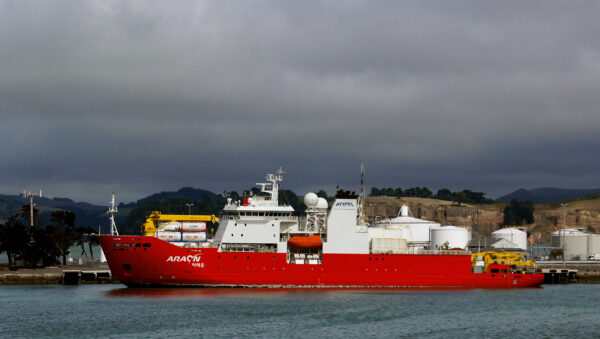
South Korea has formally adopted Arctic shipping development as a national policy on September 16, 2025. The Ministry of Ocean and Fisheries is moving to Busan to establish the city as the nation's maritime hub for Arctic shipping, signaling ambitious intentions to seize economic and strategic opportunities from this emerging route. In August 2026, South Korea conducted its first trial container shipment via the Northern Sea Route (NSR) to Europe with the PanStar Acro, flying the flag of Panama. This followed a few weeks after China's container ship Dubai Tower. Furthermore, Hanwha Ocean, one of Korea's major shipbuilders, began constructing the country's second icebreaker on September 11, 2026. This new vessel is expected to be more than twice the size and 50 percent more capable than the existing RV Araon. The Arctic is warming rapidly due to climate change, leading to reduced sea ice, longer navigation seasons, and new access to previously inaccessible regions. The number of ships operating in the Arctic reached a record high in 2025, with projections suggesting the Arctic Ocean could experience its first ice-free day in summer 2027. The NSR offers a potential reduction of 10-20 days in shipping time between East Asia and Europe compared to the traditional Suez Canal route. Amidst geopolitical shifts affecting freedom of navigation in strategic chokepoints like the Strait of Hormuz, the NSR is strategically attractive for East Asian economies for trade and energy security. China is currently the most active user of the NSR. However, South Korea's venture into NSR development faces geopolitical and sanctions risks. Since the Ukraine War, national security concerns have often superseded economic development in the Arctic, making the region confrontational. U.S. secondary sanctions against Russia could impact third parties engaging with Russian entities, potentially affecting Korean companies. This has led Chinese and Japanese firms to exercise caution with Russia, and even China's state-owned shipping giant COSCO has tempered its enthusiasm for the NSR. While South Korea is a U.S. ally, its companies may not be entirely shielded from future U.S. sanctions. Moreover, South Korea will face competition in Arctic shipping. China, with its "Polar Silk Road" initiative, has shown significant interest in developing and utilizing the NSR, deepening its cooperation with Russia.
Original source
The Diplomat Indonesia