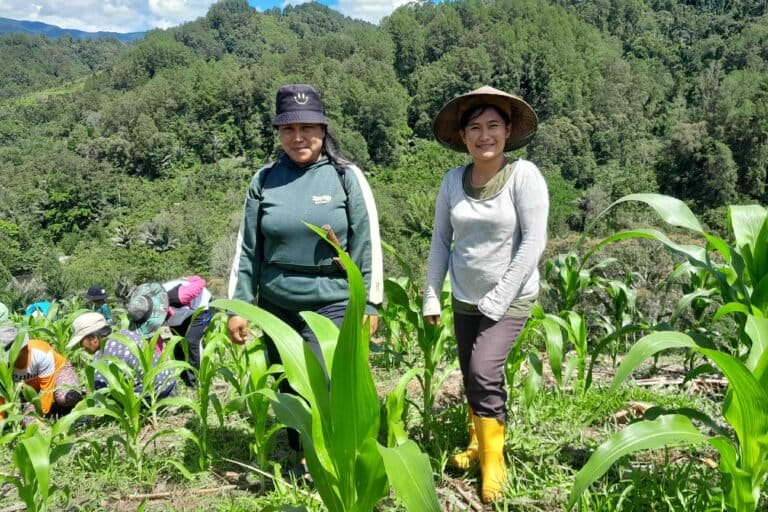
Stories of Food Sovereignty from Women in Lonca Village
Women in Lonca Village, Sigi Regency, Central Sulawesi, are establishing food sovereignty by managing communal farms through the 'Tobine Mohintuhu' community. They cultivate crops like corn, rice, vegetables, fruits, coffee, and cocoa, contributing to the local economy and livelihood stability.
In Lonca Village, Kulawi District, Sigi Regency, Central Sulawesi, Indonesia, women have formed the 'Tobine Mohintuhu' community, establishing food sovereignty through the collective management of their farms. The name 'Tobine Mohintuhu' translates to 'united women' in the local dialect, and the community comprises women from its members to its leaders. The farms they manage are known as 'pampa,' where a variety of crops are cultivated, including corn, rice, vegetables (such as mustard greens, eggplants, tomatoes, and chili peppers), durian, coffee, and cocoa. It is common for corn to be planted first when opening new land. Much of the produce from these farms is consumed by the community members themselves, with any surplus sold to nearby residents. While the primary sources of income for the community are derived from crops like cocoa, durian, pine resin, and wild honey, corn also serves as animal feed or is sold. The women undertake the work of clearing land and managing the farms collaboratively, embodying the spirit of mutual assistance known as 'mapalus.' These women-led agricultural initiatives contribute to a stable food supply and economic independence within the local community, and are particularly noteworthy from the perspective of women's empowerment. Source: Mongabay Indonesia
多角的分析
ロンカ村の女性たちが主導する農業は、地域経済の活性化に貢献している。多様な作物の栽培と、それを基盤とした収入源の確保は、外部経済への依存度を減らし、地域内での富の循環を促す。特に、カカオやドリアンといった換金作物の生産は、村の経済基盤を強化する可能性がある。また、トウモロコシを家畜の飼料に活用することは、畜産業との連携による付加価値創出の可能性も示唆している。
この事例は、直接的な大規模投資の対象というよりは、持続可能な農業モデルとしての潜在力に注目すべきである。地域コミュニティ主導の小規模農法は、大規模プランテーションとは異なり、環境負荷が低い可能性がある。もし、これらの農産物の品質向上やブランド化が進めば、フェアトレードやエシカル消費を志向する投資家にとって、新たな投資機会となり得る。しかし、現状ではインフラや流通網の整備が課題となるだろう。
ロンカ村の女性たちは、「トビネ・モヒントゥフ」コミュニティを通じて、共同作業による相互扶助の精神(マパルス)を実践し、食料主権を確立している。これは、地域社会における女性の役割の再認識と、経済的自立を促進する重要な動きである。女性が農園を管理し、収穫物を共有・販売するプロセスは、地域における意思決定への女性の参画を深め、ジェンダー平等の実現に向けた一歩となる。また、自家消費と地域内での販売は、地域社会の絆を強める効果も期待できる。
ロンカ村の住民、特に女性たちは、自分たちの手で食料を確保し、それを地域で分かち合うことで、生活の安定と自立を実感しているだろう。共同での農作業は、地域住民間の連帯感を強め、困難な状況でも互いに支え合う文化を育んでいる。自分たちが育てた作物を家族や近所の人々と共有することは、物質的な豊かさだけでなく、精神的な満足感ももたらしていると考えられる。
背景・歴史的文脈
インドネシア、特に地方部では、伝統的に女性が農業や家庭経済において重要な役割を担ってきた。しかし、近代化や経済開発の過程で、土地所有や意思決定における女性の権利がしばしば後退してきた背景がある。ロンカ村の「トビネ・モヒントゥフ」コミュニティは、このような状況に対し、女性たちが集まり、共同で農園を管理し、食料の生産と分配における自分たちの主権を確立しようとする試みである。これは、地域社会における女性のエンパワーメントと、食料安全保障の強化を目指す草の根運動の一環と位置づけられる。
原文ソース
Mongabay Indonesia