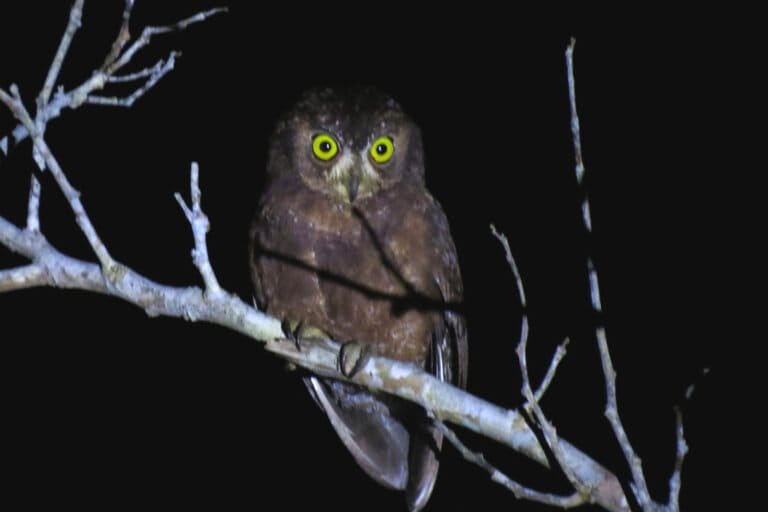
Beyond the Swivel: 10 Astonishing Facts About Indonesia's Owls
Technology
2026年7月22日
4
Mongabay Indonesia

General articles are free for 24 hours after publish.

Beyond the Swivel: 10 Astonishing Facts About Indonesia's Owls

Share
AI Summary

This report highlights the astonishing abilities of owls inhabiting Indonesia. Contrary to their nocturnal image, some species are diurnal, possessing remarkable neck rotation capabilities and unique adaptations for swimming and hunting.

Owls are often perceived as mysterious nocturnal inhabitants, known for their sharp gazes, remarkable head rotation, and nearly silent wingbeats. However, the uniqueness of these birds extends far beyond these common perceptions. This report delves into the astonishing abilities of owls found in Indonesia, revealing a facet of their lives that is often overlooked. Contrary to the widespread image of owls as strictly nocturnal creatures, several species exhibit diurnal or crepuscular activity. This means they hunt during the day or at dawn and dusk. This behavioral adaptation is often linked to the activity patterns of their prey, such as songbirds and small mammals, allowing them to effectively hunt when their food sources are most available. The owl's famous ability to rotate its head up to 270 degrees is facilitated by having 14 cervical vertebrae, twice the number found in humans. This extraordinary flexibility is crucial because their eyes are fixed in their sockets and cannot move independently, necessitating a mobile head to scan their surroundings. Furthermore, owls are not confined to terrestrial environments. Some species have demonstrated surprising aquatic capabilities. For instance, a Great Horned Owl was observed swimming across a lake in Chicago, USA, to escape pursuing eagles. This suggests a level of adaptability to water that is not widely recognized. Historically, the avian world once hosted even more colossal owl species. The extinct Ornimegalonyx from Cuba, for example, stood approximately 1.1 meters tall. Its long, powerful legs indicate it may have been a swift runner, though its flight capabilities remain a subject of expert debate. The ecological role of owls also offers significant benefits to human agriculture. Barn owls, in particular, are natural predators of rodents. A single pair can consume up to 6,000 mice in a year. This predatory prowess has led to collaborations between farmers and scientists in regions like Jordan and Palestine, where nest boxes are provided to encourage owl populations, thereby reducing the reliance on chemical pesticides. This symbiotic relationship highlights how conserving biodiversity can offer practical, sustainable solutions for human endeavors. These fascinating adaptations underscore the incredible diversity and ecological importance of owls, both globally and within Indonesia's rich natural heritage.

0

Original source

Mongabay Indonesia

原文を読む