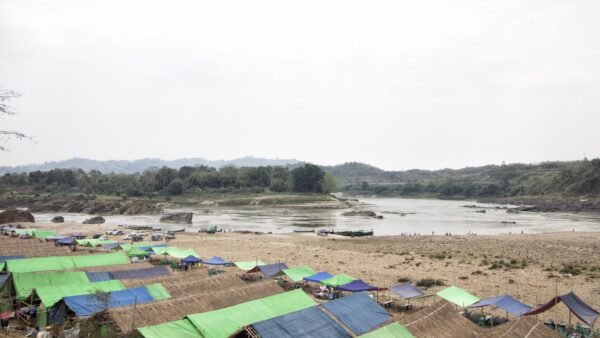
Myanmar to Push Ahead With Suspended Myitsone Dam Project, Officials Say
Myanmar's military-backed government plans to revive the controversial China-backed Myitsone dam project, suspended in 2011 due to public opposition. Officials suggest completion within approximately eight years, with China's influence appearing to be a key factor.
Myanmar's military-backed government plans to revive the controversial China-backed Myitsone dam project, which was suspended in 2011 amid widespread public opposition. Sources familiar with recent comments by Khet Htein Nan, the chief minister of Kachin State, told Reuters that work on the $3.6 billion project would "begin shortly." Htet Paing Htoo, a member of the Kachin State parliament, told Reuters that an official announcement would be released and that "the president himself has already stated that it will be restarted." Khet Htein Nan, who previously opposed the dam, has recently led public meetings across Kachin State urging locals to support the project. At one meeting on June 23, he reportedly admitted regretting his past opposition and declared the government's determination to press forward with construction. He estimated that while completion might take about 10 years, it could be finished in just over eight years due to prior groundwork. Min Aung Hlaing, the junta leader, reportedly discussed the dam's resumption during his recent visit to China. Presidential spokesperson Khaing Khaing Soe stated that Min Aung Hlaing has criticized past governments for suspending the project, arguing that earlier implementation would have led to nationwide electricity coverage. The spokesperson acknowledged public concerns and said Min Aung Hlaing has instructed his administration to seek public consent, evaluating the balance between benefits and negative impacts. The Myitsone dam is slated to be built at the confluence of the Mali and N'Mai rivers, which form the Irrawaddy River. Agreed upon in 2006 by a previous junta, the project was controversial due to potential environmental and social impacts, and reports that 90 percent of its electricity would be exported to China. In 2011, then-President Thein Sein announced the suspension of construction, citing "the wishes of the people." This suspension was seen as a catalyst for subsequent economic and political reforms in Myanmar before they were terminated by the 2021 coup d'état. China, angered by the 2011 suspension, has been pushing for its resumption. The junta's increasing reliance on China, particularly in countering ethnic armies along the border, has forced it to take Chinese concerns seriously. In April 2024, the junta announced the formation of a new leadership team for the Myitsone project, tasked with research and public relations in collaboration with the dam's Chinese developer, SPIC Yunnan International Power Investment Company. However, the project's future remains uncertain. No official details on revised contracts, ownership rights, or operational frameworks have been released. The Kachin Independence Army (KIA) continues to oppose the project, and the ongoing conflict in northern Myanmar could further complicate its progress. The extent of the government's reliance on China, which has intervened more actively in Myanmar since 2023, may suggest it has limited leverage. Resuming the project is perhaps the price it needs to pay for maintaining productive relations with Beijing. Any attempt to restart the Myitsone project could also be complicated by the conflict in northern Myanmar. The KIA, which has made significant territorial advances in Kachin State since the coup, continues to oppose the project. While the KIA does not occupy the area around the Myitsone confluence, the possibility of resumed fighting in the vicinity could bring the project to a halt once again.
多角的分析
ミャンマー軍事政権によるミッソンダム再開の動きは、経済的利益の追求と中国への依存強化という二重の動機に基づいていると考えられる。ダム建設は、ミャンマー国内の電力不足解消に寄与する可能性もあるが、その恩恵の大部分が中国への電力輸出に回されるという過去の計画は、国内経済への直接的な寄与を限定的にする。中国からの大規模な投資と支援は、経済的に孤立しがちな軍事政権にとって当面の資金源となりうるが、長期的な経済自立という観点からは、資源の海外流出と債務リスクを増大させる可能性がある。過去の改革開放期に一時停止されたプロジェクトが、再び経済的打算から再浮上することは、ミャンマー経済の構造的な脆弱性を示唆している。
ミッソンダム再開のニュースは、投資家にとって複雑なシグナルを発している。中国の国営電力投資会社(SPIC)が関与していることから、中国政府の強い後押しが期待できる。これは、プロジェクトの資金調達と実施における一定の安定性を示唆する可能性がある。しかし、ミャンマーの政治的不安定性、特に2021年のクーデター以降の国内紛争の激化、そして過去の国民の強い反対運動の歴史は、プロジェクトの長期的な持続可能性と法的安定性に対する重大なリスク要因となる。投資家は、中国の地政学的な意図と、ミャンマー国内の治安状況、そして将来的な政権交代の可能性を慎重に評価する必要がある。特に、環境・社会影響(ESIA)に関する透明性と、地域住民の同意プロセスが不十分な場合、国際的なESG投資の観点からは敬遠される可能性が高い。
ミッソンダム建設計画の再燃は、カチン州の住民、特にダム建設予定地の周辺住民にとって深刻な懸念材料となる。2011年の建設凍結は、環境破壊、強制移住、そして地域社会の生活様式への影響に対する住民の強い反対運動によってもたらされた。軍事政権が住民説明会を開催し、支持を求めているとしても、過去の反対運動の記憶は生々しく、住民の間の分断や不信感を生む可能性がある。また、発電電力の大部分が中国に輸出されるという過去の計画は、地域住民がインフラ開発の恩恵を十分に受けられないという不公平感につながる。カチン独立軍(KIA)が依然としてプロジェクトに反対していることも、地域社会の安全と安定に影響を与える要因となる。
ミャンマー国民、特にカチン州の住民は、ミッソンダム建設計画の再開に複雑な感情を抱いている。2011年の凍結は「国民の意思」として尊重されたが、今回、軍事政権が中国の意向を受けて推進しようとしていることは、国民の声が再び軽視されるのではないかという懸念を生む。電力供給の改善という潜在的な利益がある一方で、環境破壊や強制移住といった過去の懸念が再燃する可能性がある。また、軍事政権が国民の同意を求めているとしながらも、そのプロセスが透明性を欠き、実質的な反対意見が反映されない場合、国民の不満はさらに高まるだろう。特に、カチン州の若者世代は、SNSなどを通じて情報共有を行い、過去の反対運動の経験を踏まえ、新たな形で抗議の意思を示す可能性がある。
背景・歴史的文脈
ミャンマーのミッソンダム建設プロジェクトは、2006年に中国との間で合意された後、その規模と影響力から早くも論争の的となった。2007年には、環境保護団体や地域住民が、環境破壊や地域社会への影響を訴え、反対運動を開始した。2011年、当時のテイン・セイン大統領は、国民の強い反対を受けて建設の一時停止を決定した。この決定は、ミャンマーにおける民主化プロセスと経済・政治改革の開始を促す重要な契機の一つと見なされている。しかし、中国政府はプロジェクトの凍結に不満を抱き、継続的な再開圧力をかけてきた。2021年の軍事クーデター後、軍事政権は中国への依存度を高め、中国の懸念を無視できなくなった。その結果、2024年になり、軍事政権が再びミッソンダム建設の再開に舵を切る動きを見せている。
原文ソース
The Diplomat Indonesia