General articles are free for 24 hours after publish.
Indonesia's Agrarian Reform Bill Enters Parliamentary Agenda
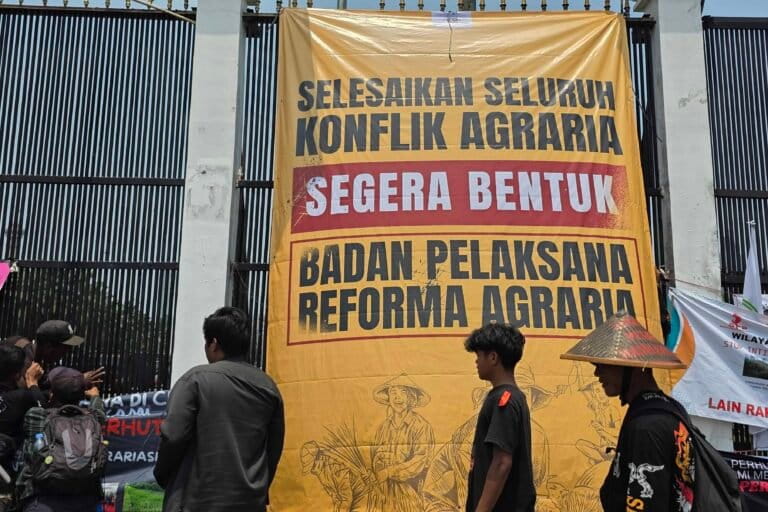
Indonesia's House of Representatives (DPR) has officially included the Agrarian Reform Bill (RUURA) in its 2026 priority legislative program, aiming to resolve long-standing land conflicts. The move comes amid recognition of the limitations of existing laws.
Indonesia's House of Representatives (DPR) has officially included the Agrarian Reform Bill (Rancangan Undang-undang Reforma Agraria, RUURA) in its 2026 priority legislative program, aiming to resolve the country's persistent land conflicts. This decision, driven by years of advocacy from civil society organizations, was announced by Bob Hasan, Chairman of the Legislation Body (Baleg), during a working meeting with government representatives. Hasan stated that the RUURA is "needed to resolve structural agrarian conflicts that remain unresolved to this day." The initiative stems from widespread land disputes arising from dual legal governance: forest areas under the Forestry Law (UU Kehutanan) and non-forest areas under the Basic Agrarian Law (UU Pokok Agraria, UUPA), including plantations. The RUURA is expected to adopt provisions previously found in the UUPA and the Forestry Law. Civil society has been demanding a specific law for agrarian reform since 2008. According to the results of a meeting of the Deliberative Body (Bamus) of the DPR, it was agreed that the discussion of the RUURA would be expedited to Baleg. "The leadership has assigned this task to Baleg," Hasan said. Ahmad Doli Kurnia, Deputy Chairman of Baleg, emphasized the urgency, noting that the UUPA, enacted in 1960, is over 60 years old and its limitations are evident. "We pushed for the revision of UUPA, but now we prefer to create RUURA," he said. Edward Omar Sharif Hiariej, Deputy Minister of Law and Human Rights, representing the government, agreed to the RUURA as a DPR initiative and its inclusion in Baleg's agenda. "Agreed. Let's proceed quickly, Sir," he remarked. This legislative push signifies a potential step towards fairer land distribution and conflict resolution in Indonesia, a nation grappling with issues of unclear land ownership and access to resources for decades. The ultimate impact, however, will depend on the bill's specific provisions and its subsequent implementation. Source: Mongabay Indonesia
Original source
Mongabay Indonesia