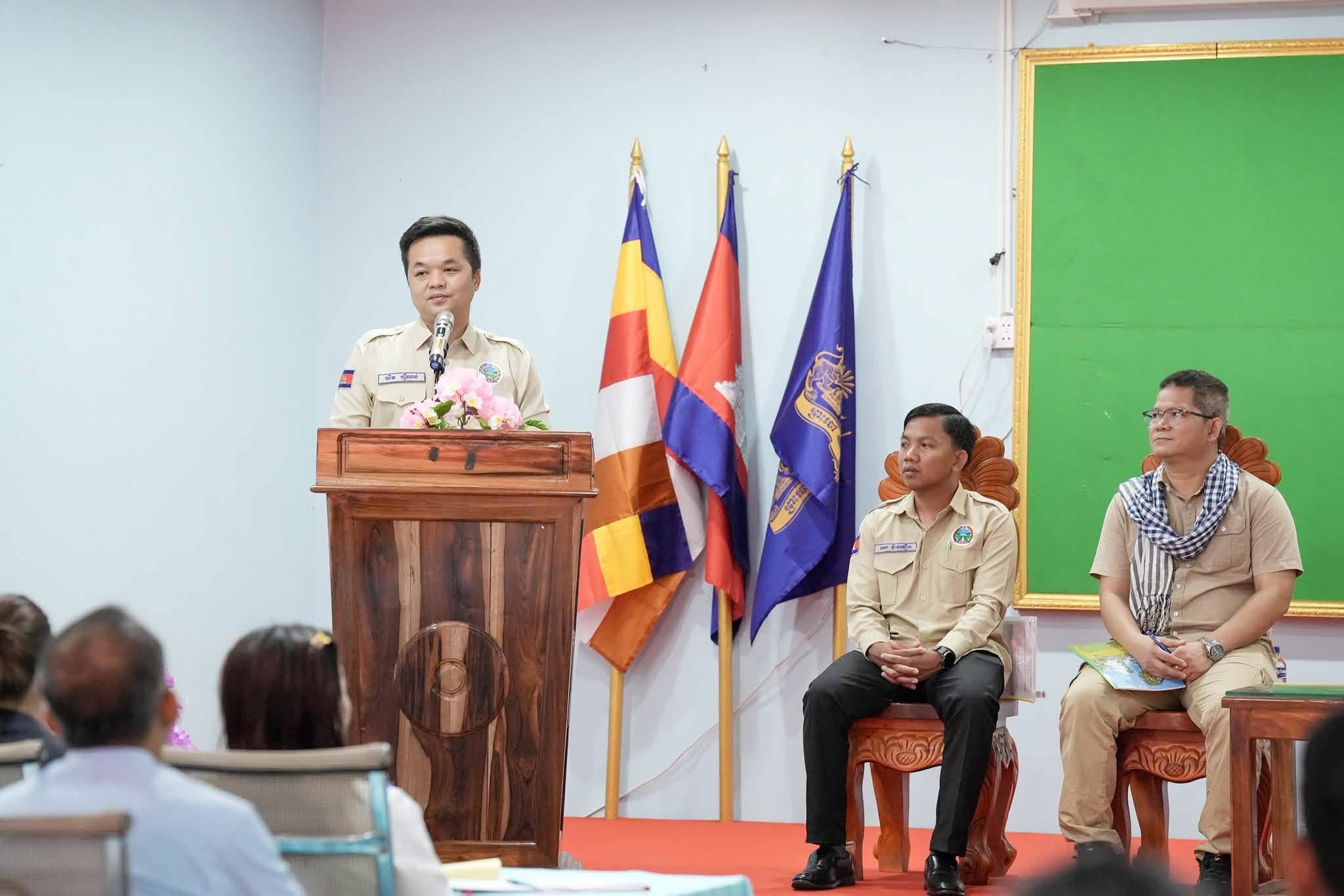
Cambodia Conducts SOP Training for Modern Agricultural Communities to Enhance Quality and Transparency
Cambodia's Ministry of Agriculture, Forestry and Fisheries organized a training on Standard Operating Procedures (SOP) for Modern Agricultural Communities (MAC) nationwide in Kampot province. This initiative aims to ensure common quality standards, transparency, and operational efficiency following the establishment of the Union of Modern Agricultural Communities (UMAC), thereby strengthening collective purchasing power and market negotiation.
The Ministry of Agriculture, Forestry and Fisheries, in collaboration with its relevant departments, has launched a training program on Standard Operating Procedures (SOP) for board members and staff of Modern Agricultural Communities (MAC) gathered from across the country, held in Kampot province. This training aims to enhance quality, transparency, and operational efficiency in the agricultural sector. Kim Phinang, a spokesperson for the Ministry of Agriculture, emphasized that the unified implementation of SOPs is crucial to guarantee common quality standards, transparency, and efficient operations. He explained that especially following the recent establishment of the Union of Modern Agricultural Communities (UMAC), the adoption of this common SOP serves as a robust foundation for consolidating purchasing power, integrating production, and increasing negotiation capabilities in a broader market. This training program is jointly organized and implemented by the Department of Agricultural Community Development and UMAC, with support from DGRV (German Agency for Rural Development). This initiative is considered a significant step for Cambodia's agricultural sector to advance modernization and enhance its competitiveness in the international market.
多角的分析
SOPの導入は、農産物の均一な品質を保証し、トレーサビリティを向上させることで、輸出市場におけるカンボジア産農産物の信頼性を高める。これは、国際的な食品安全基準への適合を容易にし、高付加価値市場へのアクセスを拡大する可能性がある。また、共同購入や共同販売による規模の経済は、生産コストの削減と収益性の向上に寄与すると考えられる。
近代農業コミュニティ(MAC)におけるSOPの標準化は、農業セクターへの投資リスクを低減させる要因となる。投資家は、一貫した品質と管理体制を持つサプライヤーとの取引をより確実視するようになる。特に、食品加工業や輸出関連企業は、安定した原料供給を期待できるようになり、カンボジア農業への直接投資や、関連インフラへの投資を促進する可能性がある。
SOP研修は、農村部の小規模農家が近代的な農業手法を習得し、市場での競争力を高める機会を提供する。これにより、農家の収入向上と生活水準の改善が期待できる。一方で、研修へのアクセスや情報格差が生じないよう、地域間の公平な機会提供と、研修内容の継続的なフォローアップが課題となるだろう。
この研修は、全国の農業コミュニティが共通の基準で運営されるようになることで、消費者がより安全で高品質な農産物を手に入れやすくなることを意味する。UMACの設立とSOPの導入は、農産物の流通における透明性を高め、農家と消費者双方の信頼関係構築に寄与するだろう。しかし、研修に参加できない農家との格差が生じないか、その影響が懸念される。
背景・歴史的文脈
カンボジアは長年、農業を基幹産業としてきたが、生産性の低さや品質のばらつきが国際市場での競争力低下の要因となっていた。近年、政府は農業の近代化と輸出振興に力を入れており、その一環として、農業コミュニティの組織化と標準化が推進されている。2023年には近代農業コミュニティ連合(UMAC)が設立され、農産物の品質管理、流通、マーケティングにおける統一的な基準の導入が急務となっていた。今回のSOP研修は、このUMAC設立後の具体的な取り組みとして、全国的な標準化を目指す重要なステップである。
原文ソース
AKP Khmer