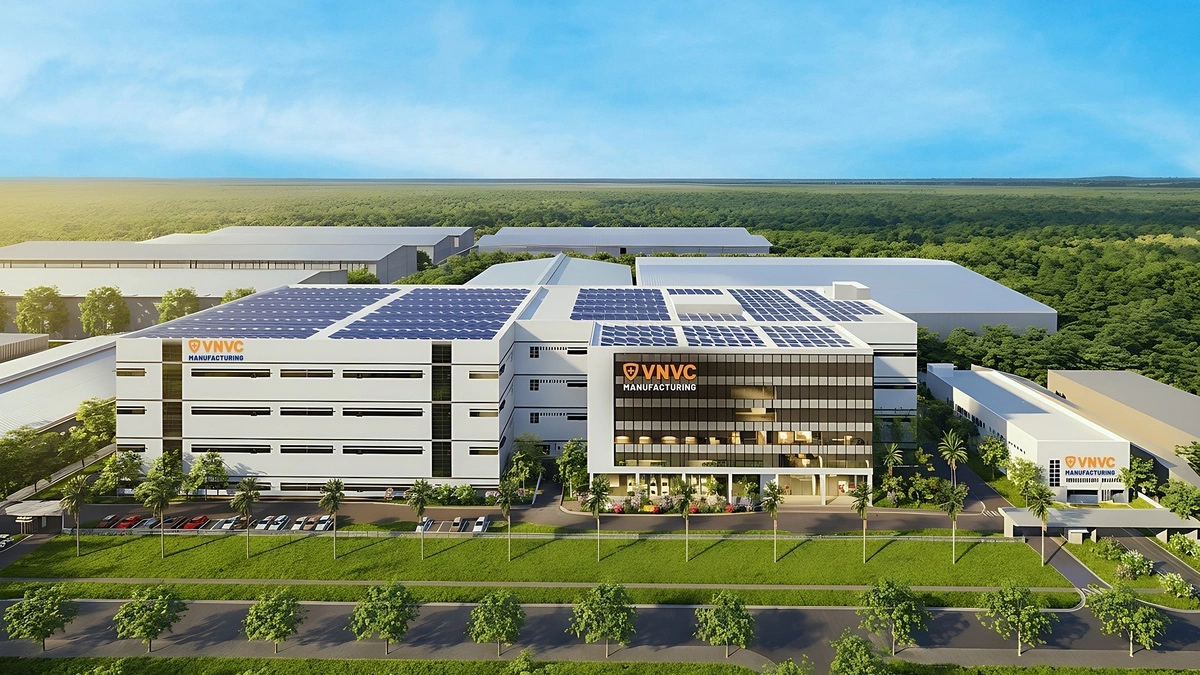
Vietnam to Build Vaccine Plant Worth Over VND2.5 Trillion, Aiming for 2028 Production
Health
2026年7月9日
5
VnExpress
Relations
🇻🇳Vietnam🇨🇳China🇺🇸United States🇷🇺Russia🌐United Nations / ASEAN

Vietnam to Build Vaccine Plant Worth Over VND2.5 Trillion, Aiming for 2028 Production

AI サマリー

Vietnam's VNVC is constructing a vaccine and biological product plant worth over VND2.5 trillion (approximately $100 million USD) in partnership with French pharmaceutical giant Sanofi. Operations are slated to begin by late 2027, with the first production of next-generation vaccines expected in 2028, bolstering Vietnam's self-sufficiency and technological capabilities in pharmaceuticals.

Vietnam's Vaccine and Biological Products Company (VNVC) is set to construct a state-of-the-art vaccine and biological product plant with an investment exceeding VND2.5 trillion (approximately $100 million USD). This facility, located in Tay Ninh province, will span 26,000 square meters and is designed to produce around 100 million doses annually. VNVC aims to commence operations by the end of 2027 and initiate the production of its first vaccines in collaboration with French pharmaceutical giant Sanofi in 2028. The announcement was made at the "Strengthening Cooperation in Deploying Strategic Technologies and Strategic Products for New-Generation Vaccine Development in Vietnam" conference, held in Hanoi on July 9. The event was jointly organized by the French Embassy in Vietnam and the Ministry of Health, drawing participation from government officials, representatives from the WHO, UNICEF, Sanofi, VNVC, and vaccine experts. Alongside the plant's construction, VNVC is targeting the establishment of a leading center for research, technology transfer, production, and quality control of high-tech vaccines and biological products, both domestically and regionally. The plant's production priorities for 2028 include next-generation influenza vaccines, hexavalent vaccines, meningococcal vaccines, pneumococcal vaccines, and RSV vaccines. Commercialization is expected to begin in 2029, with plans to introduce one new-generation vaccine to the market each year from 2030 onwards. Mr. Ngo Chi Dung, Chairman and CEO of VNVC, stated that the company will continue international collaborations for technology transfer and domestic production capacity development. "Our goal is to establish a complete research and development (R&D) infrastructure to continuously improve, adapt, and develop new-generation vaccine platforms domestically and regionally," he emphasized. Mr. Stephen Alix, Global Head of Vaccines at Sanofi, highlighted that the partnership with VNVC is a long-term program focused on research, human resource training, and developing international-standard production capabilities. He noted that vaccine manufacturing demands high technological and quality control standards, and the localization process involves not just transferring production lines but also training personnel and building robust quality management systems. Minister of Health Dao Hong Lan stressed that self-sufficiency in medicines and vaccines is crucial for national health security and sustainable development. She indicated the health sector's push for public-private partnerships (PPP) to connect research institutions, hospitals, domestic businesses, and international partners into an ecosystem for the research, testing, production, and supply of new-generation drugs and vaccines. New-generation vaccines are identified by the ministry as a top strategic technological product. Vice Chairman of the National Assembly, Nguyen Thi Thanh, assured that the legislature would accompany the government in implementing major policies, further refining the legal framework, and addressing bottlenecks in science and technology. The objective is to create the most favorable conditions, particularly for strategic technology development and technology transfer. Fostering the role of the private sector, with the state providing a legal framework and public procurement policies to create a sustainable market, is also a key focus. Over the past decade, VNVC has invested in developing a vaccine ecosystem, operating nearly 300 vaccination centers nationwide with a system for safe vaccine storage and affordable inoculation services. The Vietnam-France high-level conference aimed to bolster bilateral cooperation in strategic health technologies, particularly in preventive medicine and high-tech vaccines. The event marked a new phase in the collaboration between Sanofi and VNVC, building on agreements signed previously and the groundbreaking ceremony for the VNVC plant.

多角的分析

経済的影響

ベトナム政府は医薬品およびワクチンの国内生産能力強化を国家戦略として位置づけており、本件はそれを具現化する重要な一歩となる。2500億円という投資額は、ベトナムの国内総生産(GDP)の約0.2%に相当し、経済成長への貢献だけでなく、医薬品分野における技術移転と雇用創ち創出にも寄与する。特に、次世代ワクチンといった先端技術分野への進出は、ベトナムの産業構造高度化と国際競争力強化に繋がる。サノフィのようなグローバル企業との提携は、単なる生産委託に留まらず、研究開発能力の向上や品質管理体制の確立にも貢献し、ベトナム経済の多様化と高付加価値化を促進する可能性がある。

投資家心理

このプロジェクトは、ベトナムのヘルスケアセクターへの投資機会として注目される。VNVCは既に全国に広範な予防接種ネットワークを構築しており、国内市場における強固な基盤を持つ。サノフィとの提携により、国際的な品質基準と技術力が導入されるため、将来的な輸出拡大の可能性も示唆される。投資家にとっては、ベトナム国内のワクチン需要を満たすだけでなく、ASEAN地域への展開も視野に入れた長期的な成長戦略を持つ企業への投資機会となり得る。ただし、医薬品・ワクチン分野は規制が厳しく、技術開発のスピードも速いため、市場リスクや技術リスクを慎重に評価する必要がある。

社会的影響

本件は、ベトナム国民の健康と安全保障に直接的な影響を与える。2028年からの次世代ワクチン生産開始は、国内の予防接種プログラムの強化と、将来的なパンデミックへの対応能力向上に繋がる。これまで輸入に頼っていたワクチンを国内で生産できるようになることで、供給の安定化とコスト削減が期待され、国民がよりアクセスしやすい医療サービスの提供に貢献する可能性がある。また、高水準の国際基準に準拠した工場建設と運営は、国内の技術者や専門家の育成にも繋がり、ベトナムの医療・製薬分野における人材育成と知識集積を促進する。これにより、国民全体の健康リテラシー向上にも寄与すると考えられる。

市民の声

今回のワクチン工場建設は、ベトナム国民、特に子供を持つ保護者にとって、将来的なワクチン供給の安定化と品質向上への期待を高めるものとなる。これまで海外からの輸入に依存していたワクチンが国内で生産されるようになれば、供給途絶のリスクが軽減され、より迅速に最新のワクチンが接種できるようになる可能性がある。また、生産コストの削減が実現すれば、ワクチン接種費用が抑えられ、経済的な負担が軽減されることも期待できる。さらに、国内での先端技術導入は、ベトナムの医療技術全体のレベルアップに繋がり、国民の健康増進に寄与すると考えられる。

背景・歴史的文脈

ベトナムは、社会主義共和国として一党体制を維持しつつ、1986年のドイモイ政策以降、市場経済化と国際社会への開放を進めてきた。特に経済成長は著しく、ASEAN地域における重要な経済大国へと発展している。しかし、その成長の裏側では、経済格差や環境問題、そして一党体制下での権力構造の維持といった課題も抱えている。外交面では、伝統的な友好国であるロシアとの関係を維持しつつ、米国や欧州諸国との関係を強化し、特に南シナ海問題などを背景に中国との関係には慎重な姿勢をとっている。医薬品・ワクチン分野においては、これまで輸入に大きく依存してきたが、近年、国家の安全保障と国民の健康を守るため、国内生産能力の強化と技術自立を目指す動きが加速している。今回のVNVCによるワクチン工場建設は、こうしたベトナムの国家戦略と国際協力の文脈の中で位置づけられる。

原文ソース

VnExpress

原文を読む