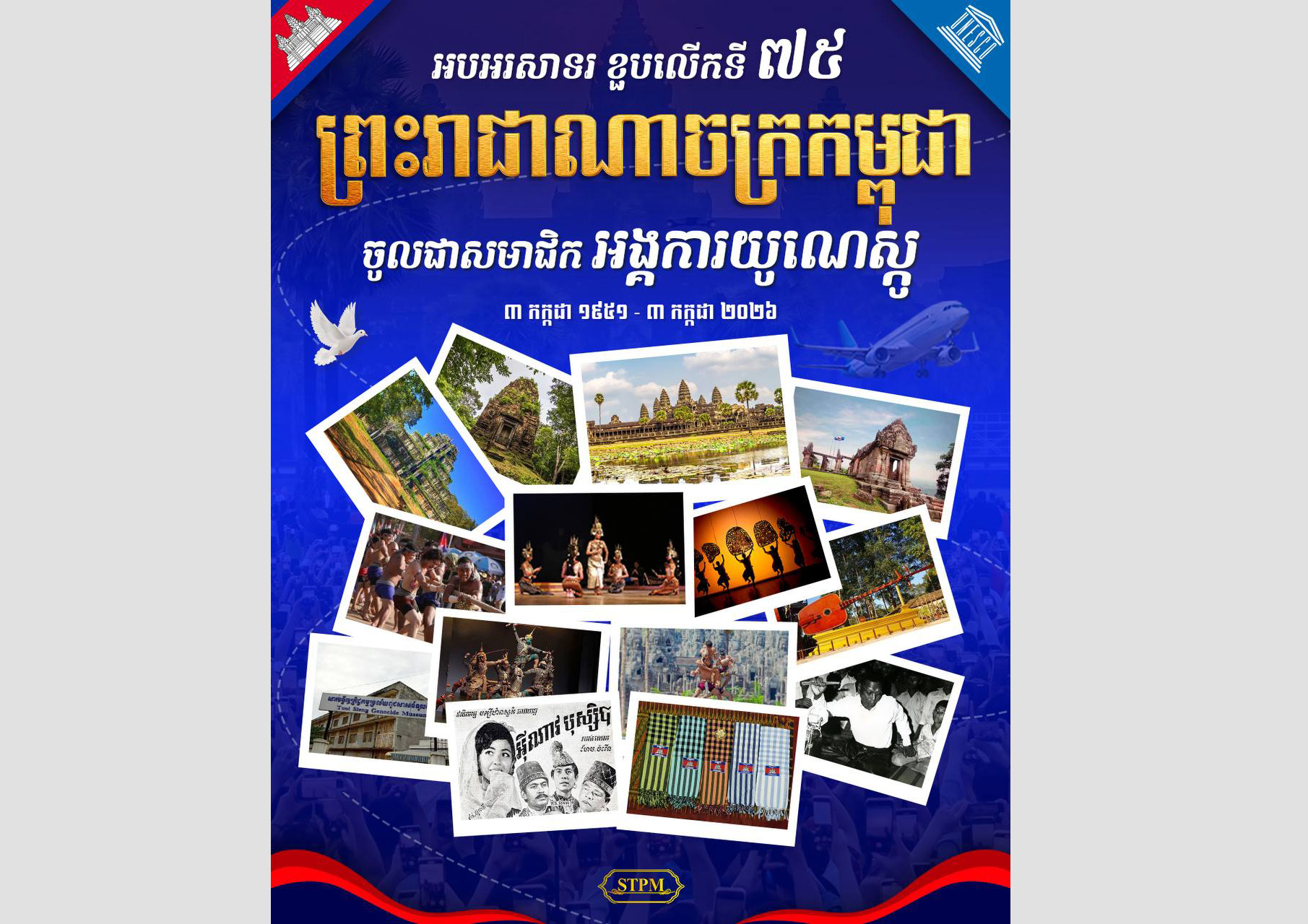
Cambodia Celebrates 75 Years of UNESCO Membership, Reaffirms Cultural Heritage Protection
Culture
2026年7月3日
3
AKP Cambodia

Cambodia Celebrates 75 Years of UNESCO Membership, Reaffirms Cultural Heritage Protection

AI サマリー

Prime Minister Hun Manet celebrated Cambodia's 75th anniversary of UNESCO membership, highlighting how registered heritage sites contribute to preserving national identity and historical memory. He emphasized that cultural heritage protection is a duty for all Cambodians.

Cambodia marked the 75th anniversary of its accession to the United Nations Educational, Scientific and Cultural Organization (UNESCO) on July 3. Prime Minister Samdech Moha Borvor Thipadei Hun Manet celebrated the milestone, sharing on social media that since joining UNESCO, Cambodia has successfully registered four of its heritage sites on the Tangible Cultural Heritage List, seven elements on the Intangible Cultural Heritage List, and three items on the Memory of the World Register. The Prime Minister noted that these inscriptions help preserve the authentic forms of Cambodian culture, safeguard the priceless legacy of the Khmer ancestors, and protect the nation’s historical memory. Among the registered heritage are the Angkor Archaeological Park, Preah Vihear Temple, Sambor Prei Kuk temple complex, and Koh Ker Archaeological Site on the World Heritage List. Intangible cultural heritage includes the Royal Ballet, Lkhon Sbek Thom (shadow puppet theatre), and Chapei Dang Veng (a stringed instrument), while the Memory of the World Register includes archives from the Tuol Sleng Genocide Museum, all testifying to Cambodia's rich culture and history. "The protection of cultural heritage is the duty of all Cambodians," Samdech Thipadei underscored. Established on November 16, 1945, UNESCO carries the special mission of maintaining global peace and security by fostering cooperation among nations through education, science, culture, and communication. The 75th anniversary serves as an occasion for Cambodia to reaffirm its commitment to working with the international community to pass on its invaluable cultural heritage to future generations.

多角的分析

経済的影響

ユネスコへの加盟は、直接的な経済効果というよりは、文化遺産を通じた観光資源の保護・振興に間接的に寄与する。登録された遺産は、カンボジアの観光産業にとって重要なアトラクションであり、国際的な知名度向上は、より多くの観光客を呼び込む可能性がある。これは、雇用創出や外貨獲得に繋がる。特に、近年登録されたコーカー遺跡群(2023年)やクメール・クロマー(2024年)は、新たな観光ルート開発の契機となり得る。

投資家心理

文化遺産の保護と活用は、長期的な視点での投資環境安定化に寄与する。ユネスコ登録遺産は、その国の歴史的・文化的価値を国際的に保証するものであり、外国からの投資家に対して、その国が長期的な文化保全にコミットしているという安心感を与える。これは、特に観光関連産業や、伝統工芸品に携わるビジネスへの投資を検討する際に、ポジティブな要素となり得る。ただし、投資にはインフラ整備や治安維持といった他の要因も重要となる。

社会的影響

文化遺産の登録は、カンボジア国民、特に若い世代にとって、自国のアイデンティティと誇りを再確認する機会となる。例えば、クメール・クロマー(カンボジアの伝統的なスカーフ)が2024年に無形文化遺産に登録されたことは、日常生活に根差した文化が国際的に認められたという実感を与え、国民の連帯感を高める可能性がある。また、トゥール・スレン虐殺博物館の記録文書が世界記憶遺産に登録されていることは、過去の悲劇を風化させず、平和への教訓として記憶し続けることの重要性を示唆している。

市民の声

文化遺産の保護は、国民一人ひとりの生活に直接的な影響を与えるものではないかもしれないが、国のアイデンティティと歴史的連続性を保つ上で不可欠である。特に、観光客が増加することで、地域経済の活性化や雇用機会の創出が期待される。一方で、遺産保護のための規制強化や、観光客増加に伴う地域社会への影響(例えば、生活環境の変化や物価上昇)といった課題も生じうる。国民は、文化遺産の恩恵を受けると同時に、その保護と持続可能な活用について、政府と共に考える必要がある。

背景・歴史的文脈

カンボジアは1951年7月3日にユネスコに加盟した。これは、フランスからの独立後、国際社会への復帰を進める時期にあたる。アンコール遺跡群が1992年に世界遺産に登録されたことは、ポル・ポト政権下の混乱からの復興と、失われた文化遺産の再評価の象徴となった。以降、カンボジア政府はユネスコと連携し、文化遺産の保護・修復・登録活動を積極的に進めてきた。これは、国家のアイデンティティ再構築と、観光立国としての経済発展戦略の一環として位置づけられている。近年では、コーカー遺跡群(2023年)やクメール・クロマー(2024年)の登録により、文化遺産保護の対象が拡大し、その重要性が再認識されている。

原文ソース

AKP Cambodia

原文を読む