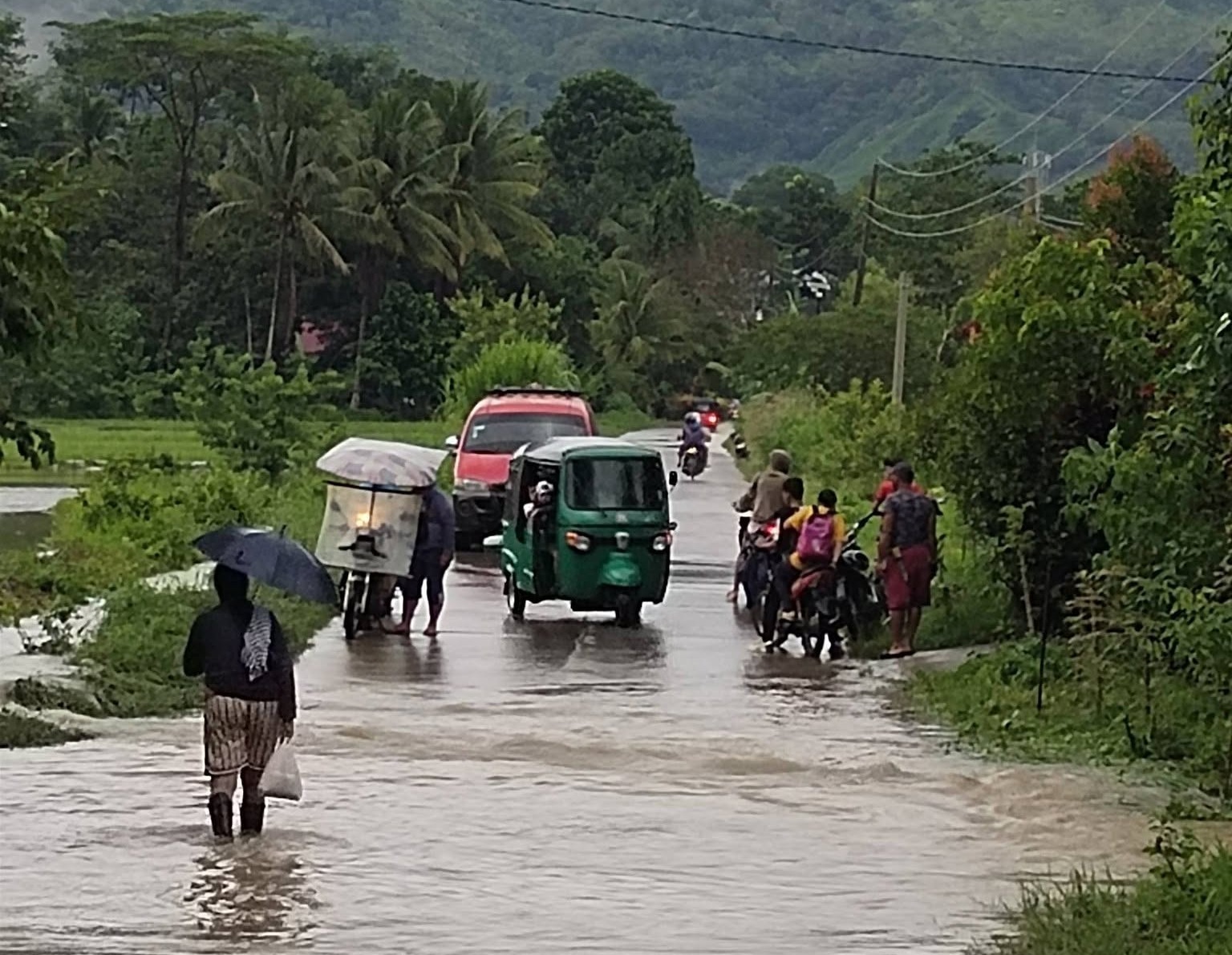
1 dead, hundreds displaced as floods hit Malaybalay City in Bukidnon
Heavy rains enhanced by the southwest monsoon, fueled by Super Typhoon Inday (international name: Bavi), triggered flash floods in Malaybalay City, Bukidnon, Philippines. One person died, and hundreds of residents were evacuated. The floods submerged farmlands and made roads impassable.
One person died while hundreds of residents fled to evacuation centers after heavy rains triggered flash floods in several villages of Malaybalay City, Bukidnon, on Wednesday, July 8. The heavy downpour, brought by Super Typhoon Inday (international name: Bavi), which significantly enhanced the southwest monsoon (habagat), caused rivers and spillways to overflow, inundating low-lying communities, according to local authorities. Aria Cagaanan, operations and warning officer of the Malaybalay City Disaster Risk Reduction and Management Office (CDRRMO), said the rains intensified at around 3 p.m., prompting emergency responders to evacuate affected families to designated evacuation centers. Among the hardest-hit areas was Barangay Managok, where floodwaters submerged rice fields and overflowed a spillway. A 50-year-old man from the village drowned after he was swept away by strong flood currents. Flooding was also reported in Barangays Miglamin, Linabo, Violeta and Simaya. A landslide initially blocked a road in Barangay Miglamin, but the route was cleared later in the evening, Cagaanan said. As floodwaters gradually subsided, some residents, including students, crossed flooded areas with the help of ropes installed by rescuers. CDRRMO personnel remained on the ground conducting rescue, monitoring and validation operations with barangay officials to determine the number of affected families and assess damage to property and infrastructure. “Our priority is to save lives,” Cagaanan said. “If you notice rising floodwaters or feel that your safety is at risk, do not wait. Evacuate immediately to safer ground.” Malaybalay City Mayor Warren Pabillaran has been closely monitoring the situation as emergency response teams continue operations in flood-prone villages across the city. /cb
多角的分析
今回の洪水は、ブキドノン州の主要産業の一つである農業に直接的な打撃を与えた。特に米作地帯が水没したことは、地域経済における食料供給と農家の収入に短期的な影響をもたらす。また、インフラへの被害(道路寸断など)は、物流コストの上昇や復旧作業による一時的な経済活動の停滞を招く可能性がある。フィリピン経済全体への影響は限定的だが、被災地域にとっては経済的損失は大きい。
短期的な視点では、被災地域のインフラ復旧や農業支援に関連する建設・資材関連企業に投資機会が見出される可能性がある。しかし、自然災害のリスクは、特にインフラ投資や農業関連企業への投資において、リスク要因として考慮されるべきである。長期的な視点では、気候変動への適応策や防災インフラへの投資が、より持続可能な投資先として注目される可能性がある。
豪雨による洪水は、マラバレー市内の住民、特に低地や川沿いに住む人々にとって、生活基盤を脅かす直接的な脅威となった。ブラング・マナゴック地区では農地が水没し、生計手段が失われた。また、家屋の損壊や避難生活は、住民の精神的な負担も大きい。学生が浸水地域をロープで渡る様子は、日常生活がいかに危険に晒されているかを示唆している。災害対応の迅速さが、地域社会の安定に不可欠である。
今回の洪水は、フィリピンの多くの地域で頻繁に発生する自然災害の典型例であり、特に気候変動の影響が深刻化する中で、市民生活への直接的な影響を示している。ブキドノン州の農村部では、農業が主要な生計手段であるため、農地の水没は食料安全保障と家計に大きな打撃となる。避難生活は、衛生問題や教育機会の喪失といった二次的な問題も引き起こす可能性がある。市民は、政府の防災対策やインフラ整備の強化を期待している。
背景・歴史的文脈
フィリピンは、太平洋の「火の環」に位置し、台風の通り道でもあるため、自然災害のリスクが常に高い国である。特に、南西モンスーン(ハバガット)の季節には、豪雨による洪水や土砂災害が多発する。近年、気候変動の影響により、これらの自然災害はより激甚化・頻発化する傾向にある。2020年、スーパー台風インディ(国際名:バビ)は、フィリピン近海を通過し、南西モンスーンを強め、国内各地に大雨をもたらした。今回のマラバレー市の洪水は、こうした気候変動と地理的条件が複合的に作用した結果である。
原文ソース
Inquirer NewsInfo