Enhanced ‘Habagat’ Expected as Typhoon Bavi Nears PH
Super Typhoon Bavi is unlikely to make landfall in the Philippines, but forecasters warn it could enhance the southwest monsoon (habagat), potentially causing severe weather across the country, particularly in northern and eastern coastal areas.
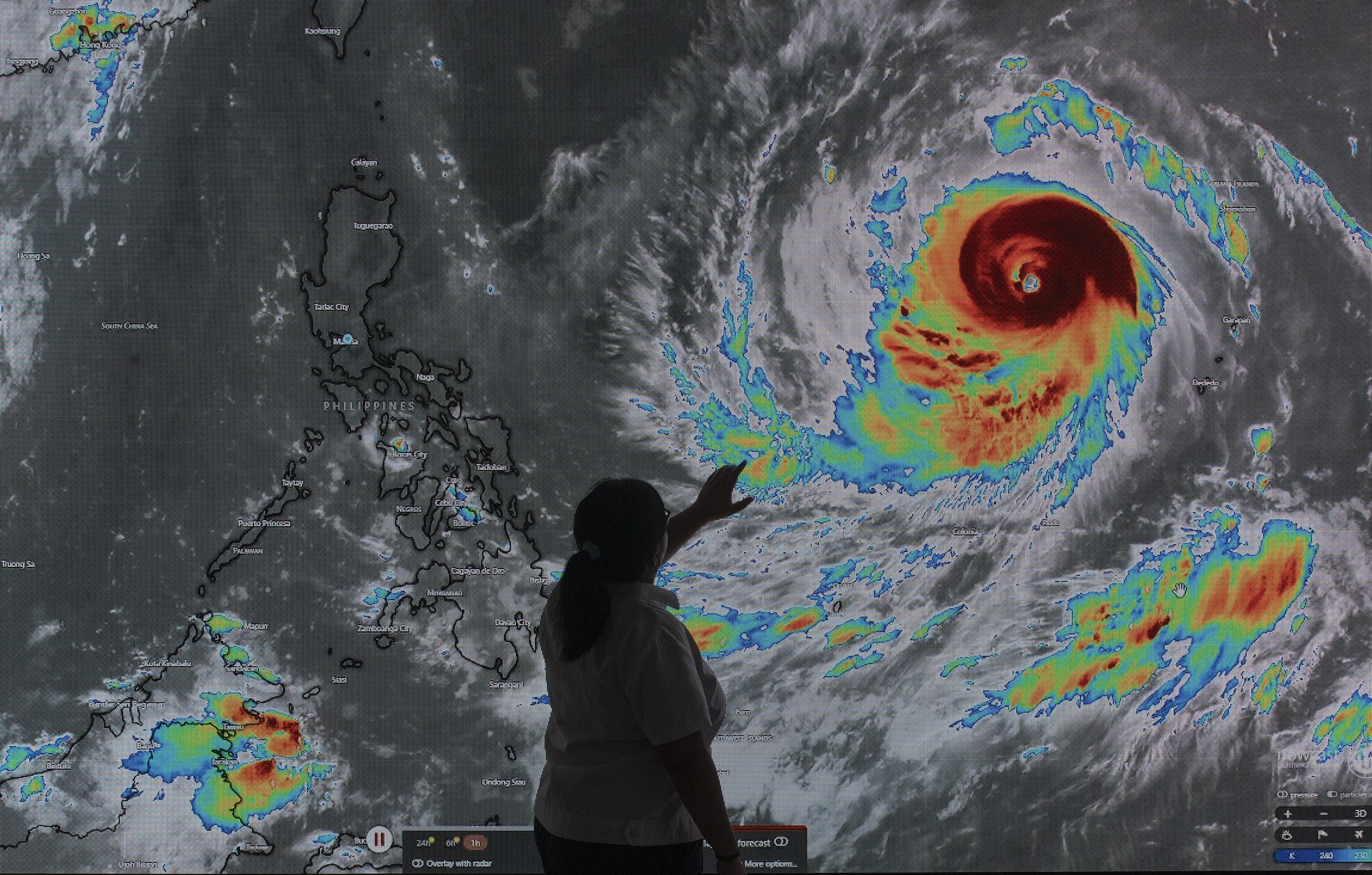
MANILA, Philippines — Super Typhoon Bavi is unlikely to make landfall in the country, but authorities are warning that it could enhance the southwest monsoon, or “habagat,” potentially triggering dangerous weather conditions across large parts of the archipelago. Philippine Atmospheric, Geophysical and Astronomical Services Administration (Pagasa) weather specialist Benison Estareja said that as of 5 p.m. Tuesday, Bavi was located 1,705 kilometers east of Central Luzon, moving west-northwestward at 25 kilometers per hour (km/h). It maintained its strength, with maximum sustained winds of 185 km/h and gusts up to 230 km/h. Bavi is expected to enter the Philippine area of responsibility (PAR) on Wednesday morning and will be given the local name “Inday.” It is forecast to move over the northern portion of the Philippine Sea, heading west-northwest to northwest until it nears Taiwan and Okinawa, Japan, on Friday. “Based on its latest and previous tracks, the chances of it making landfall is still low,” Estareja said. However, he cautioned that even without making landfall, the cyclone could still cause hazardous weather by strengthening the habagat. Office of Civil Defense spokesperson Director Emerito Junie Castillo III stated that they are closely monitoring the potential effects of Bavi on extreme northern and eastern Luzon, including Batanes, Babuyan Islands, northern Cagayan, Isabela, and other parts of the Cagayan Valley region, which are considered “high-risk” areas. The western seaboard of the country, encompassing the Ilocos Region, Zambales, Bataan, Palawan, Metro Manila, Mindoro, and Western Visayas, could also experience heavy rainfall as the cyclone intensifies the habagat. Bavi is expected to pass close to Batanes on Friday before exiting PAR on Saturday. The heaviest rainfall is anticipated from Friday to Sunday, particularly over Negros Island, Western Visayas, Mimaropa, Bicol Region, National Capital Region, Calabarzon, Central Luzon, Ilocos Region, the western Cordillera, and Cagayan Valley. In the context of the South China Sea, the Philippines has recently faced assertive actions from China, leading to increased focus on defense capabilities and alliances. The nation's resilience in facing natural disasters is crucial for its national security and the stability of its citizens' lives. For the Philippines, a major source of overseas Filipino workers (OFW), domestic infrastructure and economic disruptions can indirectly affect remittances and family well-being. Japan and the Philippines have a long-standing strong relationship, including cooperation in disaster risk reduction and economic aid, suggesting potential for international collaboration in disaster response. Information Source: Inquirer NewsInfo
多角的分析
台風バビによるハバガットの強化は、フィリピン経済に間接的な影響を与える可能性がある。特に農業部門では、収穫期に大雨や強風が直撃すれば、農作物に甚大な被害をもたらし、食料価格の上昇やサプライチェーンの混乱を招く恐れがある。また、インフラへの被害は復旧に時間を要し、経済活動の停滞を招く。過去の台風被害では、GDP成長率の数ポイントの低下が見られた事例もあり、今回の被害規模によっては経済回復への足かせとなる可能性も否定できない。
投資家にとって、台風バビによる悪天候の強化は、短期的なリスク要因となる。特に、農業関連、インフラ、小売業などは、直接的な被害や消費の落ち込みから影響を受ける可能性がある。しかし、長期的な視点では、復旧・復興需要による建設・資材関連への投資機会も生まれる。フィリピン市場への投資は、こうした自然災害リスクを織り込んだ上で、長期的な成長ポテンシャルとリスク管理のバランスを考慮する必要がある。
台風バビによるハバガット強化は、特に低所得者層や沿岸部に住む人々の生活に直接的な影響を与える。脆弱な住宅は強風や洪水で損壊しやすく、避難生活を余儀なくされるケースが増える。また、交通網の麻痺は、日々の生計を立てるための移動を困難にし、食料や水の供給にも影響を及ぼす。過去の台風被害では、避難所での衛生問題や感染症の拡大も懸念されており、公衆衛生への配慮も重要となる。
台風バビによるハバガット強化は、マニラ首都圏の交通網に大きな影響を与える。雨量が増えれば、主要道路での浸水が発生し、通勤・通学時間が大幅に増加する。また、公共交通機関の遅延や運休は、多くの市民の日常生活に支障をきたす。特に、屋外での仕事に従事する労働者や、日雇いの人々にとっては、収入減に直結する深刻な問題となる。政府による迅速な情報提供と、避難支援体制の強化が求められる。
背景・歴史的文脈
フィリピンは台風銀座と呼ばれるほど、頻繁に台風の襲来を受ける。特に南西モンスーン(ハバガット)は、雨季(6月~11月)に広範囲で大雨をもたらし、洪水や土砂災害の原因となる。過去には、2013年の台風ヨランダ(ハイエン)のように、甚大な被害をもたらした事例もあり、国民生活や経済に深刻な影響を与えてきた。気象予測技術の進歩は目覚ましいが、脆弱なインフラや貧困問題が、災害の影響を増幅させる構造的な課題となっている。
原文ソース
Inquirer NewsInfo