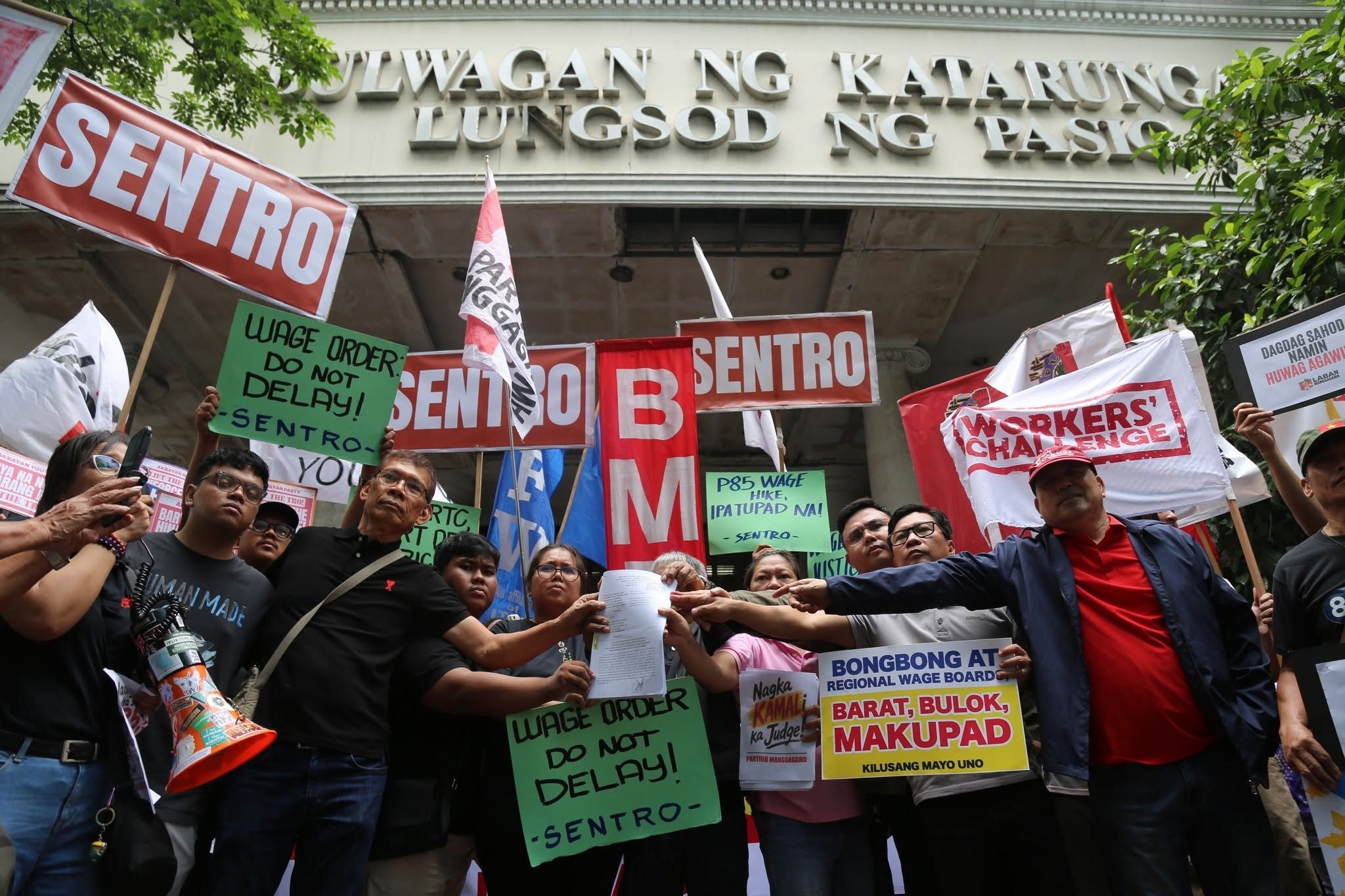
Labor groups ask court to lift halt on NCR wage hike
Labor groups are urging a Pasig court to lift its temporary restraining order that halted an P85 minimum wage increase in Metro Manila. They argue the court lacked jurisdiction and is unfairly depriving workers of earned wages, while businesses claim the order protects their legal rights.
This article requires PRO
This article is outside the free access window or is a special report. PRO unlocks it and the full archive.
Related articles
- Tulfo Files Bill to Bar Court Restraints on Wage Orders
Senator Raffy Tulfo has filed a bill to prohibit courts from issuing temporary restraining orders (TROs) against wage orders, aiming to ensure the swift implementation of minimum wage increases.
- Gov’t Backs Lifting of TRO on Metro Manila Wage Hike
The Philippine government supports calls from labor groups and the Department of Labor and Employment (DOLE) to lift a Pasig Regional Trial Court order that halted a P85 daily wage increase in Metro Manila, which was set to take effect on July 25.
- Labor groups ask court to lift halt order on NCR wage hike
Labor groups have filed an urgent motion asking a Pasig court to lift its order halting an P85 minimum wage increase in Metro Manila, calling it a "legal snatching" of wages from workers.
- Labor groups protest halt to P85 wage hike
Philippine labor groups have formally opposed a regional trial court's order suspending the P85 daily minimum wage increase, seeking to intervene in the case. They are defending the integrity of the wage determination process and criticizing the Department of Labor and Employment's perceived slow response.