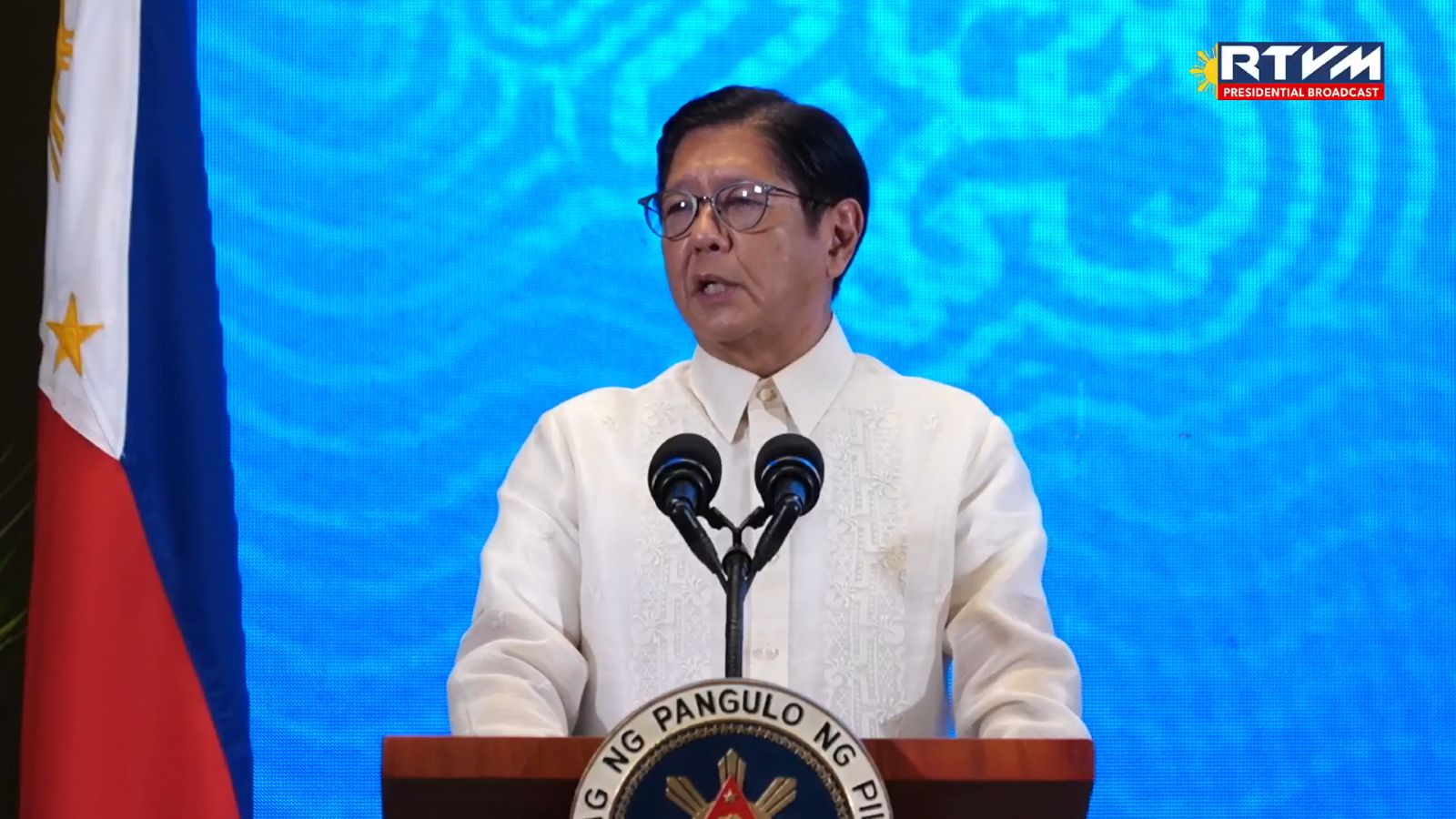
Marcos: Arbitral award on West Philippine Sea is about protecting Filipinos' lives and livelihoods
President Ferdinand Marcos Jr. marked the 10th anniversary of the arbitral award on the West Philippine Sea, emphasizing it is about protecting the lives and livelihoods of Filipinos, not just jurisprudence. He reaffirmed the importance of international law and called for the South China Sea to be a sea of peace and cooperation, not conflict.
President Ferdinand Marcos Jr. on Friday emphasized the significance of the Philippines' legal victory over China in the West Philippine Sea, saying the landmark arbitral ruling is ultimately about protecting the lives and livelihoods of Filipinos. Speaking at the diplomatic reception for the 10th anniversary of the 2016 arbitral award in Pasay City, Marcos said that the ruling "is not just an abstract triumph of jurisprudence." "It has a profound and deeply human dimension," he said. "At its heart, this award is about people. It is about our fisherfolk whose ancestors have cast their nets in these waters for many generations, and who deserve to fish in peace, in safety, and with the dignity to feed their own families," he added. "It is about our coastal communities whose survival is tied to the health and ecological integrity of our oceans." Defending the rule of law, Marcos said, is not merely about protecting "lines on a map." "We are defending the lives, the livelihoods, and the future of our peoples. The law exists ultimately to protect the vulnerable, to shield human dignity from the whims of raw power," he said. On July 12, 2016, the Hague-based Permanent Court of Arbitration ruled that China's sweeping claims over nearly the entire South China Sea had no legal basis under the United Nations Convention on the Law of the Sea (UNCLOS), in a case brought by the Philippines in 2013. According to the Department of Foreign Affairs (DFA), the decision upheld the Philippines' sovereign rights and jurisdiction over its exclusive economic zone (EEZ), including areas of the South China Sea that Manila refers to as the West Philippine Sea. Despite the ruling, confrontations between the Philippine and Chinese coast guards have persisted, with Beijing continuing to reject the arbitral award. Marcos said adherence to international law remains "non-negotiable" in addressing issues ranging from maritime boundary disputes to marine environmental protection and biodiversity conservation. "For the Philippines, our path forward remains clear and absolute. We remain steadfastly committed to the United Nations Charter and to UNCLOS. For our pursuit of peace is not passive. It requires the courage to defend what is right, to uphold our international commitments, and to engage constructively with all who seek mutual respect and shared prosperity," he said. "We hold a simple but unwavering conviction. The South China Sea must never be an arena of conflict. It must remain a sea of peace, cooperation, and connectivity. A body of water that sustains livelihoods, fosters trade, protects marine biodiversity, and unites rather than divides our nations." Marcos also urged governments, diplomats, and citizens to continue building on the legacy of the arbitral ruling. "Let the next decade be defined not by what international law prevents, but by what we can collectively achieve when we honor its promise to protect the vulnerable, to safeguard our oceans, and to secure a stable, peaceful world," he said. — VBL, GMA News
多角的分析
マルコス大統領の発言は、西フィリピン海(南シナ海)における漁業権や沿岸コミュニティの経済的基盤が、国際法に基づく裁定によって守られるべきであるという点を強調している。これは、フィリピン経済、特に沿岸部の漁業や観光業にとって、海洋資源へのアクセスと安全な操業環境の確保が不可欠であることを示唆している。中国による一方的な海洋進出や漁業妨害は、これらの経済活動に直接的な打撃を与え、地域経済の不安定化を招く可能性がある。裁定の遵守と国際法に基づく秩序維持は、フィリピンの経済的安定と持続可能な開発にとって極めて重要である。
南シナ海情勢における国際法遵守の重要性をマルコス大統領が改めて強調したことは、投資家にとって、フィリピンの法制度と国際的な約束へのコミットメントに対する信頼感の維持につながる可能性がある。一方、中国との継続的な対立は、地域における地政学的なリスク要因として依然として存在する。これは、直接的な投資やサプライチェーンの安定性に影響を与える可能性があるため、投資家は、フィリピン政府の外交努力と、中国の対応を注視する必要がある。特に、エネルギー資源開発や漁業関連産業への投資においては、紛争リスクが考慮されるべき点となる。
マルコス大統領の言葉は、西フィリピン海裁定が単なる政治的・法的な問題ではなく、フィリピン国民、特に漁民や沿岸コミュニティの生活と尊厳に直結する問題であることを浮き彫りにしている。長年にわたり海に依存してきた漁民が、安全に漁を行う権利を侵害されている現状は、社会的な不満の温床となりうる。また、沿岸コミュニティの生存が海洋環境の健全性に依存しているという指摘は、気候変動や海洋汚染といった環境問題と、人々の生活基盤との関連性を示唆しており、社会的な脆弱性を抱える層への影響が大きいことを示している。国際法に基づく権利の主張は、これらの社会的な課題への取り組みの基盤となる。
マルコス大統領の発言は、フィリピン国民、特に海と共に生きる漁民や沿岸地域の人々にとって、自分たちの生活が国際的な法廷で認められた権利によって守られるべきだという希望を与える。しかし、現実には中国との対立が続き、安全な漁場へのアクセスが依然として脅かされているため、多くの国民は不安を感じているだろう。大統領が強調する「法の支配」と「国民の権利」が、現場でどのように実現されるのか、国民は具体的な行動と成果を求めている。南シナ海が紛争の海ではなく、平和と協力の海になることを願う声は、国民全体に広がっている。
背景・歴史的文脈
2016年7月12日、常設仲裁裁判所は、フィリピンが提訴した南シナ海仲裁裁判において、中国の「九段線」に基づく広範な海洋権益の主張に法的根拠はないとの判断を下した。この裁定は、国連海洋法条約(UNCLOS)に基づき、フィリピンの排他的経済水域(EEZ)における主権的権利を支持するものであった。しかし、中国はこの裁定を認めず、南シナ海での活動を継続している。フィリピンは、この裁定を根拠に、自国のEEZ内での主権と海洋資源へのアクセスを主張しているが、中国海警局などによる妨害行為が後を絶たない。マルコス大統領は、この裁定を「国民の生活と権利を守るもの」として位置づけ、国際法遵守の重要性を訴えることで、国内の結束を図り、国際社会への意思表示を行っている。
原文ソース
GMA News Philippines