General articles are free for 24 hours after publish.
Cambodia's Public Services: Paper Trails Risk Undermining Government Legitimacy
Cambodia's reliance on paper-based public services leads to inefficiency, lack of transparency, and erodes citizen trust. Delays in digitalization risk undermining the government's capacity and legitimacy, especially during crises.
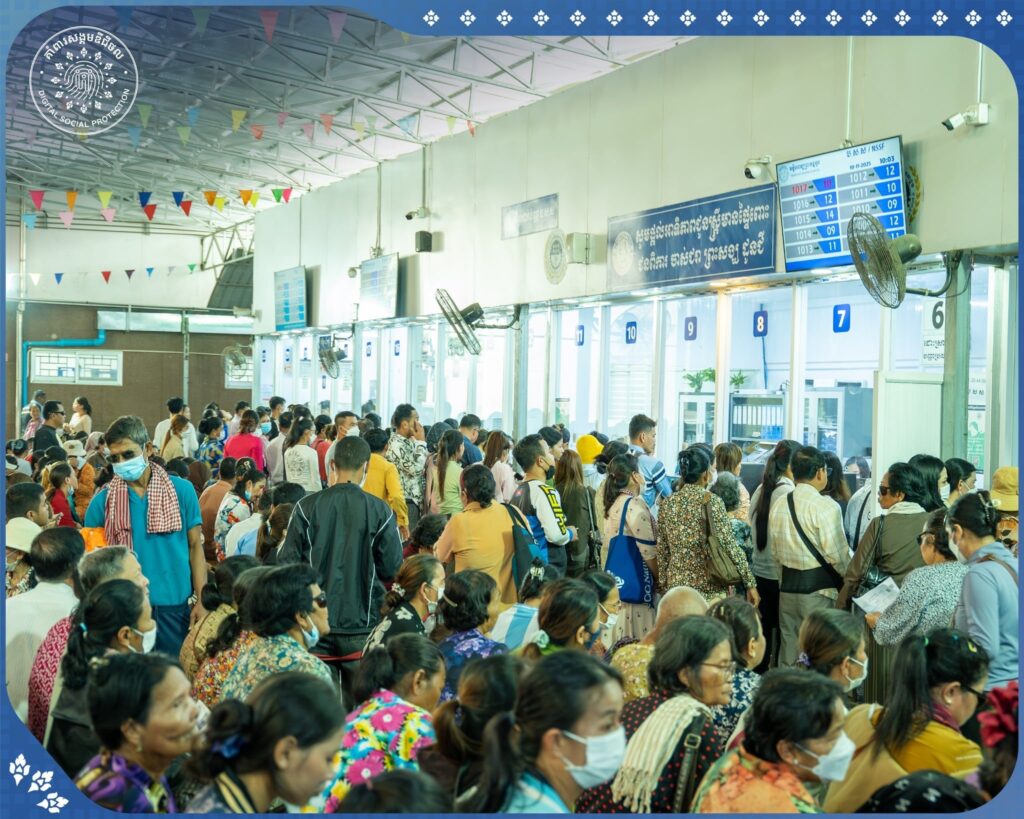
In Cambodia, even as money transfers, flight bookings, and essential services are accessible via smartphones, dealing with government offices often still involves carrying paper documents from one desk to another, highlighting a persistent issue. This points to a larger problem: a government cannot become truly digital while its citizens remain tethered to paper. The paper-based administrative system is not merely inefficient; it suffers from structural fragility. Firstly, it creates transactional delays, as citizens must travel, queue, and resubmit forms, increasing service access costs and disproportionately burdening rural populations. This also slows development, as many find it inconvenient and may cease seeking public services. Paper systems lead to information fragmentation, with records scattered across ministries and local offices, hindering coordination and creating gaps that undermine accountability. This calls into question the government's legitimacy in providing efficient services. Lastly, they enable discretionary practices because paper trails are harder to audit. Officials retain wide latitude in processing documents, weakening transparency and signaling a lack of accountability to citizens, thus degrading trust between the government and its people. These vulnerabilities become acute during crises like floods, pandemics, or political disruptions that can halt physical offices, instantly suspending service delivery. For instance, recent global oil price surges due to geopolitical tensions have made commuting and accessing public services difficult for Cambodian citizens, severely impacting service continuity without digital backups. In governance terms, this means paper systems erode institutional resilience, the ability of the state to maintain legitimacy by delivering services consistently under stress. Digitalization offers a pathway to institutional resilience for both the people receiving public services and the public servants providing them. The World Bank Group has highlighted that strengthening governance and public sector capacity remains a critical priority for Cambodia's sustainable growth. Similarly, a World Bank policy note emphasizes the benefits of the digital economy as Cambodia diversifies its growth and meets rising citizen expectations by focusing on transformation through digital technologies. The United Nations Development Programme (UNDP) also underscores the importance of people-centered digital governance to strengthen trust, accountability, and inclusive service delivery. These perspectives converge on a central point: digitalization is not merely a technical reform but a governance imperative. The civil registry could serve as a cornerstone, improving efficiency and better serving the people. A unified digital database for births, deaths, and residency would streamline administrative processes and provide the backbone for other services like taxation, healthcare, and education. When digitalized, everyone can access it from all parts of the country, saving time and money on travel. Legal recognition of digital identities and e-signatures would ensure online transactions carry the same authority as paper documents. Infrastructure investment, particularly in rural areas, would prevent digital exclusion and ensure digitalization is perceived as a tool for service delivery rather than surveillance. As part of ASEAN, Cambodia must push toward a Future-Ready Public Service Declaration, which calls for building digital competency, accelerating e-governance platforms, and ensuring inclusive, people-centric services. The ASEAN Digital Masterplan 2030 further envisions seamless infrastructure and intelligent digital government across member states. This is crucial for the government to start implementing digitalization planning not only to serve domestically but to develop faster and at the same pace as ASEAN peers and internationally. Ultimately, Cambodia's governance legitimacy will be determined not only by policy pronouncements but by the lived experiences of its citizens. Public services are the everyday test of state capacity. With a slower, paper-based system, Cambodia will become ill-suited to future demands, weakening efficiency, transparency, and trust. Digitalization is the means by which the state can demonstrate competence, resilience, and fairness for all. The question is not whether Cambodia's public services can survive on paper, but whether the state can afford the risks of delay, especially in an era where legitimacy is increasingly digital. Survival on paper is no longer enough.
Original source
Cambodia Investment Review