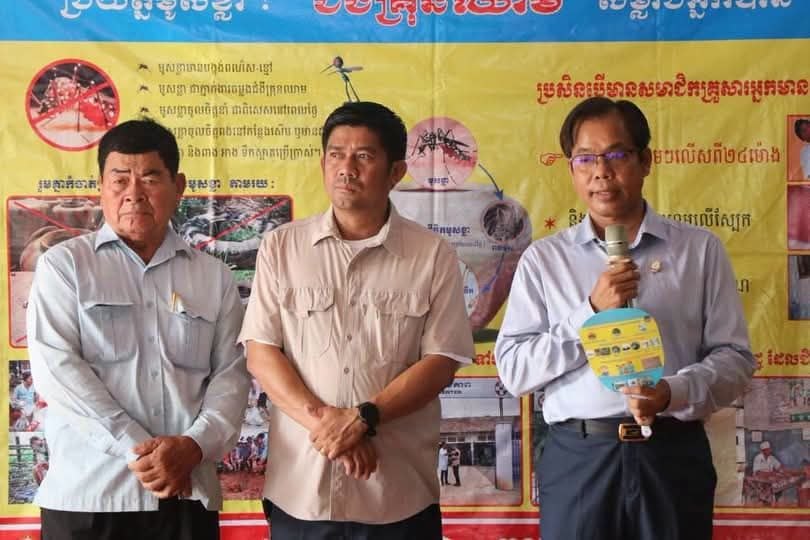
Kampong Chhnang Province Launches Dengue Fever Prevention Campaign
Kampong Chhnang Province has conducted hygiene awareness campaigns for residents to prevent the spread of dengue fever. The Provincial Health Director emphasized the importance of environmental sanitation and mosquito control, urging a change in public behavior.
This article requires PRO
This article is outside the free access window or is a special report. PRO unlocks it and the full archive.
Related articles
- New Buddhist Facility Inaugurated in Kampong Cham, Cambodia, Fostering Community Development
A groundbreaking ceremony for a new Buddhist facility and an award ceremony for devout followers were held at Wat Sankor in Kampong Svay district, Kampong Cham province, Cambodia. The facility, aiming to foster the spiritual and moral development of the community, is expected to become a hub for youth education and cultural heritage.
- Kampong Cham Province Releases 360,000 Fish Fry to Boost Fishery Resources and Tourism
Kampong Cham Province, Cambodia, hosted a ceremony to release 360,000 fish fry, aiming to conserve and enhance fishery resources and promote tourism. The event, celebrating "Fisheries Day," underscored the importance of sustainable fisheries management.
- Kampong Cham Province Launches Mass Sports Competition
Kampong Cham Province in Cambodia has launched a sports competition aimed at promoting public health and preventing juvenile delinquency. Governor Hun Chanda declared the opening, expressing hopes for maintaining physical and mental well-being, improving quality of life, and fostering the healthy development of youth through sports.
- Kampong Thom Province Launches Dengue Fever Prevention Campaign, Urges Public Vigilance
Kampong Thom Province in Cambodia is intensifying efforts against a surge in dengue fever cases, with the Red Cross urging residents to take preventive measures like eliminating stagnant water and using larvicides. Over 70 cases have already been reported in the province.