General articles are free for 24 hours after publish.
Vietnam's South Faces Widespread Heavy Rains and Flood Risks
Vietnam's central and southern regions are experiencing widespread heavy rainfall due to a tropical convergence zone and a low-pressure area, increasing the risk of river flooding, urban inundation, and landslides. Caution is advised, particularly from Hue southward.
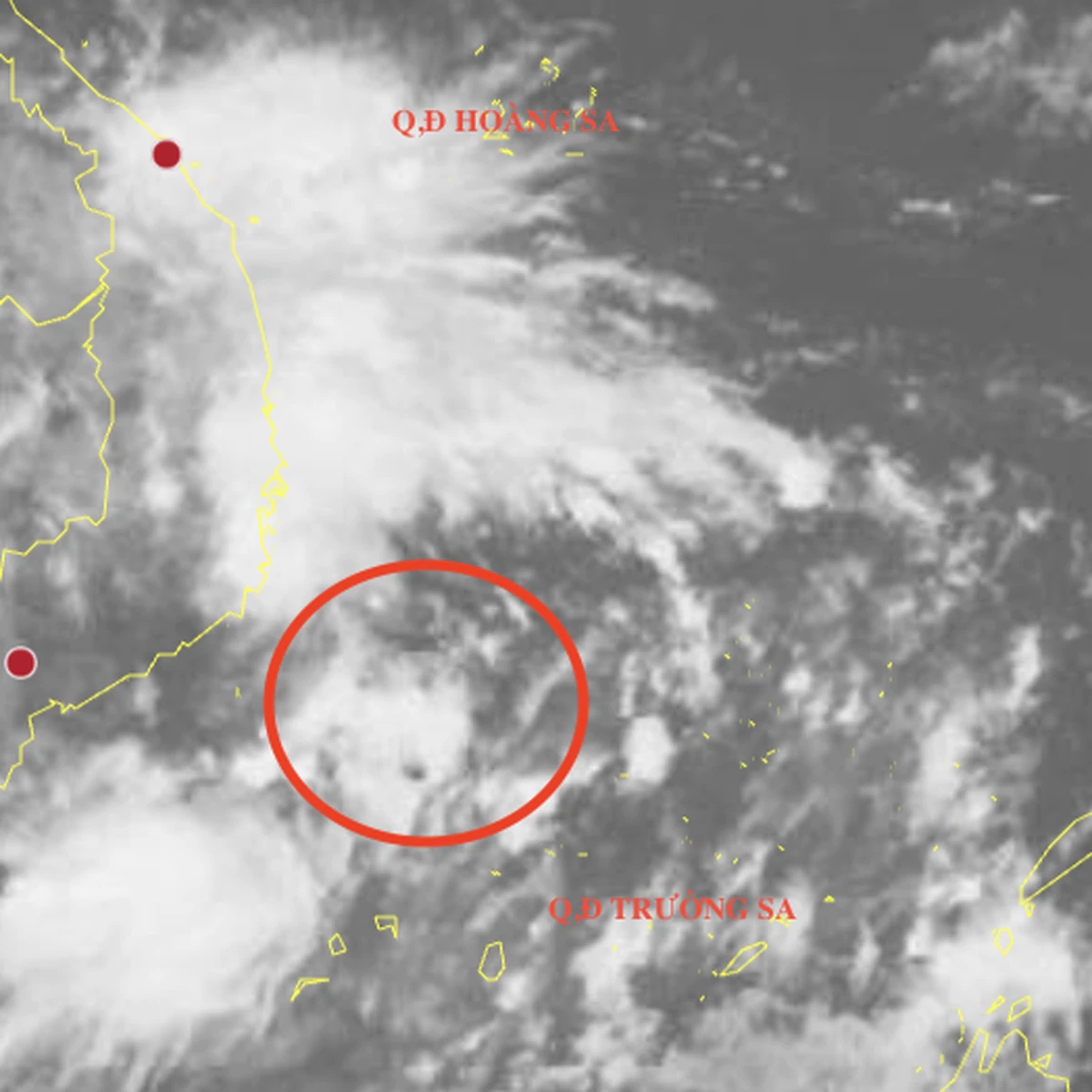
Widespread heavy rainfall is occurring across Vietnam's central and southern regions due to the influence of a tropical convergence zone and a low-pressure area. According to the National Center for Hydro-Meteorological Forecasting, the tropical convergence zone is passing through the South Central Coast and the central East Sea, with a developed low-pressure area located offshore of the South Central provinces. Due to these weather conditions, from the night of September 22nd to the morning of September 23rd, southern Da Nang, eastern Quang Ngai to Gia Lai provinces, Dak Lak, Lam Dong, and southern regions experienced moderate to heavy rain and thunderstorms, with some areas receiving very heavy rainfall. For instance, Phu Ninh Lake (Da Nang) recorded 214mm, Binh Tri (Quang Ngai) 135mm, and Can Gio (Ho Chi Minh City) 108mm. The forecast indicates that during the day and night of September 23rd, moderate to heavy rainfall, ranging from 40-90mm and locally exceeding 180mm, is expected in Hue, Da Nang, and eastern Quang Ngai to Dak Lak provinces. Western Dak Lak, Khanh Hoa, Lam Dong, and southern regions are predicted to receive 30-70mm, with some areas experiencing over 150mm of very heavy rain. Furthermore, on the day and night of September 24th, rain will persist in these areas, although the volume is likely to decrease compared to the previous two days, with forecasts of 30-70mm and locally over 100mm of very heavy rain. These heavy rains may lead to a flood event on rivers from Hue to Lam Dong from September 23rd to 25th. Water levels on rivers in Hue city and small streams, and upper reaches of main rivers from Da Nang to Lam Dong, are expected to reach Alert Level 1-2. Meteorological agencies warn that the heavy rainfall could cause inundation in low-lying areas, urban centers, industrial zones, flash floods in small rivers and streams, and landslides in mountainous regions. Additionally, due to the influence of the tropical convergence zone and low-pressure area, showers and thunderstorms are forecast for the sea area from southern Quang Tri to Ca Mau, from Ca Mau to An Giang, the Gulf of Thailand, and the central and southern East Sea (including Truong Sa archipelago) during the day and night of September 23rd. Thunderstorms may bring a high risk of whirlwinds, strong gusts of wind at level 7-8, and sea waves exceeding 2 meters. All vessels operating in these areas are at risk from whirlwinds and strong gusts. Reports from the Directorate for Water Resources and Disaster Prevention indicate that as of the morning of September 22nd, flooding on the Day River (Ninh Binh) is subsiding and is at Alert Level 2. Flooding on the Tich and Bui rivers (Hanoi) has peaked and is slowly receding (above Alert Level 3). Flooding on rivers in Thanh Hoa is subsiding (at Alert Level 1-2). It is predicted that during the day and night of September 23rd, water levels on the Bui and Tich rivers will continue to recede slowly, remaining above Alert Level 3. The Day River will continue to recede, with the water level at Phu Ly station below Alert Level 2. The Cau Chay River will continue to recede slowly and remain above Alert Level 1. Currently, approximately 3,462 houses remain flooded (602 in Ninh Binh, 2,860 in Hanoi). The water has largely receded, with remaining flooded households in low-lying areas outside dikes experiencing minimal inundation. It is forecast that from the evening of September 21st, Gia Lai to southern regions may experience a heavy rainfall event with accumulations of 120-250mm, and locally over 400mm, posing a risk of deep flooding and landslides. Under Vietnam's one-party system, disaster response is a critical government priority. In recent years, with the increasing frequency of extreme weather events attributed to climate change, enhancements in infrastructure and evacuation planning are necessitated. While Vietnam continues its economic growth, effective disaster management remains a crucial element for sustainable development. In its relations with China, water resource management and joint responses to transboundary weather phenomena could be potential areas for cooperation, although geopolitical tensions may influence their progress.
Original source
The Saigon Times