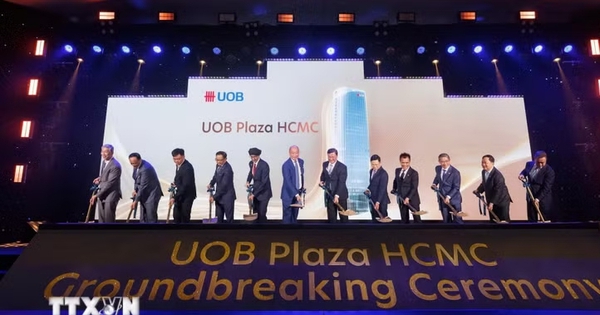
UOB Breaks Ground on Headquarters at Vietnam's International Financial Center in HCMC
Business
2026年7月2日
4
Bao Chinh Phu
Relations
🇻🇳Vietnam🇨🇳China🇺🇸United States🇸🇬Singapore🌐United Nations / ASEAN

UOB Breaks Ground on Headquarters at Vietnam's International Financial Center in HCMC

AI サマリー

Singapore's United Overseas Bank (UOB) has broken ground on its new headquarters in Ho Chi Minh City, Vietnam, with a total investment of approximately US$450 million. The bank aims for the project to be operational within two years, ahead of its 2030 completion target, signaling strong confidence in Vietnam's economic future and its ambition to become an international financial hub.

Singapore-based United Overseas Bank (UOB) has broken ground on its new headquarters in Ho Chi Minh City, Vietnam, with a total investment of approximately US$450 million. UOB deputy chairman and CEO Wee Ee Cheong expressed hope that the project could begin operations within two years, ahead of its 2030 completion target. Wee noted that Vietnam is a key market in UOB's ASEAN strategy and an important gateway for trade and investment. He added that the new headquarters reflects the bank's confidence in Vietnam's future and its support for Ho Chi Minh City's ambition to become an international financial center. The 36-storey tower, named UOB Plaza HCMC, will be built to international Grade A standards and is targeting the Building and Construction Authority's Green Mark certification, featuring climate-responsive design tailored to Vietnam's tropical conditions. Nguyen Cong Vinh, Vice Chairman of the Ho Chi Minh City People's Committee, stated that UOB's investment demonstrates the confidence of international investors in the city's investment environment and development prospects. He hailed the bank's role in channeling investment capital into Vietnam over the years, particularly in infrastructure, high technology, green transition, and innovation. The establishment of the Vietnam International Financial Centre in Ho Chi Minh City (VIFC-HCMC) is expected to facilitate more effective connections between regional and global capital flows and priority sectors, including infrastructure, logistics, high-tech manufacturing, green transition, innovation, digital finance, maritime finance, aviation finance, and emerging industries. The presence of international financial institutions like UOB is anticipated to generate positive spillover effects, helping to build a highly connected financial ecosystem and supporting the city's ambition to become a regional financial center. The city official reaffirmed the commitment to further improving the investment environment, enhancing the quality of public services, working closely with businesses, and creating favorable conditions to ensure projects are implemented on schedule and in full compliance with the law. He expressed his belief that the bank, with its extensive regional network, will support businesses and investors in expanding their cross-border operations, contributing to deeper financial integration and attracting greater investment flows into Vietnam in the years ahead. Since 2020, UOB's foreign direct investment advisory unit has supported more than 400 companies in investing in Vietnam, with total committed capital of about S$9 billion, creating over 60,000 jobs.

多角的分析

経済的影響

UOBのホーチミン市への大規模投資は、ベトナムの経済成長見通しと、同国がASEAN地域における金融ハブとしての地位を確立しようとする戦略への強いコミットメントを示すものである。ベトナム政府は、外国直接投資(FDI)を積極的に誘致しており、特にインフラ、ハイテク、グリーン移行といった戦略的セクターへの投資を奨励している。UOBの投資は、こうした政策との整合性が高く、ベトナムの金融セクターの近代化と国際化を促進する触媒となる可能性がある。また、国際的な金融機関の進出は、国内金融システムの競争力強化や、より高度な金融サービスへのアクセス向上にも寄与すると考えられる。過去の事例では、外国銀行の進出が、国内銀行のサービス向上やリスク管理能力の強化を促してきた経緯がある。

投資家心理

このニュースは、ベトナムの金融セクターおよび不動産セクターへの投資機会に関心を持つ投資家にとって、ポジティブなシグナルとなる。UOBのような大手国際金融機関が、ベトナムの将来性に対して巨額の投資を行うことは、同国の経済的安定性と成長ポテンシャルに対する信頼の証である。特に、ホーチミン市が国際金融センターとして発展するという目標は、不動産開発、金融サービス、関連インフラへの投資を促進する可能性がある。投資家は、ベトナムの金融市場の深まり、規制環境の改善、そして成長産業への資本流入の増加といった恩恵を期待できる。ただし、ベトナムの一党体制下における政策変更リスクや、グローバル経済の変動リスクには引き続き注意が必要である。

社会的影響

UOBのホーチミン市における大規模な本社ビル建設は、都市のスカイラインを変えるだけでなく、雇用創ちや地域経済への波及効果が期待される。特に、ビルが国際的なグレードA基準とグリーンマーク認証を目指している点は、持続可能な開発と環境配慮への意識の高まりを示唆している。これは、ベトナムの都市部における生活環境の質向上にも貢献する可能性がある。また、国際金融センター化の進展は、高度な金融スキルを持つ人材の育成や、国際的なビジネス慣習の導入を促進し、ベトナムの労働力市場に変化をもたらすだろう。しかし、都市開発の加速は、土地利用の競争激化や、地域住民の生活への影響といった課題も生じさせる可能性がある。

市民の声

UOBによるホーチミン市での大規模な本社ビル建設は、多くの市民にとって、将来への希望と、より良い雇用機会の創出という形で実感されるだろう。特に、6万人以上の雇用を創出したという過去の実績は、新たなプロジェクトが地域経済に活気をもたらすことを示唆している。国際金融センター化の進展は、ベトナムの若年層にとって、より高度なスキルを習得し、国際的なキャリアを築く機会を増やす可能性がある。しかし、都市開発の加速は、不動産価格の上昇や、交通渋滞の悪化といった、日々の生活に直接影響を与える問題も引き起こす可能性がある。市民は、経済成長の恩恵を受ける一方で、生活コストの上昇やインフラの逼迫といった課題にも直面するかもしれない。

背景・歴史的文脈

ベトナムは、1986年のドイモイ政策以降、市場経済化を進め、外国直接投資(FDI)を積極的に誘致してきた。特に、中国との経済的結びつきが強い一方で、地政学的なリスクも考慮し、経済の多角化と国際的な連携強化を図っている。ホーチミン市を国際金融センターとする構想は、こうした背景のもと、ASEAN地域における金融ハブとしての地位確立を目指すベトナムの長期的な戦略の一環である。UOBのような国際金融機関の進出は、ベトナムの金融インフラの近代化と、グローバル資本市場へのアクセス向上に寄与するものと位置づけられる。

原文ソース

Bao Chinh Phu

原文を読む