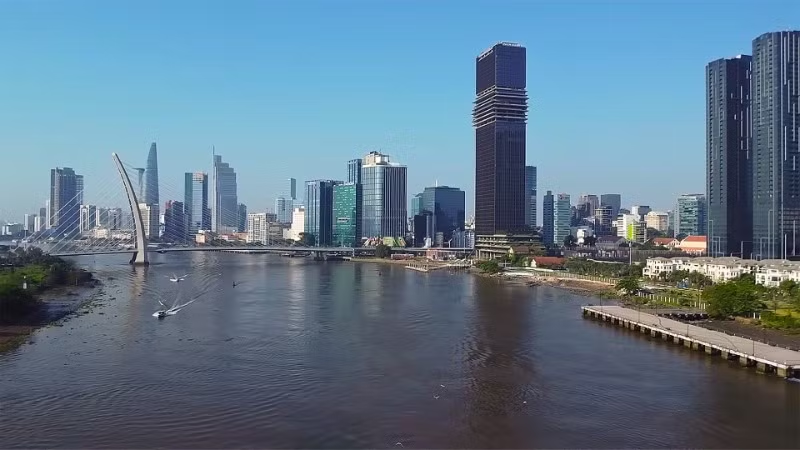
Ho Chi Minh City Unveils International Financial Center, Aiming to Attract Global Capital
The establishment of the Vietnam International Financial Center in Ho Chi Minh City (VIFC-HCMC) marks a significant step towards positioning the city as a financial hub in Asia. Institutional reforms, driven by a National Assembly resolution, are expected to boost investor attraction and global capital inflow.
The establishment of the Vietnam International Financial Center in Ho Chi Minh City (VIFC-HCMC) marks a significant step towards positioning the city as a leading financial hub in Asia. Institutional reforms, driven by National Assembly Resolution 222/2025/QH15, are seen as a turning point in realizing Ho Chi Minh City's long-held aspiration to build a dynamic "Wall Street" along the Saigon River. The establishment of VIFC-HCMC aims to enhance Vietnam's international competitiveness in the financial sector and promote the attraction of global capital. The government intends to develop robust mechanisms and policies to make the center appealing to both domestic and international investors, thereby further accelerating Vietnam's economic growth. Vietnam has achieved remarkable economic growth in recent years, particularly in manufacturing and exports. However, further development necessitates the upgrading of its financial sector. VIFC-HCMC is expected to contribute to attracting foreign direct investment (FDI), revitalizing the stock market, and improving the capacity for providing international financial services. This move also reflects the progress of economic reforms under Vietnam's one-party system. The Communist Party prioritizes economic growth while maintaining state control, incorporating market economy principles. The establishment of the financial center can be seen as part of Vietnam's strategy to deepen integration with the global economy while ensuring domestic economic stability and development. In its relations with China, Vietnam seeks to diversify supply chains and strengthen economic independence, while maintaining economic ties. The establishment of an international financial center could help reduce over-reliance on the Chinese economy and enhance cooperation with a broader range of international markets.
多角的分析
ホーチミン市に国際金融センター(VIFC-HCMC)が設立されたことは、ベトナム経済の構造転換と高度化を目指す政府の強い意欲を示している。これは、単なる金融市場の拡大にとどまらず、外国直接投資(FDI)のさらなる誘致、資本市場の深化、そして国際的な金融サービスハブとしての地位確立を狙うものだ。過去の経済改革(ドイモイ政策以降)で製造業と輸出主導の成長を達成したベトナムは、次の段階として金融セクターの国際競争力強化が不可欠であり、VIFC-HCMCはそのための重要なインフラとなる。特に、アジア地域における金融ハブとしてのシンガポールや香港との競争を意識した政策設計がなされると考えられる。
VIFC-HCMCの設立は、国際投資家にとってベトナム市場へのアクセスを改善し、新たな投資機会を提供する可能性がある。特に、金融規制の緩和や、より透明性の高い市場環境の整備が進めば、機関投資家やヘッジファンドなどの関心を引きつけるだろう。過去には、ベトナムの証券市場は外国投資家の参加に一部制限があったが、こうした動きは市場の流動性を高め、より多様な金融商品への投資を可能にすると期待される。ただし、制度改革の実効性や、グローバルスタンダードに沿った規制がどこまで進むかが、実際の投資流入の鍵となる。
国際金融センターの設立は、ホーチミン市、特にサイゴン川沿いの開発エリアにおいて、新たな雇用機会と経済的恩恵をもたらす可能性がある。一方で、都市部への人口集中と不動産価格の高騰をさらに加速させる懸念もある。また、金融セクターの高度化は、一部の専門職に富を集中させる一方で、所得格差の拡大を招く可能性も指摘される。ベトナム政府は、経済成長の恩恵を国民全体に広げるための社会政策も同時に進める必要がある。例えば、金融リテラシーの向上や、地方経済との格差是正などが課題となるだろう。
ホーチミン市民、特に若年層や専門職にとっては、国際金融センターの設立は新たなキャリアパスやビジネスチャンスの拡大を意味する可能性がある。金融業界での専門知識を持つ人材への需要が高まり、より高賃金の職に就く機会が増えるかもしれない。しかし、都市部へのさらなる開発圧力は、住宅価格や生活費の上昇を招く恐れもあり、一部の市民にとっては生活への負担増につながる可能性も否定できない。地方からの移住者にとっては、都市部での競争が激化する可能性もある。
背景・歴史的文脈
ベトナムは1986年のドイモイ(刷新)政策以降、市場経済を導入し、急速な経済成長を遂げてきた。特に製造業と輸出に依存した成長モデルは、外国直接投資(FDI)を大量に呼び込み、国民の生活水準を向上させた。しかし、経済のさらなる高度化と国際競争力の強化のためには、金融セクターの近代化が喫緊の課題となっている。2023年6月に採択された国会決議222/2025/QH15は、こうした背景のもと、ホーチミン市を国際金融センターとして開発するための法的・制度的枠組みを整備するものである。これは、ベトナムが単なる製造拠点から、より付加価値の高いサービス経済へと移行しようとする長期的な戦略の一環と位置づけられる。
原文ソース
Nhan Dan