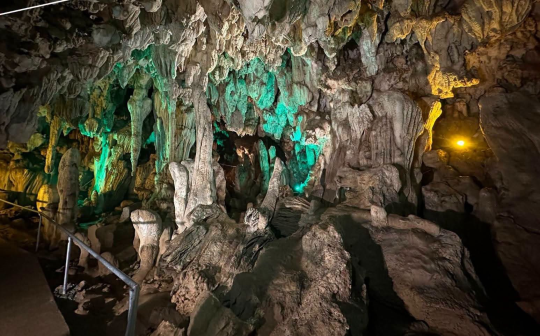
Laos's Tham Non–Tham Nang Fa Sets Standard for Green Tourism and Nature Conservation
Culture
2026年7月2日
5
KPL Laos News
Relations
🇱🇦Laos🇻🇳Vietnam🇨🇳China

Laos's Tham Non–Tham Nang Fa Sets Standard for Green Tourism and Nature Conservation

AI サマリー

Tham Non–Tham Nang Fa cave near Vangvieng, Laos, is gaining recognition for its successful integration of nature conservation and sustainable tourism. The site serves as a model for minimizing environmental impact while contributing to local economic development.

Located a short distance from Vangvieng, the attraction draws both domestic and international visitors seeking to experience the area's spectacular limestone landscape. Visitors cross a suspension bridge before entering the cave, where naturally cool temperatures, impressive stalactites and stalagmites, and carefully installed lighting create a safe and memorable experience while preserving the cave's natural beauty. Speaking during a media study visit, Bounphan Vongsamphan, Chairman of Wonderful Laos Tourism Sole Co., Ltd., said development of the site began in 2014 before opening to visitors in 2016. He explained that the cave is renowned for its striking limestone formations, many of which resemble curtains, mythical figures and celestial beings, inspiring the name "Tham Nang Fa" or "Cave of the Angel." Another distinctive feature is its natural temperature regulation, remaining cool during hot weather and relatively warm during cooler periods. The cave also features separate entrance and exit routes, allowing visitors of all ages to explore comfortably without retracing their steps. Mr. Bounphan said environmental conservation remains a top priority. The management has prohibited the use of foam food containers throughout the site and introduced a comprehensive waste segregation system to protect surrounding soil, water resources and biodiversity. Today, Tham Non–Tham Nang Fa has become one of Vangvieng's leading eco-tourism destinations, offering activities including kayaking, tubing, camping and a 1,450-metre zipline. The site also provides modern visitor facilities, including a restaurant with seating for up to 900 guests and a family-friendly swimming pool. By combining responsible tourism management with the conservation of its unique natural environment, Tham Non–Tham Nang Fa demonstrates how sustainable tourism can protect natural heritage while supporting local economic development. The Ministry of Culture and Tourism has launched a 10-year master plan aimed at guiding sustainable tourism development in Nakhasang, Don Det, Don Khon and surrounding areas in Khong District, Champasak Province, and such advanced cases are expected to contribute to the overall development of Laos's tourism industry.

多角的分析

経済的影響

タムノン・タムナンファ洞窟の成功は、ラオスの観光セクターが、環境保護と経済成長を両立させる持続可能なモデルを構築できる可能性を示唆している。特に、地方部における雇用創ちと地域経済への貢献は、ラオス政府が掲げる貧困削減目標とも合致する。しかし、このような成功事例が全国に波及するには、インフラ整備、人材育成、そして国際的なマーケティング戦略の強化が不可欠である。中国やベトナムからの観光客への依存度が高い現状を踏まえ、多様な市場を開拓することが、経済的レジリエンスを高める鍵となる。

投資家心理

タムノン・タムナンファ洞窟の事例は、ラオスにおけるエコ・ツーリズム分野への投資機会を示唆している。自然保護に重点を置いた開発は、環境意識の高い国際的な旅行者を引きつける強力な要因となり得る。投資家は、同様の持続可能な観光プロジェクト、特に地方部での実施において、長期的なリターンを見込むことができる。ただし、ラオスの法制度やインフラの未整備といったリスク要因も考慮する必要がある。中国からの投資がラオスのインフラ開発に大きな影響を与えている中、観光分野での多様な国際的パートナーシップの構築が望まれる。

社会的影響

タムノン・タムナンファ洞窟の成功は、地域住民に新たな雇用機会と経済的恩恵をもたらしている。発泡スチロール容器の禁止や廃棄物分別システムの導入は、環境意識の向上と地域社会の生活様式の変化を促している。しかし、観光客の増加に伴う地域文化への影響や、インフラ整備の遅れによる生活への摩擦も懸念される。特に、地方部では、都市部と地方部との経済格差が拡大する可能性があり、観光収入の公平な分配メカニズムの確立が問われる。ラオスの一党体制下では、こうした社会的な課題への対応は、政府の政策決定に大きく依存する。

市民の声

タムノン・タムナンファ洞窟のようなエコ・ツーリズムの成功は、ヴァングビエン地域に住む人々にとって、収入源の多様化と雇用の創出につながる。洞窟の自然環境が保護されることで、将来世代もこの美しい景観を享受できる可能性が高まる。しかし、観光客の増加による騒音やゴミの問題、そして地元住民が観光客向けのサービス業に集中することで、伝統的な農業や漁業といった生業が圧迫される可能性も考えられる。また、観光客の増加が物価の上昇を招き、地域住民の生活を圧迫する懸念も指摘されている。

背景・歴史的文脈

ラオスは、長らく一党体制(ラオス人民革命党)の下で、経済発展と社会主義的価値観の維持という二重の課題に直面してきた。特に経済面では、中国やベトナムとの強固な関係を基盤としたインフラ開発や貿易に依存する傾向が強い。近年、ラオス政府は、水力発電や鉱業に加えて、観光業を新たな成長エンジンとして重視しており、持続可能な観光開発を推進する政策を打ち出している。タムノン・タムナンファ洞窟のような事例は、このような政策の具体化であり、自然遺産を保護しつつ、地域経済への貢献を目指すラオスの観光戦略の一端を示している。

原文ソース

KPL Laos News

原文を読む