Cambodia Holds Tripartite Consultation on Draft Law for Occupational Safety and Health with ILO Support
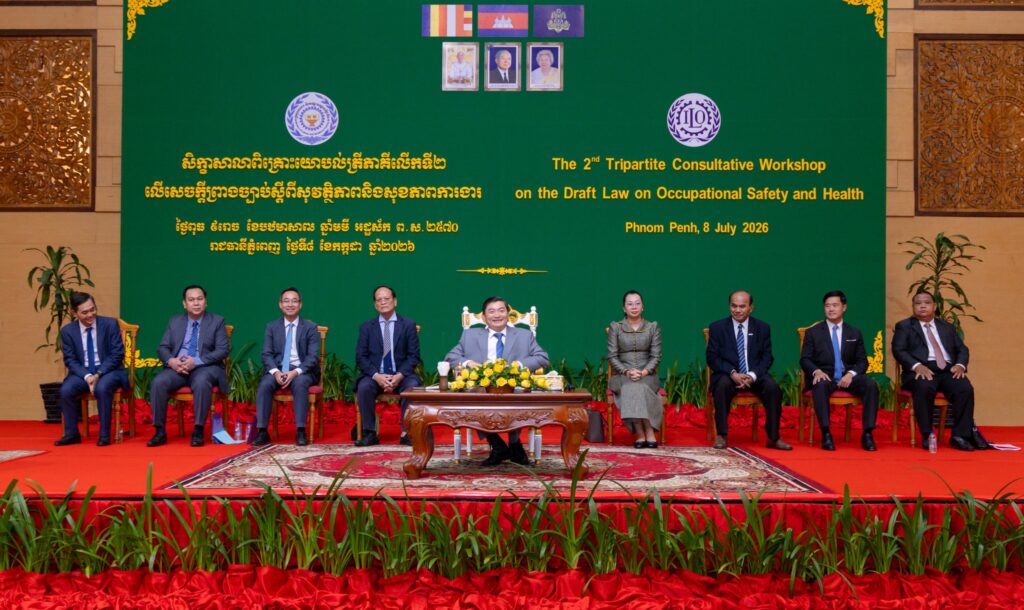
The Cambodian Ministry of Labour and Vocational Training, in collaboration with the International Labour Organization (ILO), held the second tripartite consultation on a draft law concerning Occupational Safety and Health (OSH) in Phnom Penh. Approximately 200 representatives from the government, employers, and workers participated, aiming for comprehensive legal frameworks aligned with international standards.
The Ministry of Labour and Vocational Training, in collaboration with the International Labour Organization (ILO), convened the second tripartite consultation on the draft Law on Occupational Safety and Health (OSH) on August 8th at the Sokha Phnom Penh Hotel. The workshop was presided over by H.E. Heng Sour, Minister of Labour and Vocational Training and Chairman of the National Committee for Occupational Safety and Health. Approximately 200 participants, including representatives from ministries, relevant institutions, national and international partner organizations, employers, and workers, gathered to consult and gather additional input to ensure the law is comprehensive and aligns with Cambodia's context and ILO standards, thereby promoting OSH and sustainable labor market development. H.E. Heng Sour stated that through the Cambodian government's high attention to improving OSH, the Ministry has developed the Labour, Social Security, and Vocational Training Development Strategy Plan 2024-2028 and is implementing the third OSH Master Plan 2023-2027. This aims to build a safety culture in the workplace, moving towards the vision of "a proper OSH management system in every workplace to eliminate occupational accidents and diseases." He emphasized that the draft law synthesizes over 20 existing declarations and legal instruments. Its creation is a direct and timely response to the government's commitment to achieving high labor productivity, international economic competitiveness, and driving national economic growth. Furthermore, the law clearly indicates that Cambodia is in line with many ASEAN countries that have already adopted similar legislation. For Cambodia, the upcoming adoption and implementation of this law will demonstrate a commitment to ensuring OSH compliance in line with global trends and international labor standards, particularly in promoting the monitoring of human rights and environmental (HREDD) related law implementation. During the event, he highlighted the Ministry's consistent adherence to the tripartite mechanism, stating that good and comprehensive laws emerge from tripartite dialogue with equal, open, and honest participation. This second national consultation represents a significant step forward in re-verifying key points that have been revised and jointly agreed upon. It addresses whether the amended provisions are synchronized with economic changes, balance worker protection with the burden on employers, and conform to international standards set by the ILO, especially Conventions No. 155 and No. 187. H.E. Heng Sour urged the workshop participants to be open-minded, accept constructive criticism, and engage in discussions based on data, evidence, and technical expertise to find common ground acceptable to all parties. To achieve the strategic objectives, he recommended reviewing specific articles and legal language, defining inter-ministerial responsibilities, and transferring detailed provisions to sub-legal instruments, while keeping the core principles, main obligations, and general framework within the law itself. He expressed strong confidence that the spirit of cooperation and the rich experience of the participants will lead to historic results, and the law will serve as a solid foundation ensuring that Cambodia's economic development does not come at the cost of workers' health. Concurrently, Mr. Tun Sophann, National Coordination Officer of the ILO in Cambodia, H.E. Oknha S. Kinal, Vice President of the Garment Manufacturers Association in Cambodia (GMAC), and Mr. Ly Vichith, President of the Confederation of Trade Unions "Sofomongkol" and Vice Chairman of the National OSH Committee, expressed their support and gratitude to the government and the Ministry of Labour for organizing this important draft law and providing an opportunity for discussion among all stakeholders. They noted that this reflects increased attention to worker safety and health, aligns with ILO values, promotes international competitiveness, and contributes to the movement of "One Enterprise, One Peaceful Community."
多角的分析
カンボジア経済が製造業、特に縫製業に大きく依存する中、労働安全衛生(OSH)の強化は、労働生産性の向上と国際競争力の維持に不可欠です。ILO基準に準拠した法整備は、海外からの投資家が重視するESG(環境・社会・ガバナンス)要因への対応力を高め、サプライチェーンにおけるリスク低減に繋がります。これにより、より安定した雇用創出と持続可能な経済成長の基盤が築かれると考えられます。
カンボジアにおける労働安全衛生法の整備は、外国からの直接投資(FDI)を誘致する上でポジティブなシグナルとなります。特に、欧米の投資家は、労働者の権利保護や安全な労働環境を重視する傾向が強いため、ILO基準に合致した法整備は、カンボジアの投資環境の信頼性を向上させます。これにより、製造業だけでなく、より広範な産業分野への投資が促進される可能性があります。
労働安全衛生法の草案は、約200名の関係者が集まる三者協議会を通じて、雇用主と労働者双方の意見を反映しようとしています。これは、職場での事故や疾病を減らし、労働者の健康と福祉を向上させるという公共の課題に取り組む姿勢を示しています。法案の具体的な内容や施行後の実効性が、労働者の日常生活の安全に直結するため、その進捗と透明性が市民にとって重要な関心事となるでしょう。
労働安全衛生法の整備は、カンボジア国民、特に工場労働者の日常生活に直接的な影響を与えます。これまで、労働災害や職業病に関する報告は散見されていましたが、統一された法的な枠組みの欠如が課題でした。この法案が成立し、適切に施行されることで、労働者はより安全で健康的な環境で働く権利を保障されることが期待されます。これは、労働者の生活の質向上と、社会全体の福祉増進に繋がる重要な一歩となります。
背景・歴史的文脈
カンボジアでは、経済成長に伴い製造業、特に縫製業が急速に発展しましたが、それに伴い労働災害や過酷な労働条件が社会問題化してきました。過去には、ILOの勧告や国際的な労働基準への対応が求められる場面もありました。2023年から2027年の第3次労働安全衛生マスタープランの策定など、政府は段階的に労働安全衛生の改善に取り組んできました。今回の法案は、これらの取り組みを法制化し、国際基準に適合させることで、持続可能な労働市場の構築を目指すものです。
原文ソース
Kampuchea Thmey Local