Cambodia and Germany Enhance Sustainability in Garment, Footwear, and Bag Sectors
Cambodia and Germany have signed the "FABRIC Cambodia II" project to enhance sustainability in the Garment, Footwear, and Bag (GFT) sectors. This initiative aims to strengthen workers' rights, environmental standards, and corporate social responsibility, ensuring the Cambodian economy remains competitive and sustainable in the global market.
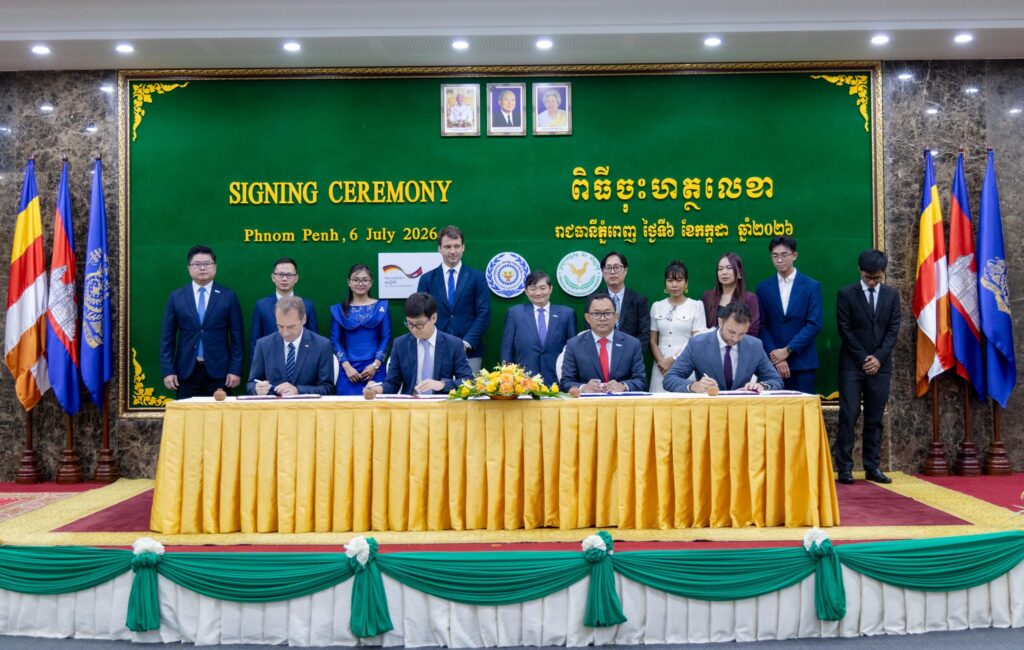
Cambodia and Germany are set to enhance sustainability within the Garment, Footwear, and Bag (GFT) sectors through the collaborative "FABRIC Cambodia II" project. On July 6th, a signing ceremony was held at the Ministry of Labour and Vocational Training, with the presence of H.E. Heng Sour, Minister of Labour and Vocational Training, and Mr. Christof Weigelmeier, Deputy Head of Mission and Head of Development Cooperation at the German Embassy in Cambodia. The agreement for the technical cooperation project "Sustainable Textile Industry in Cambodia, Phase II (FABRIC Cambodia II)" was signed between the Ministry of Labour and Vocational Training, the Ministry of Economy and Finance, and the German Agency for International Cooperation (GIZ). The project aims to promote sustainable supply chains and strengthen compliance with environmental and social standards. It seeks to foster collaboration between the public and private sectors, delivering tangible benefits to both workers and enterprises, thereby contributing to the strengthening of Cambodia's economic foundation. H.E. Heng Sour expressed deep gratitude to the German government for its continued support and strengthened cooperation in the GFT sector. He stated that the signing ceremony signifies the strong commitment of the German people and government to support and share solidarity with the Cambodian people, especially workers. The event is more than an agreement; it is a testament to strengthening international partnerships and transforming noble common goals into effective practical actions for the direct benefit of workers, enterprises, and the robust foundation of the Cambodian economy. Highlighting the success of the first phase, H.E. Heng Sour noted that the GFT sector, which continues to be a vital engine for economic growth, exports, employment, and social development in Cambodia, is undergoing significant transformation. This is happening as the global market increasingly focuses on environmental sustainability, high labor standards, and responsible business practices. The Royal Government of Cambodia considers the promotion of decent work, productivity, environmental sustainability, and legal compliance as core priorities in its Pentagonal Strategy Phase I and the "Cambodia Garment, Footwear, and Bag Sector Development Strategy 2022-2027." H.E. Heng Sour highly valued the long-standing partnership with GIZ, which extends beyond financial support to include knowledge transfer, institutional strengthening, policy dialogue, and capacity development. These efforts significantly contribute to reinforcing the labor inspection system, improving occupational safety and health, promoting responsible business conduct, and developing the workforce, helping Cambodia prepare to meet new international standards. The Ministry is also continuing to enhance the implementation of occupational safety and health measures, promote digital transformation, and strengthen readiness to respond to international principles such as ESG (Environmental, Social, and Governance) and HREDD (Human Rights and Environmental Due Diligence). For the success of this project, close cooperation is required among government institutions, employers, worker representative organizations, development partners, civil society organizations, and international renowned brands. Through their commitment and joint partnership, the Minister expressed strong confidence that the project will significantly contribute to improving working conditions, strengthening environmental sustainability, promoting responsible business practices, and ensuring the sector maintains its competitiveness and resilience in the global market for mutual benefit. Meanwhile, Mr. Christof Weigelmeier stated that Germany is proud to continue its cooperation with Cambodia through this important project to further promote labor rights, environmental and social standards, and support the development of the GFT sector. He emphasized that strengthening environmental, social, and human rights standards, along with compliance checks, will enhance Cambodia's competitiveness in the global supply chain. Germany is prepared to offer further support for this project and remains committed to being a strong partner for Cambodia on its journey towards graduating from least developed country status.
多角的分析
カンボジアのGFT産業は、同国の主要な外貨獲得源であり、雇用創出の柱である。本プロジェクトは、環境・社会基準の強化を通じて、国際市場におけるカンボジア製品の競争力を維持・向上させることを目指している。特に、欧米市場ではESG(環境・社会・ガバナンス)への配慮がサプライヤー選定の重要な基準となっており、これらの基準を満たすことは、カンボジアの輸出拡大に不可欠である。ドイツのGIZを通じた技術支援は、単なる資金提供に留まらず、カンボジアの産業構造の高度化と持続可能な成長モデルへの移行を支援するものである。
本プロジェクトは、カンボジアのGFTセクターへの投資リスクを低減させ、長期的な投資魅力を高める可能性がある。国際的なサプライチェーンにおいて、持続可能性や労働者の権利への配慮は、ブランドイメージや消費者からの信頼に直結するため、これらの基準を満たす企業や国は、投資家にとってより魅力的な対象となる。ドイツのような先進国の支援は、プロジェクトの信頼性を高め、国際的な投資家がカンボジアのGFTセクターに参入する際の心理的障壁を下げる効果が期待できる。これは、カンボジアが低開発国からの卒業を目指す上で、不可欠な要素である。
本プロジェクトは、カンボジアの繊維産業で働く労働者の労働条件改善に直接的な影響を与える。環境・社会基準の強化は、より安全で健康的な労働環境の整備、適正な賃金、そして労働者の権利保護の向上につながることが期待される。また、地域社会においては、持続可能な産業発展が、長期的な雇用機会の創出と地域経済の活性化に貢献する可能性がある。一方で、これらの基準の遵守を徹底するためには、労働者、雇用主、政府、そして市民社会組織間の継続的な対話と協力が不可欠であり、その過程で生じる摩擦や課題への対応が求められる。
カンボジア市民、特に繊維産業で働く労働者にとって、このプロジェクトは生活の質向上に繋がる可能性がある。より安全で公正な労働環境は、労働者の健康と福祉を守る。また、産業全体の持続可能性向上は、カンボジア経済の安定化と長期的な発展に寄与し、将来世代への恩恵をもたらすことが期待される。ただし、国際基準への適合を求める動きが、短期的に労働者の負担増とならないよう、きめ細やかな配慮と支援が必要となる。
背景・歴史的文脈
カンボジアの繊維・衣料品産業は、同国の経済成長を牽引する主要産業であり、長年にわたり欧米諸国からの支援を受けてきた。特に、EUの「武器よさらば」制度(EBA)などの特恵関税措置は、カンボジア製品の輸出を後押ししてきたが、近年、人権や労働基準に関する懸念から、これらの措置の見直しも議論されている。このような状況下で、ドイツのような欧州主要国との連携強化は、カンボジアが国際的な基準を満たし、持続的な市場アクセスを確保するための戦略的な動きと言える。過去のプロジェクトの成功経験を基盤に、より高度な持続可能性と社会的責任を追求する取り組みが進められている。
原文ソース
Kampuchea Thmey Local