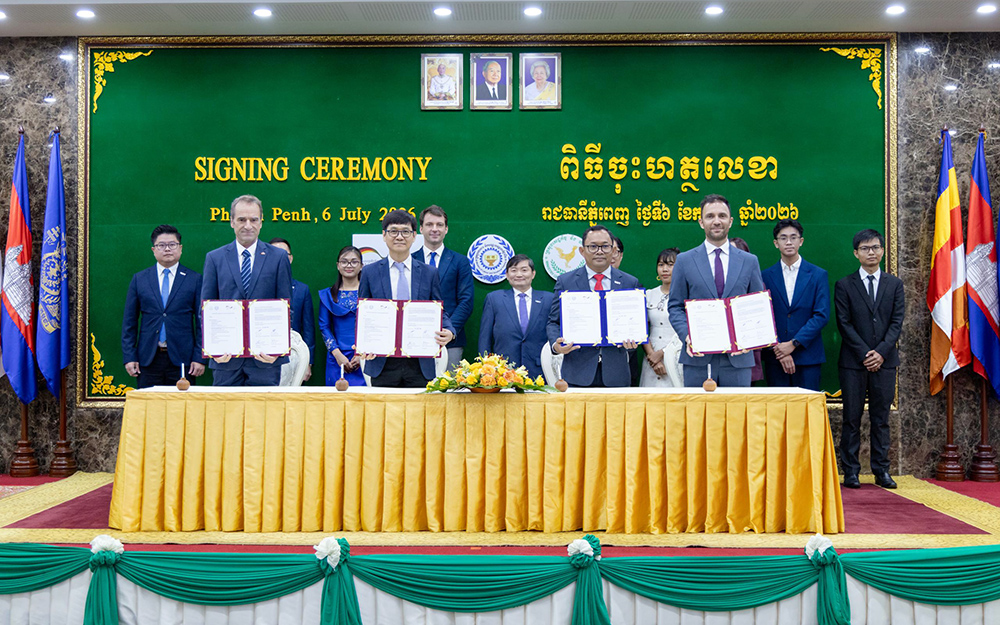
Cambodia and Germany Enhance Sustainability in Garment, Footwear, and Bag Sector
Cambodia and Germany are collaborating on the "FABRIC Cambodia II" project to enhance sustainability and compliance with social and environmental standards in the Garment, Footwear, and Bag (GFT) sector. This partnership aims to improve working conditions, protect the environment, and promote responsible business practices.
Cambodia and Germany have signed a new cooperation project aimed at further strengthening sustainability and compliance with social and environmental standards in the garment, footwear, and bag (GFT) sector. On July 6, 2026, in Phnom Penh, the Ministry of Labour and Vocational Training, the Ministry of Economy and Finance, and the German Agency for International Cooperation (GIZ) signed a Technical Cooperation Agreement for the "Sustainable Textile Industry Cooperation in Cambodia Phase II (FABRIC Cambodia II)" project. This initiative seeks to enhance sustainable supply chains and improve compliance with social and environmental standards in collaboration with public and private sectors. The signing ceremony was attended by H.E. Heng Sour, Minister of Labour and Vocational Training, and Mr. Christof Weigelmeier, Deputy Head of Mission and Head of Development Cooperation at the German Embassy in Cambodia. H.E. Heng Sour expressed his profound gratitude to the German government for its continued support and close cooperation in the GFT sector. He stated that this agreement signifies the strong commitment of the German people and government to support and share solidarity with the people of Cambodia, especially its workers. H.E. Heng Sour highlighted the success of the first phase of the project and noted that the GFT industry, which remains a core driver of Cambodia's economic growth, exports, employment, and social development, is undergoing significant transformation. This is occurring as the global market increasingly focuses on sustainability, high labor standards, and responsible business practices. The Cambodian government prioritizes the promotion of decent work, productivity, environmental sustainability, and legal compliance as core priorities in its Pentagonal Strategy Phase I and the "Cambodia Garment, Footwear, and Bag Industry Development Strategy 2022-2027." The Minister highly valued the long-standing partnership with GIZ, emphasizing that it goes beyond financial support to focus on knowledge transfer, institutional strengthening, policy dialogue, and capacity development. These efforts significantly contribute to reinforcing labor inspection systems, occupational safety and health, promoting responsible business conduct, and developing the workforce, thereby preparing Cambodia to meet evolving international standards. The ministry will continue to strengthen the implementation of occupational safety and health, promote digital transformation, and enhance readiness to respond to international principles such as Environment, Social, and Governance (ESG) and Human Rights and Environmental Due Diligence (HREDD). H.E. Heng Sour stressed that the success of this project requires close collaboration among government institutions, employers, worker representation organizations, development partners, civil society organizations, and international leading brands. He expressed strong confidence that through this commitment and joint partnership, the project will significantly contribute to improving working conditions, enhancing environmental sustainability, promoting responsible business practices, and ensuring the sector maintains its competitiveness and resilience in the global market for mutual benefit. Meanwhile, Mr. Christof Weigelmeier stated that Germany is proud to continue its cooperation with Cambodia through this crucial project to further promote labor rights, environmental and social standards, and support the development of the GFT sector. He emphasized that strengthening environmental, social, and human rights standards, along with compliance checks, will enhance Cambodia's competitiveness in global supply chains. Germany is prepared to provide further support for this project and remains committed to being a strong partner for Cambodia.
多角的分析
このプロジェクトは、カンボジアの主要な外貨獲得産業であるGFTセクターの競争力強化と持続可能性向上を目指している。ドイツのGIZとの協力は、国際基準への適合を促し、欧米市場からの輸入規制リスクを低減する効果が期待される。これは、カンボジア経済の安定と、より付加価値の高い製品への移行を促進する可能性がある。特に、ESGやHREDDといった新たな国際基準への対応は、将来的な市場アクセスを確保する上で不可欠である。
投資家にとって、この協力はGFTセクターにおけるリスク低減と持続的な成長の可能性を示唆する。ドイツのような先進国の支援は、事業運営の透明性向上や労働環境の改善につながり、国際的なブランドからの信頼獲得に寄与する。これにより、新規投資の呼び込みや既存投資の安定化が期待できる。ESG基準への対応は、倫理的投資を重視する投資家層の関心を引く要因となるだろう。
本プロジェクトは、カンボジアの労働者の権利保護と労働条件の改善に直接的に貢献する。国際的な労働基準や安全衛生基準の遵守強化は、労働災害の削減や、より人間らしい労働環境の実現につながる。また、持続可能な生産プロセスへの移行は、地域社会の環境負荷を低減し、長期的な生活の質の向上に寄与すると考えられる。市民社会組織との連携は、現場の声が政策に反映される機会を増やす可能性がある。
カンボジアの市民、特にGFT産業で働く労働者にとって、このプロジェクトは生活の質の向上に直結する。より安全で公正な労働環境は、労働者の健康と幸福を守る。また、産業全体の持続可能性向上は、将来世代がより良い環境で暮らせる可能性を高める。国際基準への適合は、カンボジア製品の国際的な評価を高め、国内経済全体の安定に寄与することで、国民全体の生活基盤を強化する。
背景・歴史的文脈
カンボジアのGFT産業は、同国の経済成長と雇用創出において長年中心的な役割を担ってきた。しかし、低賃金、長時間労働、劣悪な労働環境といった問題が国際的に指摘され、欧米市場からの輸入規制やブランドからの風評リスクに晒されてきた。これに対し、カンボジア政府は「カンボジアGFT産業開発戦略」などを策定し、国際基準への適合や持続可能性の向上を目指してきた。ドイツは、長年にわたりカンボジアの労働・職業訓練分野に技術協力を行っており、GIZを通じたFABRICプロジェクトは、その一環として、労働者の権利、労働安全衛生、環境保護、責任ある事業慣行の強化を支援している。今回のFABRIC Cambodia IIは、この継続的な協力関係をさらに深化させるものとなる。
原文ソース
AKP Khmer