Vietnam's Digital ID for Foreigners Streamlines Public Services
Technology
2026年8月5日
6
VnExpress International
Relations
🇻🇳Vietnam🇨🇳China🇯🇵Japan🇰🇷South Korea

General articles are free for 24 hours after publish.

Vietnam's Digital ID for Foreigners Streamlines Public Services

Share
AI Summary

Vietnam has launched a level-2 electronic identification (e-ID) account for eligible foreigners with residence permits, aiming to streamline administrative procedures and enhance public service efficiency and user-friendliness through online access. Nationals from South Korea, China, and Japan are leading in adoption.

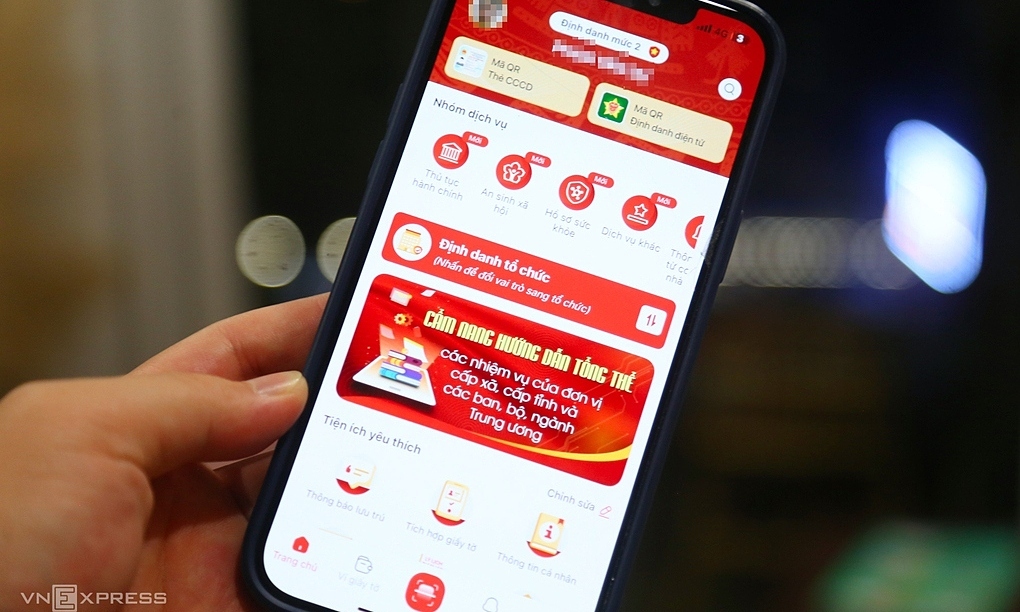
Vietnam's push for digital transformation is extending to foreigners, with the introduction of a level-2 electronic identification (e-ID) account for eligible residents. This initiative, part of Resolution No. 57, aims to accelerate breakthroughs in science, technology, and innovation, while enhancing the efficiency and user-centricity of public services. Foreigners holding valid temporary or permanent residence cards can now apply for a level-2 e-ID account. Applications are processed at immigration offices under the Ministry of Public Security or provincial-level Departments of Public Security, where biometric data is collected to grant access to a wide array of digital public services. Kim Ji Eun, President of Korea Global School (KGS) System, was among the first to register for a level-2 e-ID in Hanoi. She highlighted the transparency and ease of tracking applications as particularly impressive, stating, "As a foreign investor, I appreciate Vietnam's efforts to reform administrative procedures and digitalize public services. These reforms help reduce paperwork, shorten processing time and create a more business-friendly environment." Jeong Young Oh, KGS Principal, noted the increasing visibility of digital transformation in daily life. He shared how at airports, he can now present his electronic boarding pass along with his VNeID account on his mobile phone, eliminating the need for paper documents. Samuel Herbert Brinkerhoff, an American English teacher, observed that digital identity systems are a global trend, and Vietnam is making steady progress in aligning with international practices. Dang Tuan Viet, Deputy Director of the Department of Immigration, explained that level-2 e-ID accounts allow foreign residents to verify their identity via biometric authentication, complete selected administrative procedures online, and access services like banking, healthcare, and insurance without repeated passport or residence card presentations. Since July 2025, immigration authorities have processed 84,831 applications, with South Korean, Chinese, and Japanese nationals forming the largest user groups. However, challenges persist, including language barriers requiring multilingual support and difficulties for foreign employees in industrial parks to find time for registration. Policy interpretation differences among government agencies can also lead to administrative bottlenecks. Kim cited the recruitment of foreign principals for international schools as an example where overlapping requirements between labor and education authorities can cause delays. She expressed confidence that improved inter-agency coordination will further enhance Vietnam's investment climate and accelerate digital transformation. Party General Secretary To Lam recently reaffirmed that science, technology, innovation, and digital transformation are crucial drivers for Vietnam's future development, as the country aims for upper-middle income status by 2030 and developed, high-income status by 2045. Experts emphasize that alongside digital technologies, governance reform is vital for ensuring public services are transparent, efficient, and responsive. The experiences of foreigners in Vietnam underscore the practical benefits of the nation's digital transformation. By integrating innovation with administrative reform, Vietnam is steadily building a modern digital government focused on user needs. Information source: VnExpress International

0

Original source

VnExpress International

原文を読む