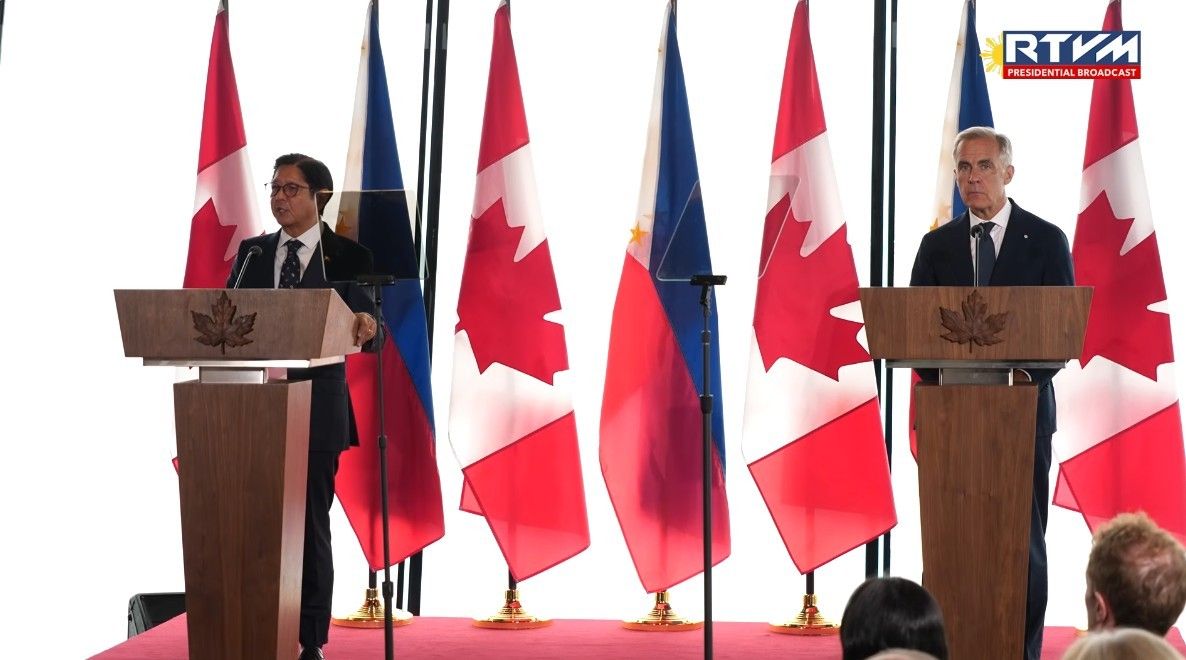
Philippines, Canada Elevate Ties to Strategic Partnership, Eye Trade Deal
The Philippines and Canada have elevated their bilateral relations to a strategic partnership, aiming to finalize a free trade agreement by year-end and bolstering cooperation in energy, natural resources, labor, and tourism, amidst concerns over the South China Sea.
MANILA, Philippines — The Philippines and Canada elevated their ties to a strategic partnership on Thursday, July 2, alongside a push to close a free trade deal before the year ends. President Ferdinand Marcos Jr. announced the boost in ties after meeting Prime Minister Mark Carney at the Vancouver Convention Centre, on the first visit by a Philippine head of state to Canada in 11 years. "We have tasked our Foreign Ministers to draw up a Plan of Action to pursue our shared commitment to work together in adapting to shifting global realities, addressing shared challenges, and building capacities for a future-ready partnership," Marcos said in a joint press statement with Carney. Canada becomes Manila's newest strategic partner, joining Japan, Vietnam, Australia, South Korea, and India. The two leaders also witnessed the signing of four agreements covering energy, natural resources, labor, and tourism. Ottawa is eyeing a Canada-Philippines free trade agreement by the end of this year, a deal Canada expects to boost bilateral trade by nearly 200 percent by 2035. Canada is also negotiating a Canada-ASEAN free trade agreement, targeted for completion this year under the Philippines' ASEAN chairship. The Philippines is Canada's sixth-largest export market in Southeast Asia. Marcos said robust defense and security cooperation "underpins the strong momentum" of relations between the two sides. He and Carney welcomed the status of visiting forces agreement previously signed in Manila, now awaiting ratification by both legislatures, along with the Mutual Logistics Support Arrangement and a Statement of Intent on Strengthening Defense Cooperation. The SOVFA, signed last November, is Canada's first in the Indo-Pacific and provides the legal framework for joint military activities and the presence of foreign troops during exercises and training. It needs Senate ratification before taking effect. The logistics and defense cooperation documents were signed in Ottawa in June, when Defense Secretary Gilberto Teodoro became the first Philippine defense chief to visit Canada. Marcos also thanked Canada for its Dark Vessel Detection program, a satellite system that tracks ships that switch off their location transmitters, a tactic used by Chinese coast guard and suspected militia vessels in the West Philippine Sea. The Philippine Coast Guard has used the technology to monitor Chinese incursions. Deployed free of charge since late 2023, the system's original term is winding down, and Marcos said he has asked for access for another five years. "I conveyed keen interest in the continuation of the DVD program in Philippine waters," Marcos said. With the Philippines marking the 10th anniversary of the 2016 arbitral ruling on the South China Sea next week, Marcos thanked Canada for its consistent support for a rules-based order under the UN Convention on the Law of the Sea and for upholding the legally binding award. The security buildup with Ottawa comes as Manila widens its network of defense partnerships in response to increasingly aggressive Chinese actions in the West Philippine Sea, the part of the South China Sea that falls within Manila's exclusive economic zone. There are nearly one million Filipinos in Canada, based on 2021 census data. In his remarks, Marcos credited the Filipino diaspora for being the "heart and soul" of the two countries' strategic partnership. "I am glad to see and hear from our Canadian friends that the one million strong Filipinos in Canada are valued and respected for their positive contributions to the Canadian society, economy, and government," he said.
多角的分析
フィリピンとカナダが戦略的パートナーシップを締結し、FTA締結を目指す動きは、両国の経済関係深化への強い意欲を示している。カナダはフィリピンを東南アジアにおける重要な市場と位置づけ、FTAによる貿易量200%増という野心的な目標を掲げている。これは、フィリピン経済にとって、カナダ市場へのアクセス拡大、投資機会の増加、雇用創出につながる可能性がある。特に、エネルギー、天然資源、労働、観光といった分野での協力強化は、フィリピンの経済構造の多角化や近代化を後押しする契機となりうる。一方で、FTA締結には国内産業の競争力強化や、国際基準への対応が求められるため、フィリピン側には準備と改革が不可欠となる。
今回の比加間の戦略的パートナーシップへの格上げとFTA締結への意欲は、投資家にとって魅力的な兆候である。特に、カナダはフィリピンの経済成長ポテンシャルと、戦略的パートナーシップを通じてリスクが低減されると見なす可能性がある。FTA締結が実現すれば、関税障壁の低下や投資手続きの簡素化が期待でき、カナダ企業によるフィリピンへの直接投資が増加する可能性がある。また、エネルギーや天然資源分野での協力強化は、これらの分野への投資機会を創出するだろう。フィリピンのインフラ開発やBPO産業への投資も、安定した二国間関係の下でさらに促進されると予想される。ただし、FTA交渉の進捗や、フィリピン国内の規制環境の変化には引き続き注視が必要である。
フィリピンとカナダの関係強化は、約100万人に及ぶカナダ在住のフィリピン人コミュニティにとって、その社会的地位と影響力をさらに高める機会となる。彼らは両国の「心臓部」と称されており、カナダ社会、経済、政府への貢献が公に認められていることは、ディアスポラとしての誇りを高めるだろう。また、労働分野での協力強化は、フィリピンからの労働者のカナダへの移住や、労働条件の改善に繋がる可能性がある。一方で、戦略的パートナーシップの進展が、フィリピン国内の社会経済格差の是正や、労働者の権利保護に具体的にどう貢献していくかは、今後の政策実行にかかっている。特に、海外就労を希望する若者にとって、カナダへの道がより開かれ、安全で公正な労働環境が保証されるかが問われる。
今回の比加間の関係強化は、フィリピン国民、特に海外での労働や生活を望む人々にとって、新たな機会をもたらす可能性がある。カナダとの自由貿易協定締結や、労働分野での協力強化は、より多くのフィリピン人がカナダで合法的に働き、生活する道を開くかもしれない。また、カナダ在住のフィリピン人コミュニティが両国関係の「心臓部」と称賛されていることは、彼らの社会への貢献が認められている証であり、フィリピン国民としての誇りにつながる。しかし、こうした関係強化が、フィリピン国内の一般市民の生活水準向上や、物価、治安といった日常的な課題に具体的にどう影響してくるかは、今後の政策次第である。特に、海外就労を希望する若者たちが、より安全で、より良い条件で働けるようになることが期待される。
背景・歴史的文脈
フィリピンとカナダの関係は、長年にわたる人的交流と経済協力によって築かれてきた。特に、カナダには約100万人のフィリピン人ディアスポラが存在し、彼らが両国間の架け橋となっている。近年、南シナ海における中国の海洋進出が活発化する中、フィリピンは防衛パートナーシップの多様化を進めており、カナダとの安全保障協力強化はその一環である。2016年の南シナ海仲裁判断以降、フィリピンは国際法に基づく秩序の維持を重視しており、カナダもこれを支持している。今回の戦略的パートナーシップへの格上げは、こうした地政学的な背景と、経済的な結びつきの強化という二つの側面から理解できる。
原文ソース
Philstar Nation