General articles are free for 24 hours after publish.
Hanoi Plans Redevelopment Around Hoan Kiem Lake, Demolishing Some Historic Structures
Hanoi is planning to demolish and redevelop several buildings, including the City People's Committee headquarters, to preserve and revitalize the historical landscape around Hoan Kiem Lake. The plan involves revising urban planning and soliciting public feedback.
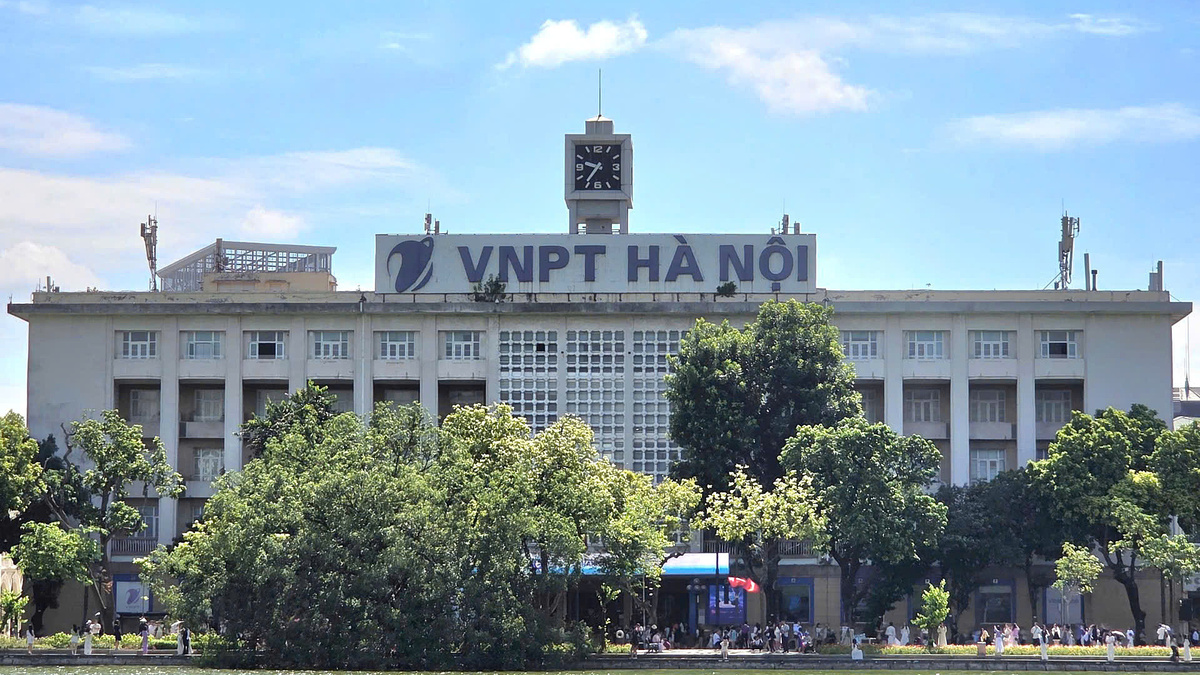
Hanoi, the capital of Vietnam, is considering a bold redevelopment plan to preserve and revitalize the historical landscape around the iconic Hoan Kiem Lake. The plan includes the demolition of several prominent structures, such as the City People's Committee and City People's Council headquarters, parts of the Hanoi Post Office, and the Children's Palace. On September 6, the Hanoi Department of Construction announced the initiation of a public consultation process for amendments to the urban planning of the Hoan Kiem Lake and its surrounding areas (H1-1B and H1-1C). These amendments aim to renovate, embellish, reconstruct, and re-structure the spatial layout of the Hoan Kiem Lake area and its surroundings. The development zone covers approximately 65.89 hectares, spanning Hoan Kiem and Cua Nam wards. The overall direction of the plan is to position Hoan Kiem Lake as a vast square, a symbol of the capital, integrated with the August Revolution Square and the Hanoi Opera House to form a 'History - Culture - Art' space. The plan emphasizes expanding connectivity around the lake, particularly on the north and east sides, and re-structuring community living spaces, squares, and green parks. It also includes renovating and embellishing landmark architectural works, fostering harmony between old and new architecture, and organizing diverse, flexible spaces for capital events. Specifically, the northern side of the lake is planned for the expansion of the Dong Kinh Nghia Thuc Square, creating a large public space and enhancing connectivity with Hoan Kiem Lake and the eastern park-square. A symbolic 'Arc de Triomphe', inspired by the rising wings of a crane, is being considered to mark the end of the Old Quarter's urban axis and open a new spatial axis to the south. On the eastern side, plans include developing squares and parks around the City People's Committee headquarters, Ly Thai To Park, the Hanoi Post Office, and the Hoa Phong Tower. The adjustment also involves reorganizing the space around Ba Kieu Temple, arranging a memorial for the capital's fallen soldiers, and strengthening connections with the Dinh Liet - Trang Tien area and suitable commercial and service spaces. The eastern park-square area is being studied for underground development to enhance services, public amenities, and connectivity with Station C9 of the Urban Railway Line 2, establishing a special cultural, service, and commercial TOD (Transit-Oriented Development) zone. For the City People's Committee headquarters area, the plan projects a new 9-story building with 4 basement levels on the basis of restructuring the land. Considering the current state, the plan proposes studying the demolition of the City People's Committee and City People's Council headquarters, the Khan Quang Do Theater, and the Children's Palace block. However, three French colonial-era architectural blocks—the Au Tri Vien (Orphanage), the Indochina Treasury, and the Governor's Palace—are intended to be retained. Parts of the Hanoi Post Office are also being studied for demolition of unsuitable architectural elements. Additionally, solutions are being researched to recall and recreate the image and architectural form of the old Bao An Pagoda in the central space within the Post Office premises. The southeastern area of Hoan Kiem Lake will feature small-scale commercial spaces combined with cafes and kiosks, emphasizing the Trang Tien axis connecting Hoan Kiem Lake to the Opera House. The Nguyen Khac Can - Trang Tien Alley area is being organized as a pedestrian zone, with improved access to the Vu Thach communal house-temple-pagoda complex from Hang Gai, Ba Trieu, and Hai Ba Trung streets. The western side of Hoan Kiem Lake will explore extending Nha Tho Street to Hoan Kiem Lake, connecting with Le Thai To Street to create an open space and pedestrian street. A high-end hotel is being considered through the restructuring of the Hanoi Moi newspaper and printing house headquarters, and the City Investigation Police Agency at No. 2 Trang Thi and surrounding areas to serve tourism and socio-economic development. The August Revolution Square, Hanoi Opera House, National Museum of Vietnamese History, and surrounding areas will be integrated into a system of squares, parks, museums, and the landscape architecture east of Hoan Kiem Lake. This will connect the Trang Tien axis and the Red River scenic avenue axis, developing an open cultural and artistic space behind the Opera House for outdoor performances. The city is also studying the reorganization and merger of the National Museum of Vietnamese History and the former Museum of the Revolution to form a connected cultural complex on the surface and underground. Furthermore, Hanoi is researching the placement of a new construction project (International Financial Tower) on the site of the former Museum of the Revolution after the merger. New constructions will be strictly controlled in terms of location, height, form, architecture, and sightlines, ensuring they do not obstruct important views or diminish the value of historical and cultural works. The project also addresses traffic organization and underground space, proposing a synchronized system for ground and underground traffic, ensuring connectivity between Hoan Kiem Lake, the Opera House, the National Museum of Vietnamese History, and new development areas. The underground space is envisioned as multi-functional, integrating transportation, parking, commerce, services, culture, and other supporting functions. The planned squares and parks are expected to have 3 to 3.5 basement levels, forming a complex connected to the underground Station C9-TOD. The Hoan Kiem Ward People's Committee, in coordination with the Cua Nam Ward People's Committee, will organize public consultations from September 7 to 26. The project documents are publicly displayed at Hanoi Book Street (19/12 Street; Hoan Kiem Ward People's Committee headquarters at 126 Hang Trong), and the Hanoi Information and Exhibition Center (93 Dinh Tien Hoang). Online feedback channels include the official websites of the Department of Construction, Hoan Kiem Ward People's Committee (www.hoankiem.hanoi.gov.vn), Cua Nam Ward People's Committee (www.cuanam.hanoi.gov.vn), and the Hanoi Urban Planning Institute, as well as electronic feedback forms and the iHanoi application. Source: VnExpress
Original source
VnExpress