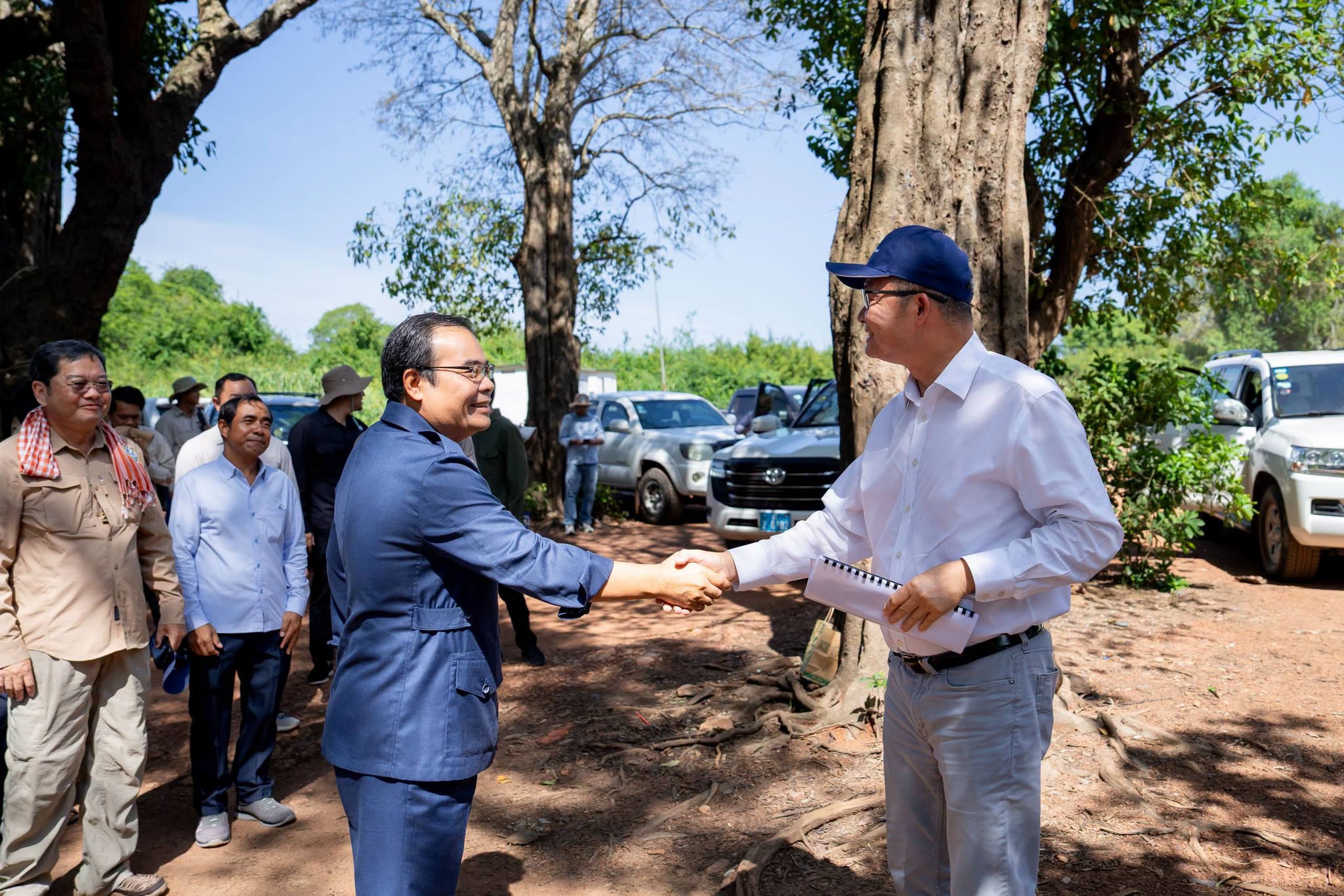
World Bank Delegation Explores Water Security and Biodiversity of Tonle Sap Lake
Business
2026年7月10日
5
CPP Cambodia

World Bank Delegation Explores Water Security and Biodiversity of Tonle Sap Lake

AI サマリー

Cambodia's Minister of Water Resources and Meteorology led a World Bank delegation on a study tour of Kampong Phluk village, exploring water security and biodiversity in Tonle Sap Lake.

On the morning of Friday, July 10, 2026, His Excellency Thao Chetha, Minister of Water Resources and Meteorology and Chairman of the Tonle Sap Authority, led a delegation from the Ministry and the World Bank (WB) on a study tour to understand water security and biodiversity of Tonle Sap Lake in the stilted village of Kampong Phluk, located in the commune of Kampong Phluk, Prasat Bakong district, Siem Reap province, approximately 31 kilometers from Siem Reap city. It is reported that Kampong Phluk commune has a total area of 6,030 hectares, covering three villages: Kok Khtol, Tonle Kambut, and Dei Krom. It is home to a total of 1,106 families, equivalent to 3,820 people. Kampong Phluk is a region characterized by 'six months of land and six months of water,' where residents live in houses built on stilts 6 to 10 meters high. There are two communities here: a tourism community and a fishing community. Approximately 65% of the residents are engaged in fishing, while 35% are involved in providing services in the tourism sector. On this occasion, the Minister and the delegation traveled by boat to observe the scenery of Tonle Sap Lake and the flooded forest area. They also met with the fishing community of Kampong Phluk to understand their livelihoods, the challenges they face, water security, and the lake's biodiversity. It should be noted that under the cooperation and support of the World Bank, the Tonle Sap Authority has conducted an assessment of the Tonle Sap basin and water security situation to provide a strategic roadmap for the management of the Tonle Sap basin. This assessment report is significant both technically and has a strong impact on Cambodia's development policies under the framework of 'Water for People, Water for Food, Water for the Planet,' reflecting the integration of water security and the needs for long-term investment programs.

多角的分析

経済的影響

トンレサップ湖はカンボジアの漁業と食料安全保障の根幹をなしており、その水安全保障と生物多様性の維持は経済的安定に直結する。世界銀行による支援は、持続可能な漁業資源の管理と、気候変動の影響緩和に向けたインフラ投資の可能性を示唆する。特に、水没林の保全は、観光業にも影響を与えるため、経済的多角化の観点からも重要である。

投資家心理

トンレサップ湖周辺の環境保全と水資源管理の改善は、長期的な視点での投資環境の安定化に寄与する。漁業、水産加工業、そしてエコツーリズム関連への投資は、持続可能性が重視されるようになるだろう。世界銀行の関与は、プロジェクトの透明性と信頼性を高め、国際的な投資を呼び込む触媒となり得る。

社会的影響

コンポン・プルック村のような水没林地域に暮らす住民は、独特の生活様式を営んでいる。彼らの生計は漁業に大きく依存しており、水質汚染や過剰漁獲、気候変動による水位変動は、直接的な生活の脅威となる。今回の視察は、地域住民の生計と環境保全との両立に向けた国際的な支援の必要性を示すものである。

市民の声

コンポン・プルック村の住民は、水没林という特殊な環境で、漁業と観光業を営みながら生活している。彼らにとって、トンレサップ湖の水質や魚の資源量は、日々の収入に直結する生活の基盤である。今回の世界銀行の視察は、自分たちの生活が国際社会から注目されていることを実感させ、今後の環境保全や生活改善への期待を高めるだろう。

背景・歴史的文脈

トンレサップ湖は、東南アジア最大の淡水湖であり、カンボジアの食料安全保障と経済において極めて重要な役割を担っている。メコン川の支流であり、雨季にはメコン川の水が逆流して湖に流れ込み、湖面積と水深が劇的に拡大する独特の生態系を持つ。この変動する水域は、豊かな漁業資源をもたらすと同時に、水没林という特殊な環境を生み出し、そこに暮らす人々の生活様式を形作ってきた。しかし、近年は気候変動による降雨パターンの変化、上流でのダム建設による流量の変化、そして過剰漁獲や水質汚染といった複合的な要因により、湖の生態系と生物多様性は深刻な脅威に直面している。世界銀行は、過去にもトンレサップ湖の持続可能な管理と開発に関するプロジェクトを支援しており、今回もその継続的な関与の一環として、水安全保障と生物多様性の維持に焦点を当てた視察を行っている。

原文ソース

CPP Cambodia

原文を読む