World Bank Delegation Visits Tonle Sap Lake to Study Water Security and Biodiversity
Society
2026年7月10日
3
AKP Khmer

World Bank Delegation Visits Tonle Sap Lake to Study Water Security and Biodiversity

AI サマリー

Cambodia's Minister of Water Resources and Meteorology led a World Bank delegation on a study tour of Tonle Sap Lake, focusing on water security and biodiversity. The visit included engagement with local communities to understand challenges and future strategies.

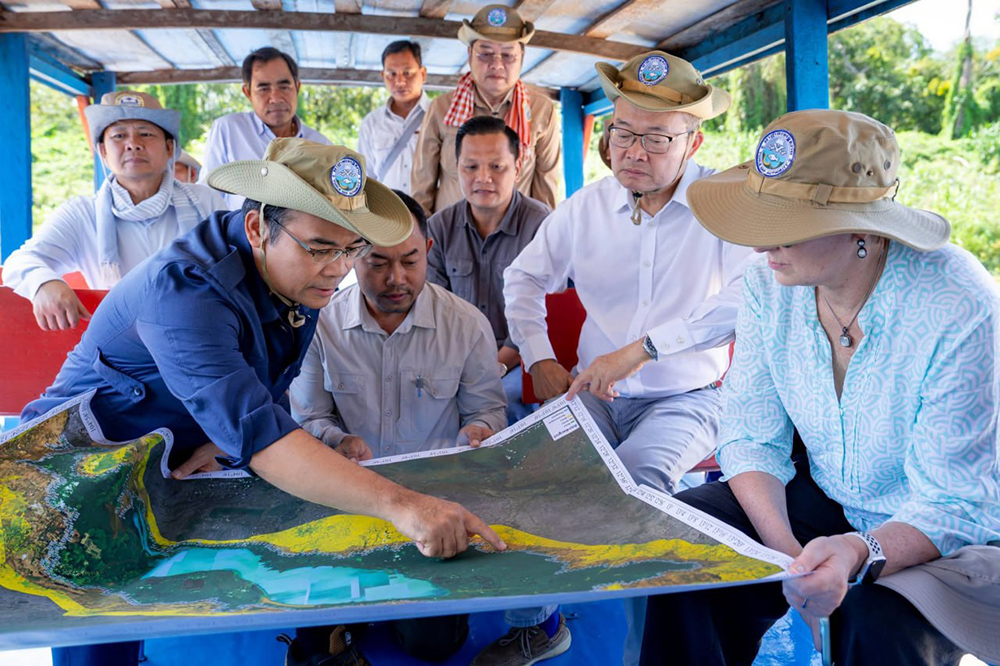
His Excellency Thor Cheath, Minister of Water Resources and Meteorology and Chairman of the Tonle Sap Authority, led a delegation from the Ministry and the World Bank (WB) on a study tour to understand water security and biodiversity in the Tonle Sap Lake. The delegation visited the stilted village of Kampong Phluk, located in the geographical area of Kampong Phluk commune, Prasat Bakong district, Siem Reap province, approximately 31 kilometers from Siem Reap city, on the morning of Friday, July 10, 2026. This area is characterized by being "6 months land, 6 months water," with residents living in houses built 6 to 10 meters high above the ground. Kampong Phluk commune covers a total area of 6,030 hectares and encompasses three villages: Kok Kdol, Tnaot Kambut, and Dei Krom. The total population is 1,106 families, equivalent to 3,820 people. The community consists of two main groups: a tourism community and a fishing community, with approximately 65% of residents engaged in fishing and 35% in tourism-related services. The Minister and the delegation traveled by boat to observe the scenery of Tonle Sap Lake and the flooded forest areas. They also held discussions with the Kampong Phluk fishing community to understand their livelihoods, challenges, water security, and the lake's biodiversity. It is noted that under the cooperation and support of the World Bank, the Tonle Sap Authority has conducted studies and assessments of the Tonle Sap Lake basin and water security to provide a strategic roadmap for its management. This assessment report is significant both technically and has a strong influence on Cambodia's development policies under the framework of "Water for People, Water for Food, Water for the Planet," reflecting the integration of water security and the needs for long-term investment programs.

多角的分析

経済的影響

トンレサップ湖の水安全保障と生物多様性に関する世界銀行の視察は、カンボジアの持続可能な開発戦略において、水資源管理が経済的安定の基盤となることを示唆している。特に、漁業と観光業に依存する地域社会の生計維持は、湖の生態系保全と密接に関わっており、将来的な投資はこれらのセクターの収益性向上とリスク軽減に繋がる可能性がある。

投資家心理

世界銀行によるトンレサップ湖の水安全保障と生物多様性への関心は、この地域におけるインフラ投資や環境保全型プロジェクトへの関心を高める可能性がある。特に、水資源管理の改善は、農業用水の安定供給や水運の効率化に繋がり、広範な経済活動に恩恵をもたらすことが期待される。投資家は、長期的な視点で環境・社会・ガバナンス(ESG)基準に合致したプロジェクトへの参入を検討するだろう。

社会的影響

コンポン・プルック村のような水上生活コミュニティにとって、水安全保障と生物多様性の維持は直接的な生活基盤に関わる問題である。漁業への依存度が高い住民は、水質の悪化や漁獲量の変動に脆弱であり、気候変動の影響も懸念される。今回の視察は、国際機関がこれらの課題に注目する契機となり、住民の生活改善に向けた支援策の具体化に繋がるかどうかが注目される。

市民の声

カンボジア国民、特にトンレサップ湖周辺の住民にとって、水資源の安定的な確保と豊かな生物多様性は、食料安全保障と生計維持に不可欠である。世界銀行のような国際機関の関与は、これらの問題に対する政府の取り組みを後押しし、より効果的な水資源管理政策の実施を期待させる。しかし、具体的な支援策が住民の生活向上にどう結びつくかが、今後の重要な焦点となる。

背景・歴史的文脈

トンレサップ湖は東南アジア最大の淡水湖であり、カンボジアの食料安全保障と経済にとって極めて重要な役割を果たしている。その水深は雨季と乾季で大きく変動し、独特の洪水林生態系を形成している。近年、気候変動、過剰漁業、上流からのダム建設による水流の変化などが、湖の生態系と水安全保障に影響を与えている。世界銀行はこれまでもカンボジアの水資源管理やインフラ開発を支援しており、今回の視察は、これらの課題に対する包括的なアプローチの一環と考えられる。

原文ソース

AKP Khmer

原文を読む