General articles are free for 24 hours after publish.
Bakong Temple: Birthplace of Khmer Mountain-Temple Architecture and Living Link to Angkor Heritage
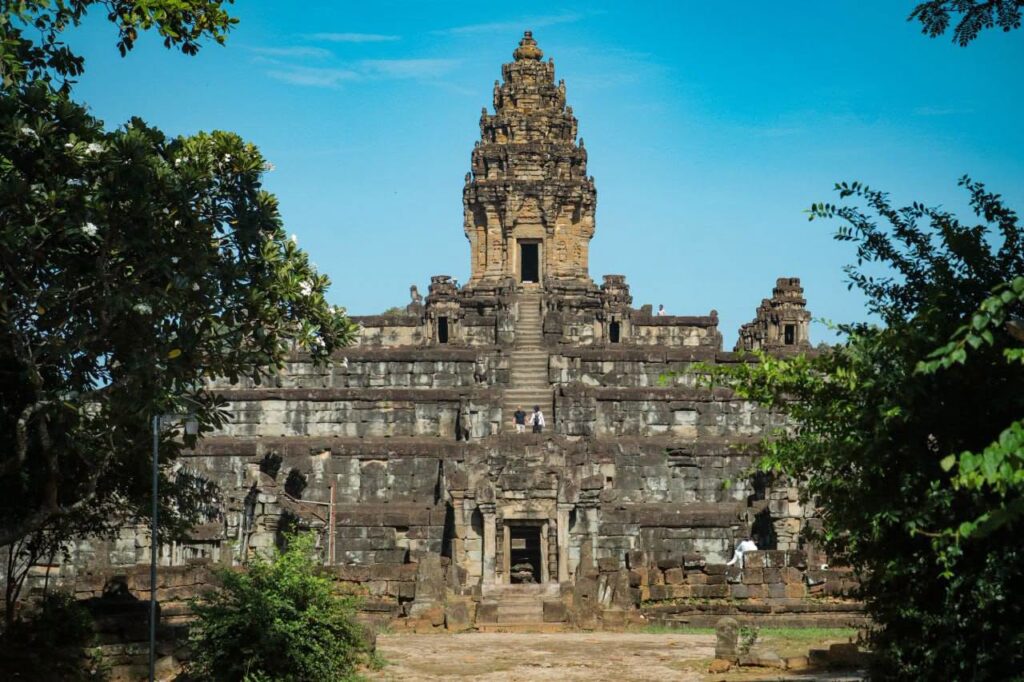
Bakong Temple, an early major monument of the Angkor era near Siem Reap, stands as a landmark in Khmer architectural evolution. Consecrated in 881 AD, it pioneered the 'mountain temple' concept, influencing subsequent Angkorian structures.
SIEM REAP, Sept 7, 2026 (KPT) — Bakong Temple, one of the earliest major monuments of the Angkor era, stands as a landmark in the evolution of Khmer architecture and continues to serve as a living connection between Cambodia’s ancient heritage and present-day community life, the Apsara National Authority said Monday. Located about 15 kilometers southeast of Siem Reap in the Roluos region, Bakong is regarded as the first fully developed pyramid-shaped temple of the Khmer Empire and a pioneering example of the “mountain temple” concept. Consecrated in 881 AD under King Indravarman I, Bakong marked a milestone in Khmer temple design. Its elevated pyramid structure established a model that influenced later Angkorian monuments. The complex includes a vast outer enclosure measuring 900 by 700 meters, with at least 22 smaller brick temples surrounding the central sanctuary. A second enclosure, 400 by 300 meters, encircles the main temple and is protected by a moat. Distinctive features include early seven-headed naga sculptures lining the entrance causeway — among the earliest examples of naga balustrades that later became a hallmark of Khmer architecture. Remains of wooden beams found in several brick structures also provide evidence of ancient construction techniques. Bakong’s influence extended beyond the Angkor period. The original central sanctuary has disappeared, while the existing shrine was rebuilt in the 12th century. Its refined form is said to have inspired architect Vann Molyvann in designing Phnom Penh’s Independence Monument. The site also embodies continuity of religious life. A Theravada Buddhist monastery dating to the post-Angkor period stands within the complex, reflecting the transition from Hindu worship to Buddhism and the enduring role of the temple in community traditions. Festivals and ceremonies have helped sustain Bakong as a living cultural and spiritual site. Far from being abandoned after Angkor’s decline, Bakong illustrates how communities continued to live, worship and maintain traditions around one of Cambodia’s most important monuments. Today, Bakong offers visitors more than an ancient ruin: it is a window into the evolution of Khmer architecture, the transformation of religious traditions and the enduring relationship between heritage sites and local communities. As a pioneering mountain temple where ancient and contemporary life remain intertwined, Bakong stands as a powerful link between Cambodia’s Angkorian past and its living cultural identity.
Original source
Kampuchea Thmey English