General articles are free for 24 hours after publish.
Prabowo at BRICS Summit Advocates for Greater Developing Country Voice, Calls for Reform of International Institutions
President Prabowo Subianto, speaking at the BRICS Summit, called for reforms in institutions like the UN, WTO, and international financial bodies to increase the voice of developing nations. He stressed building inclusive global governance to counter geopolitical pressures, highlighting regional cooperation based on ASEAN's experience.
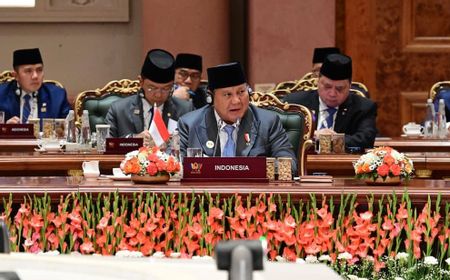
JAKARTA - President Prabowo Subianto has encouraged the reform of a number of multilateral institutions so that developing countries have more room in determining global rules, not just accepting the provisions that have been made. Prabowo conveyed this view at the special session of the 18th BRICS Summit at Bharat Mandapam, New Delhi, India, Saturday, September 12. The Coordinating Ministry for Economic Affairs in its statement, Sunday, September 13, said the closed session raised the theme of Inclusive Global Governance and Strengthening Multilateralism and was attended by the leaders of the full BRICS member countries. Prabowo assessed that reforms were needed to the United Nations, the World Trade Organization or WTO, as well as international financial institutions to be more able to represent the interests of developing countries. He also emphasized the importance of building resilience from the national, regional to global levels, especially to face geopolitical, economic, food and energy pressures. "BRICS represents half of humanity and a large part of global economies and trade. BRICS brings together the largest markets and major energy producers in the world. This creates a very large collective power," said Prabowo. According to Prabowo, ASEAN's experience shows that regional cooperation can be used to maintain dialogue, stability, and economic growth in the midst of geopolitical and geoeconomic changes. Coordinating Minister for the Economy Airlangga Hartarto said developing countries must be directly involved in the formation and negotiation of global governance. "If we are not part of the negotiation process, then the provisions will eventually be determined and applied to us," said Airlangga. "Therefore, Indonesia needs to continue to take an active role in shaping a more inclusive, representative, and just global governance," he continued. In the economic field, Indonesia also encourages an open, transparent, rule-based multilateral trading system and continues to provide development space for developing countries. The 2026 BRICS Summit also discussed financial cooperation, the Local Currency Settlement (LCS) mechanism, strengthening global supply chains, energy, food security, digitization, technology, climate change, and trade. The summit continued on the second day with a discussion on the theme of Resilience, Innovation, Cooperation and Sustainability: Shaping the Future for Inclusive Global Growth involving BRICS member countries and partners.
Original source
VOI English