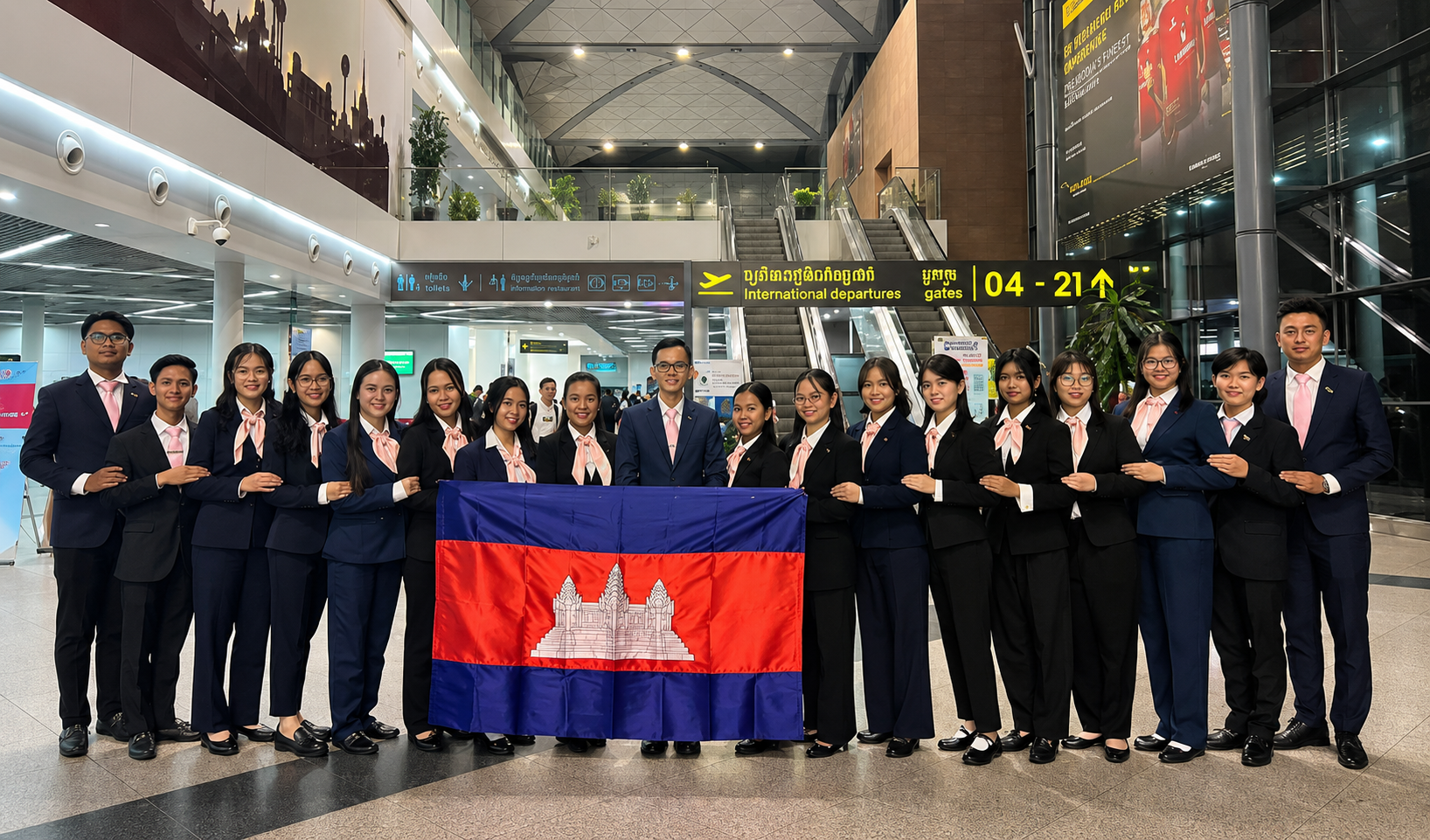
Cambodian Professionals' Path to Global Leadership: The Importance of Cultural Intelligence
Business
2026年7月28日
7
Cambodia Investment Review

General articles are free for 24 hours after publish.

Cambodian Professionals' Path to Global Leadership: The Importance of Cultural Intelligence

Share
AI Summary

The article argues that Cambodian professionals need to develop 'cultural intelligence' (CQ) alongside technical expertise to excel in global leadership roles. This ability to understand and work effectively across cultures is crucial for Cambodia's strengthened participation in the global economy.

For Cambodian professionals aiming to ascend to leadership roles within multinational corporations and international organizations, the development of 'cultural intelligence' (CQ) is highlighted as a critical factor, alongside technical expertise and English proficiency. As economic development and engagement with the global economy deepen, opportunities for local talent to contribute internationally are expanding. However, becoming a true global leader requires more than just qualifications. Cultural intelligence is defined as the ability to understand, appreciate, and effectively work with people from diverse cultural backgrounds. In today's globalized workplace, leaders must go beyond task management to build cross-cultural trust, communicate effectively with diverse teams, and make decisions in complex international environments. For Cambodian professionals seeking senior leadership positions, CQ can serve as a significant advantage. While many Cambodian professionals possess strong technical skills, local knowledge, and valuable experience with international organizations, leadership demands a broader skill set. Working with colleagues and partners from different countries and cultures can lead to misunderstandings if cultural differences are not navigated effectively. Cultural intelligence transforms these differences into opportunities for collaboration and innovation. Developing CQ does not mean abandoning Cambodian values or adopting foreign leadership styles. Instead, it involves understanding cultural nuances and adapting effectively while maintaining one's identity. Cambodian professionals already bring strengths like respect for relationships, cooperation, and community-oriented thinking, which can positively contribute to international teams. Combining these with confidence and adaptability is key. Cultural intelligence comprises three key components: cognitive CQ (understanding cultural differences), motivational CQ (willingness and confidence to engage with diverse cultures), and behavioral CQ (ability to adjust communication and leadership approaches). Cambodian professionals are uniquely positioned to bridge local knowledge with global perspectives. Multinational companies and INGOs need leaders who understand Cambodia's realities and can operate within international systems. Global leadership requires confidently communicating ideas, collaborating across cultures, and influencing people from various backgrounds. Organizations with culturally intelligent leaders are better equipped to build trust, enhance teamwork, and foster innovation. Developing more culturally intelligent leaders is not only crucial for individual career advancement but also for strengthening Cambodia's participation in the regional and global economy. Universities, companies, and professional training institutions are urged to place greater emphasis on cross-cultural leadership development. Investing in the ability to lead diverse teams, alongside technical skills, is essential for preparing Cambodia's workforce for the future. By cultivating cultural intelligence, Cambodian professionals can confidently represent their nation on the global stage and bring international knowledge back to strengthen their country's future. Information source: Cambodia Investment Review

0

Original source

Cambodia Investment Review

原文を読む